

Maddy summaryThis bill authorizes a Congressional Gold Medal to honor the "Hello Girls" - female telephone operators who served in the Army Signal Corps during World War I. They provided critical battlefield communications in France (connecting 26 million calls), wore military uniforms, and faced combat risks, but were denied veteran benefits for 60 years due to being classified as civilian contractors. The medal recognizes their pioneering service, devotion, and the decades-long struggle to gain military recognition. The award follows similar recognition for other WWII women veterans and aims to correct the historical injustice they faced.
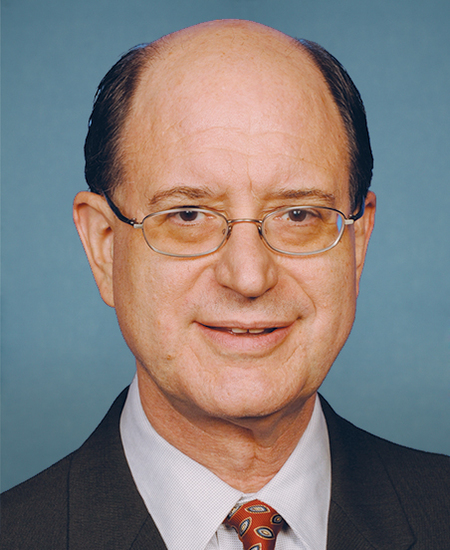
Rep. Brad Sherman
Sponsored bills
Supporting Americans with Lower Taxes Act or the SALT Act This bill modifies the cap on state and local tax deductions (the SALT deduction) and provides for Medicare coverage of hearing and vision services. Current law caps the SALT deduction at $10,000 for single taxpayers and married couples filing jointly and $5,000 for married taxpayers filing separately; the cap applies to tax years 2018 through 2025. The bill permanently (1) eliminates any cap for single taxpayers or married couples filing jointly who make less than $400,000 a year ($200,000 for married taxpayers filing separately); (2) increases the cap to $60,000 for single taxpayers or married couples filing jointly who make $400,000 or more a year ($30,000 for married taxpayers filing separately who make $200,000 or more a year); and (3) phases down the cap for filers who make more than $400,000 in a manner such that those who make $1 million or more do not qualify for the deduction. The bill also provides for Medicare coverage of hearing and vision services, including hearing aids, glasses, and contact lenses, beginning in 2025. It also appropriates any amounts received as a result of the bill's changes to the SALT cap to Medicare's Supplementary Medical Insurance Trust Fund and provides for specific fund transfers for FY2024 and FY2025 to support Medicare hearing and vision coverage.
Maddy summaryHR 1328, the Medical Device Nonvisual Accessibility Act of 2023, requires certain home-use medical devices (like blood pressure monitors and sleep apnea machines) to include nonvisual accessibility features - such as voice commands or audio feedback - by 2025. It directly affects blind or low-vision users who rely on these devices for independent, safe, and private care at home. The bill mandates that devices classified as Class II or III (and cleared via FDA processes) must meet accessibility standards ensuring equal usability for blind or low-vision individuals, with limited waivers allowed for manufacturers facing undue hardship. The FDA will develop and enforce these standards within two years, consulting with accessibility experts and blind users.
Maddy summaryThe Paycheck Fairness Act (HR 17) strengthens equal pay protections by amending the Fair Labor Standards Act. It prohibits pay discrimination based on sex, pregnancy, childbirth, sexual orientation, gender identity, and sex characteristics. The bill modifies employer defenses for pay differences to require demonstration that any disparity is job-related, consistent with business necessity, and accounts for the entire pay differential. It also prohibits employers from relying on wage history when making hiring decisions or setting pay, enhances penalties for violations, and requires the EEOC to collect compensation data disaggregated by sex, race, and national origin.
Maddy summaryHRES 215 is a symbolic resolution recognizing Nowruz, the ancient Persian New Year celebrated by over 300 million people worldwide, including Iranian Americans. It acknowledges Nowruz’s 3,000-year cultural history, its themes of renewal and human rights, and expresses appreciation for Iranian Americans’ contributions to U.S. society. The resolution has no binding policy impact but formally supports the holiday’s observance and the values of freedom and tolerance it embodies.
Maddy summaryThe Stop Corporate Capture Act requires agencies to disclose conflicts of interest when industry-funded studies or research are submitted for rulemaking consideration. It mandates that such studies be made publicly available and requires agencies to assess the social equity impacts of proposed rules. The bill creates an Office of the Public Advocate to help improve public participation in rulemaking, particularly for historically excluded groups. These provisions aim to increase transparency in regulatory decision-making and ensure rulemaking considers broader public interests beyond corporate interests.
Maddy summaryHR 1483 repeals multiple tax provisions benefiting oil and gas companies, effective for taxable years beginning after December 31, 2022. It eliminates credits for marginal wells, enhanced oil recovery, and intangible drilling costs; ends percentage depletion allowances for oil/gas; and prohibits LIFO accounting for major integrated oil producers (defined as companies with >500,000 barrels daily crude production). The bill also removes deductions for tertiary injectants, special passive loss rules, and qualified business income deductions for oil/gas activities. These changes directly affect oil and gas producers by reducing their tax advantages, without creating new taxes or subsidies.
Maddy summaryHR 1511 amends Section 249 of the Immigration and Nationality Act to change eligibility criteria for certain immigration provisions. The bill replaces outdated language about entry dates (prior to July 1, 1924, or January 1, 1972) with a requirement that applicants must have been long-term residents of the United States for at least seven years before applying. This change would directly affect individuals seeking immigration status under the amended provisions who meet the new residency timeline. The bill is procedural in nature, updating the legal definition of qualifying residency without creating new benefits or restrictions. (Note: The bill's title incorrectly references the "Immigration Act of 1929," which never existed; the actual law amended is part of the 1952 Immigration and Nationality Act.)
This resolution supports the goals of a feminist foreign policy (i.e., a foreign policy that requires analysis of and challenges to power structures and inequalities that are based on systems of discrimination). The resolution also supports the adoption of policies that promote gender equity and the participation of women and girls in public life.
Maddy summaryHRES 200 is a non-binding House resolution condemning two mass shootings in California: 11 victims in Monterey Park (January 21, 2023) at a Lunar New Year celebration and 7 victims in Half Moon Bay (January 23, 2023) at a farm. It honors all victims - primarily Asian-American seniors and immigrant farmworkers - expresses condolences to their families, and reaffirms the House’s commitment to supporting Asian-American and Pacific Islander communities. The resolution specifically addresses the rise in anti-Asian hate crimes during the pandemic and recognizes the vulnerability of immigrant communities. As a symbolic gesture, it does not create new laws or allocate funding but formally condemns the violence and affirms solidarity.