

Maddy summaryHR 4963, the Tax Fairness for Workers Act, would restore tax deductions for certain employee expenses. It creates an above-the-line deduction for union dues and expenses paid by wage-earning employees, and allows miscellaneous itemized deductions for other work-related expenses (like uniforms or supplies) that were previously disallowed after 2017 tax law changes. These provisions directly affect employees who pay union dues or incur qualifying job-related costs. The bill amends specific sections of the Internal Revenue Code to make these deductions available for taxable years beginning after December 31, 2022. It does not change tax rates or provide new benefits, only reinstating previously eliminated deductions for eligible workers.
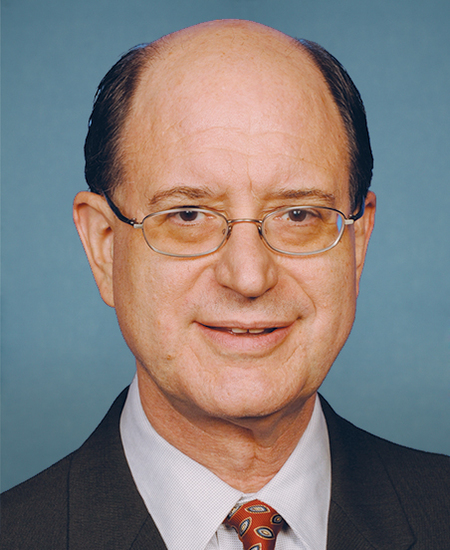
Rep. Brad Sherman
Sponsored bills
Maddy summaryThe Rebuild America's Schools Act of 2023 creates a $20 billion annual federal grant program to fund long-term improvements to public school facilities across the United States. It requires states to prioritize school districts serving high-poverty students (with high percentages of students eligible for free/reduced lunch) and those with deteriorating infrastructure, while mandating that recipient schools develop 10-year facilities master plans. The bill specifies that funds must be used for construction, renovation, and modernization projects that improve energy efficiency, address environmental health hazards (including lead, asbestos, and poor air quality), and ensure school safety, while requiring the use of American-made materials for construction projects.
Maddy summaryHRES 578 is a non-binding House resolution calling for the immediate release of Eyvin Hernandez, a U.S. citizen and Los Angeles County public defender wrongfully detained by Venezuela since March 2022. The resolution urges U.S. officials, including the President and Secretary of State, to press Venezuela for his release and condemns Venezuela’s practice of detaining U.S. citizens for political purposes. It specifically references Hernandez’s wrongful detention without evidence or fair trial, noting his status as a Department of State-designated wrongfully detained individual. The resolution expresses support for Hernandez and other Americans detained abroad, without creating new legal requirements or funding.
Maddy summaryThis bill establishes new federal requirements for employers to prevent heat-related illness and injury among workers. It mandates that employers provide safe work environments by implementing specific measures, including access to cool water, scheduled rest breaks in shaded areas, employer-paid cooling equipment, and training for employees and supervisors on recognizing heat illness symptoms. The Secretary of Labor must create these standards within one year, requiring employers in high-heat occupations (like construction, agriculture, and outdoor labor) to adopt engineering controls, administrative schedules, and health protocols. Key provisions include ensuring hydration, rest, and language-accessible training, while preserving existing safety protections and allowing for updates as scientific evidence evolves.
Maddy summaryHR 1776, the End Tuberculosis Now Act of 2023, would amend U.S. foreign assistance law to strengthen global tuberculosis (TB) programs. The bill requires U.S. assistance to align with the World Health Organization's End TB Strategy, aiming to reduce TB deaths by 95% and incidence by 90% by 2035. It mandates annual reporting on TB diagnosis and treatment progress, prioritizes research for new diagnostics and treatments, and emphasizes integrating TB services into primary health care. The legislation affects U.S. government agencies, global health partners, and countries with high TB burdens, particularly focusing on low- and middle-income nations.
Maddy summaryHR 1176, the Taiwan International Solidarity Act, amends the TAIPEI Act of 2019 to clarify that UN Resolution 2758 does not address Taiwan's representation or sovereignty in international organizations. The bill directs U.S. representatives in international bodies to resist China's efforts to distort policies regarding Taiwan and encourages U.S. allies to oppose China's attempts to undermine Taiwan's diplomatic relationships. It also requires the U.S. government to report on China's initiatives promoting its "One China" position. These changes aim to strengthen Taiwan's international engagement through U.S. advocacy and policy coordination.
Holding Chinese Listed Companies Accountable Act This bill establishes stricter requirements for Chinese companies that are publicly traded. Under current law, the Securities and Exchange Commission must delist from an exchange a publicly traded company that uses, for two consecutive years, an accounting firm not subject to Public Company Accounting Oversight Board inspections. The bill reduces this to one year for companies that are organized under Chinese laws.
Maddy summaryHR 4893, the Scientific Integrity Act, requires federal agencies that fund, conduct, or oversee scientific research to adopt policies preventing political interference in science. The bill mandates these agencies to prohibit suppression or distortion of research findings, establish Scientific Integrity Officers to enforce policies, and implement training and reporting systems. It directly affects scientists and engineers employed by or contracted with covered agencies (like the EPA or NIH), ensuring their work remains free from political pressure. Key mechanisms include annual public reporting on misconduct complaints, whistleblower protections, and requiring scientific conclusions to be based on evidence, not ideology.
Member Business Loan Expansion Act This bill revises requirements related to the terms and lending limits of certain credit union loans. Specifically, the bill (1) allows the National Credit Union Administration Board to lengthen the maturity term of certain loans made by a credit union, and (2) raises the credit limit for credit union member businesses under which such loans are excluded from overall credit union lending limits. Finally, the bill expands the definition of a community financial institution by (1) allowing insured credit unions to qualify, and (2) raising the average asset limit. (Community financial institutions are subject to reduced asset requirements for purposes of Federal Home Loan Bank membership.)
Maddy summaryThis bill expands eligibility for business loans at credit unions to include veterans. It amends the Federal Credit Union Act to define "member business loan" as including loans made to veterans, using the standard definition of "veteran" from Title 38 of U.S. Code. Credit unions offering these loans will now be able to serve veteran business owners under the same terms as other qualifying borrowers. The policy change directly affects veterans seeking business financing and credit unions providing such loans.