

Restore Everyone's Sleep Tonight Act of 2023 or the REST Act of 2023 This bill authorizes an airport to impose an access restriction (i.e., a prohibition on the landing or takeoff of aircraft) between the hours of 10 p.m. and 7 a.m. for aircraft, with exceptions. The authorization to impose the restriction does not apply to exceptional circumstances, such as (1) a scheduled flight that is delayed in takeoff or landing due to weather; (2) emergency flights; and (3) flights for the purpose of preserving life, health, or safety. An airport may impose a noise deterrence penalty on an air carrier or aircraft operator for a violation of the access restriction. The restriction does not apply to the operation of military, law enforcement, and U.S. Coast Guard flights. Further, the bill specifies that an airport may impose the restriction without approval or comment by the Federal Aviation Administration, the Department of Transportation, any air carrier or aircraft operator, or any other entity.
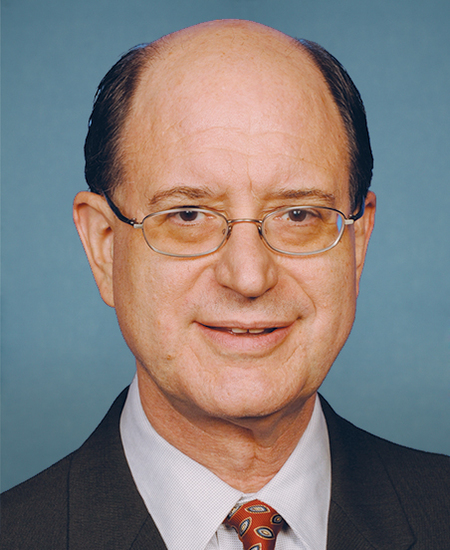
Rep. Brad Sherman
Sponsored bills
Responsive Employees Support Productive Educated Congressional Talk Act or the RESPECT Act This bill requires the Federal Aviation Administration (FAA) to respond in writing within 90 days to requests for data and information from Congress. Specifically, the FAA must substantively respond if the data is within the control of the FAA; and the data would be otherwise appropriate to provide if requested by an airline, an airport, a flight procedure proponent, an Aviation Roundtable, anyone not employed by the FAA, or via a Freedom of Information Act request from any individual or any entity. The FAA must also provide staff at a private or public meeting with a Member of Congress if certain conditions are met.
Maddy summaryThe APPRISE Act (HR 6559) requires the FAA to ensure communities highly impacted by aviation noise can appoint technical representatives to participate equally in FAA working groups developing new flight procedures. It directly affects communities near airports where noise from proposed flight paths falls within 5 miles of their jurisdiction. The bill mandates that these community representatives join core or full working groups on the same terms as industry or airport representatives, ensuring their technical input is considered during procedure planning.
Maddy summaryHRES 904 is a House resolution supporting World AIDS Day goals. It encourages efforts to achieve zero new HIV transmissions, zero discrimination, and zero AIDS-related deaths by 2030, while commending existing programs like PEPFAR and the Ryan White CARE Act. The resolution also supports continued funding for HIV prevention, treatment, and research, with specific focus on communities disproportionately affected by HIV in the U.S. and globally. As a symbolic statement, it does not create new laws or allocate funds.
Maddy summaryThis bill authorizes the posthumous presentation of a Congressional Gold Medal to honor Marshall "Major" Taylor, a pioneering Black cyclist who broke racial barriers in the late 19th and early 20th centuries. It recognizes his athletic achievements, including world records and international championship wins, as well as his advocacy for equality in sports. The medal, designed by the Treasury Secretary, will be presented to Taylor's great-granddaughter, Karen Donovan, following the congressional authorization. As a commemorative act with no policy changes, it serves solely to honor Taylor's legacy as a trailblazer and role model.
Maddy summaryThis bill (HR 6553) waives all costs for U.S. government-led evacuations of American citizens from Israel, Gaza, the West Bank, and nearby countries (like Cyprus) between October 7 and November 17, 2023. It directly affects U.S. citizens endangered by the Hamas-led attacks on October 7 and subsequent conflict. The key mechanism amends existing law to require the State Department to cover all expenses related to these evacuations through government-coordinated transport, eliminating repayment obligations for affected citizens. This policy change applies specifically to evacuations during that defined period following the October 7 attacks.
Maddy summaryThis bill reauthorizes the Never Again Education program, which funds Holocaust education initiatives in schools. It extends the program's funding authorization period from ending after four fiscal years to continuing annually through fiscal year 2030. The bill modifies the existing law (Public Law 116-141) by updating the funding timeline without changing program requirements or eligibility. It directly affects the existing grant program supporting educational materials and teacher training on the Holocaust. The change ensures continued federal funding for these specific educational efforts until 2030.
Maddy summaryHRES 895 is a resolution introduced in the U.S. House of Representatives on November 28, 2023, that condemns statements by some members of Congress calling for the expulsion of Palestinians from the United States. The resolution states such rhetoric is un-American, bigoted, and dangerous because it unfairly conflates Palestinians with Hamas and ignores the U.S. history of welcoming immigrants of all backgrounds. It specifically references H.R. 6211 (introduced November 2, 2023) as an example of harmful rhetoric. This resolution has no legal effect - it is a symbolic statement expressing the House's position.
Maddy summaryHRES 793 is a resolution passed by the U.S. House of Representatives calling on Hamas to immediately release all 199 hostages taken during Hamas' October 7, 2023 attack on Israel. The resolution condemns Hamas for the attack, the taking of hostages, and threats against hostages, while stating that holding hostages violates international humanitarian law under the Geneva Conventions. It demands the immediate release of all hostages and expresses sympathy for victims and their families. As a symbolic resolution, it does not create legal obligations but formally expresses the House's position.
Maddy summaryHR 6451, the Mental Health Justice Act of 2023, provides $250 million in federal grants to states, tribes, and localities to hire mental health professionals as first responders for specific emergencies. It directs these professionals to replace police in situations involving mental health crises, substance use, or intellectual/developmental disabilities - such as when a 911 caller describes a mental health emergency or a first responder identifies someone needing mental health support. The bill requires grantees to train responders in de-escalation techniques, link individuals to community-based services (not incarceration), and report on outcomes like reduced arrests or use of force. It also mandates data collection on demographics and prevents funneling people into institutional settings, with annual reports to Congress on program effectiveness.