

Maddy summaryThis resolution expresses the House of Representatives' position that Congress should take steps to prevent the privatization of the United States Postal Service (USPS), ensuring it remains a federal independent agency. It highlights USPS’s constitutional role, self-sustaining nature (relying on service revenue, not taxpayer funds), and critical functions - serving 168 million addresses daily, supporting rural communities, and underpinning e-commerce. The resolution opposes privatization, noting it would raise prices, reduce services, and harm the $1.9 trillion mailing industry. As a non-binding resolution, it reflects the House’s stance but does not create new law or policy.
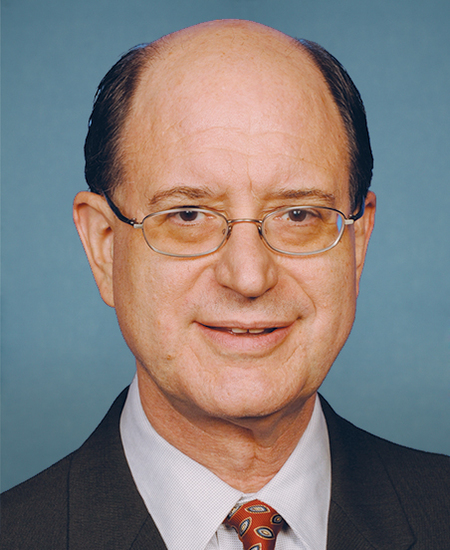
Rep. Brad Sherman
Sponsored bills
Maddy summaryHR 768, the Holocaust Education and Antisemitism Lessons Act, requires the U.S. Holocaust Memorial Museum Director to study how states and school districts currently teach about the Holocaust and antisemitism in K-12 schools. The study will examine curriculum requirements, teacher training, educational materials used, and assessment methods across all states and a representative sample of school districts and schools. It specifically aims to identify gaps, resources needed, and how schools address antisemitism and genocide prevention in their teaching. The Museum must submit a report to Congress within three years of the bill's enactment, detailing findings on current practices and challenges. This bill does not mandate new teaching requirements but seeks to understand existing approaches to Holocaust education.
Maddy summaryHR 764, the Global Health, Empowerment and Rights Act, removes two barriers for foreign nongovernmental organizations (NGOs) seeking U.S. foreign assistance. It ensures these organizations cannot be denied funding solely because they provide health services (like counseling and referrals) using non-U.S. government funds, as long as those services comply with local laws. The bill also requires that foreign NGOs face the same rules on using non-U.S. funds for advocacy and lobbying as U.S. NGOs receiving similar aid. This directly affects international health-focused NGOs working in countries where U.S. aid is provided.
Maddy summaryThis resolution celebrates the historical and ongoing contributions of Hindu Americans to the U.S. economy, culture, and society, including their roles in fields like Ayurveda, yoga, and the arts. It specifically condemns Hinduphobia, anti-Hindu bigotry, hate, and intolerance, addressing rising hate crimes against Hindu places of worship (mandirs) and individuals. As a non-binding symbolic resolution, it does not create new laws or policies but serves to affirm support for Hindu Americans' religious freedom and community.
Maddy summaryHRES 68 is a non-binding House resolution expressing strong disapproval of the President’s announcement to withdraw the U.S. from the Paris Agreement. It commends states, businesses, and citizens supporting the Agreement, urges the President to reverse the withdrawal decision, and calls for Congress to prioritize U.S. climate leadership. The resolution does not create new laws or affect specific groups but formally states the House’s position against withdrawing from the international climate accord. It was introduced by 115 co-sponsors and reflects broad congressional concern about reversing U.S. climate commitments.
Maddy summaryThis bill creates a new above-the-line tax deduction for performing artists (like musicians, actors, and dancers) to deduct work-related expenses directly from their gross income, rather than itemizing deductions. It sets a $100,000 income threshold (adjusted annually for inflation), phasing out the deduction by 10% for every $2,000 earned above this amount. The bill also explicitly includes commissions paid to an artist’s manager or agent as deductible expenses and raises the $200 "nominal employer" threshold for expense deductions to $500 (with inflation adjustments). These changes apply to tax years beginning after December 31, 2024.
Maddy summaryHR 669, the "Restricting First Use of Nuclear Weapons Act of 2025," requires Congress to declare war before the U.S. can conduct a first-use nuclear strike. It directly affects the President (who currently has sole authority to authorize such strikes), military commanders, and Congress by mandating that federal funds cannot be used for a first-use attack without a congressional declaration of war. The bill defines a "first-use nuclear strike" as an attack launched without prior confirmation that the U.S., its territories, or allies were first hit with nuclear weapons. This law changes policy by creating a constitutional check on presidential nuclear authority, requiring explicit congressional approval for the initial use of nuclear weapons.
Maddy summaryThe Close the Medigap Act of 2025 would prohibit Medigap insurance issuers from denying coverage or charging higher premiums based on health status, pre-existing conditions, genetic information, or other factors. It requires insurers to spend a minimum percentage of premiums on health care claims and improves the Medicare Plan Finder website to provide clearer information about coverage options, out-of-pocket costs, and guaranteed issue requirements. The bill applies to Medigap policies effective January 1, 2026, with full implementation by 2031, and requires Medigap brokers to disclose payments they receive from insurers. These changes would directly affect Medicare beneficiaries, particularly those with pre-existing conditions who have historically faced barriers to obtaining affordable supplemental coverage.
Supporting Accurate Views of Emergency Services Act of 2025 or the 911 SAVES Act This bill requires the Office of Management and Budget to categorize public safety telecommunicators as a protective service occupation under the Standard Occupational Classification system no later than 30 days after the enactment of this bill. (The Standard Occupational Classification system is a federal statistical standard used by federal agencies to classify workers into occupational categories for the purpose of collecting, calculating, or disseminating data.)
Maddy summaryThe BLUE Pacific Act establishes a comprehensive U.S. strategy for engagement with Pacific Island nations, requiring the President to submit a detailed "Strategy for Pacific Islands Partnership" every four years to Congress. The bill authorizes $270 million annually from 2026 through 2033 to fund programs addressing public health, education, economic development, climate resilience, and security capacity building across 13 Pacific Island countries. Key provisions include creating a senior official to manage U.S. relations with the Freely Associated States (Marshall Islands, Federated States of Micronesia, and Palau), establishing an Ambassador's Self-Help Small Grants Program, and requiring coordination with regional organizations like the Pacific Islands Forum. The legislation also mandates annual reports on implementation progress, security challenges, diplomatic presence, and alignment with regional development goals. This comprehensive approach aims to strengthen U.S. partnerships with Pacific Island nations while supporting their priorities in areas such as disaster resilience, climate adaptation, and economic growth.