

Maddy summaryHR 5073, the INFORM Act of 2025, requires immigration authorities to notify the immediate family of a detained individual within 24 hours if they are transferred to a different detention facility. This applies directly to immigrants held under U.S. immigration law and their immediate family members, defined as parents, children, spouses, and certain extended family like step-relatives or domestic partners. The law mandates that notifications include the reason for the transfer and full contact details (name, address, phone number, and point of contact) for the new facility. It establishes a specific timeline and content requirement for these notifications to improve transparency during detention transfers. The bill focuses on procedural changes for facility transfers, not on altering detention policies or immigration eligibility.
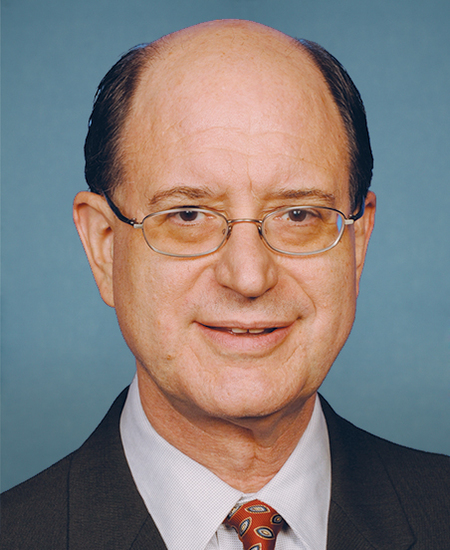
Rep. Brad Sherman
Sponsored bills
Maddy summaryThis bill is a congressional resolution expressing U.S. policy priorities regarding Xinjiang. It urges China to open Xinjiang to international access, cease repression of Uyghurs and other minorities, release specific detained individuals (including Ekper Asat, Dr. Gulshan Abbas, and Kamile Wayit), and stop transnational repression against Uyghur families abroad. The bill directs the State Department to coordinate U.S. policy on Uyghur issues, prioritize support for Uyghur communities, establish reporting mechanisms for transnational repression, and develop strategies to pressure China on detention facilities. It also requires U.S. diplomatic posts in China to have Uyghur-language capabilities and directs U.S. advocacy at the United Nations to address human rights concerns.
Maddy summaryHR 2503, the Undersea Cable Control Act, requires the President to develop a strategy restricting foreign adversaries' access to items needed for undersea cable construction, maintenance, and operation. The strategy must identify critical equipment, coordinate with allies on unified export controls, and detail efforts to limit adversary access through international standards bodies. It mandates annual congressional reports and actions to evaluate adding such items to U.S. export control lists, with the goal of preventing adversaries from obtaining cable-support technology. The bill directly affects U.S. export policy and international coordination, targeting specific items under current export regulations without altering existing infrastructure.
Maddy summaryThis bill permanently establishes the Coordinator for Afghan Relocation Efforts (CARE) within the State Department, expanding their role to prioritize family reunification for U.S. military personnel and veterans with Afghan allies. It mandates the Coordinator to collect detailed data on Afghan applicants (including special immigrant visa seekers, refugees, and parolees), vetting timelines, and pending family reunification cases into a centralized database. The Coordinator must report this data to Congress every 90 days to ensure transparency and inform policy decisions. The law directly affects Afghan allies and their families seeking U.S. relocation, particularly those connected to U.S. military service.
Maddy summaryThis resolution (HRES 659) is a symbolic congressional expression of support for designating August 15, 2025, as "Indian Independence Day: A National Day of Celebration of the World’s Two Largest Democracies." It does not create new law but formally recognizes India’s independence from British rule on August 15, 1947, and celebrates the shared democratic values between the U.S. and India. The resolution specifically acknowledges India’s 78th independence anniversary, honors Americans of Indian descent for their contributions to U.S. society, and reaffirms the U.S.-India partnership based on democracy and mutual respect. It has no binding effect but aims to foster goodwill through ceremonial recognition.
Maddy summaryHR 4976, the Shielding Students from Wildfire Smoke Act, requires the Environmental Protection Agency to commission the National Academies of Sciences to review existing policies protecting children from wildfire smoke in K-12 schools, childcare centers, and related activities like sports or camps. The review will assess current standards, identify research and policy gaps, and provide recommendations to Congress for better protection, especially in under-resourced settings. This bill does not create new regulations but mandates a formal evaluation of current approaches to safeguard children during smoke events. It directly affects children in educational and childcare environments across the U.S., particularly in communities frequently impacted by wildfires.
Maddy summaryThis bill extends the expiration date for a provision allowing certain vehicles to use High Occupancy Vehicle (HOV) lanes without meeting standard occupancy requirements. Specifically, it amends federal law to change the deadline from September 30, 2025, to September 30, 2031. The change directly affects drivers and vehicle operators who currently qualify for this exemption under existing rules. It is a procedural reauthorization, not a policy change, maintaining the current HOV lane exemption rules for an additional six years.
Maddy summaryThe Warehouse Worker Protection Act establishes new requirements for employers in warehouse facilities to protect workers from harmful quotas and workplace surveillance practices. It requires employers to provide written descriptions of quotas and workplace monitoring to workers, prohibits quotas that interfere with breaks, safety compliance, or anti-discrimination rights, and gives workers the right to access their work speed data. The bill creates a Fairness and Transparency Office within the Department of Labor to enforce these requirements and investigate violations, with enforcement also involving the Federal Trade Commission. Employers with more than 200 employees at covered warehouse facilities (including distribution centers, couriers, and warehouses) are directly affected by these new requirements, which include new protections against retaliation for workers who exercise these rights.
Maddy summaryThe Wildfire Emergency Preparedness Act of 2025 establishes a national training plan for structural firefighters to respond to wildfires and wildland-urban interface fires, with $5 million annually for training grants. It creates an Under Secretary of Agriculture for Fire Coordination to improve federal-state-local coordination in wildfire response and authorizes $20 million annually for research on firefighter health, including PFAS exposure in firefighting equipment. The bill also provides $100 million for supplemental grants to fire departments and EMS organizations for wildfire response equipment and training, and sets criteria for mental health support for first responders. It requires reports to Congress on training effectiveness and coordination challenges within one year of enactment.
Maddy summaryThis bill adjusts health insurance subsidies by modifying the premium tax credit structure under the Internal Revenue Code. It replaces previous income thresholds with a sliding-scale formula, increasing subsidies for households earning between 150% and 400% of the federal poverty level - reducing their required premium payments as income rises within these tiers. The changes apply to tax years beginning after December 31, 2025, directly affecting middle-income individuals and families purchasing coverage through health insurance marketplaces. It also repeals specific provisions from a prior reconciliation law related to health care.