

Monarch Action, Recovery, and Conservation of Habitat Act of 2021 or the MONARCH Act of 2021 This bill provides support for the conservation of western monarch butterflies (the monarch butterfly population that overwinters along the coast of California and breeds across California, Arizona, Nevada, Washington, Oregon, Idaho, and Utah). Specifically, the bill establishes the Western Monarch Butterfly Rescue Fund. The Department of the Interior must use amounts in the fund to provide grants for the conservation of such butterflies. In addition, Interior must enter into an agreement with the National Fish and Wildlife Foundation to facilitate the implementation of the Western Monarch Butterfly Conservation Plan, which was prepared by the Western Association of Fish and Wildlife Agencies.
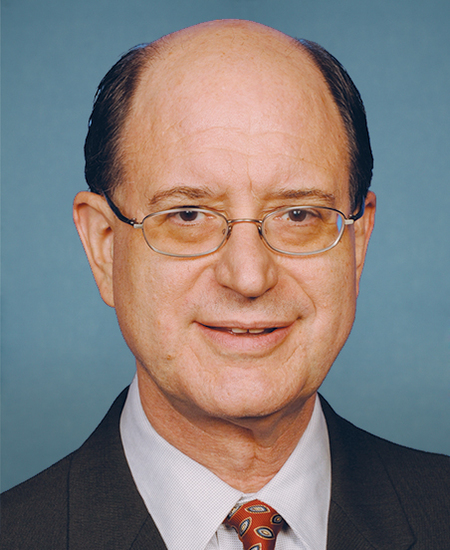
Rep. Brad Sherman
Sponsored bills
Critically Endangered Animals Conservation Act of 2021 This bill provides statutory authority for the Critically Endangered Animals Conservation Fund, which finances a grant program to protect critically endangered species. Specifically, the bill requires the Department of the Interior to establish the fund as a separate account in the Multinational Species Conservation Fund. Critically endangered species means any animal species categorized on the International Union for Conservation of Nature (IUCN) Red List of Threatened Species as either endangered or critically endangered. The term also means any other animals species categorized on such list as data deficient or under a threat category lower than endangered if Interior determines that (1) the most recent IUCN Red List assessment indicates that the population is decreasing, or (2) such species is facing new or emerging threats.
Supporting Technical Experts in Managing Diplomacy Act or the STEM Diplomacy Act This bill authorizes the Department of State to waive occupational requirements related to a civilian foreign affairs position if the individual to be hired possesses significant scientific, technological, engineering, or mathematical expertise that is integral to the position.
Performing Artist Tax Parity Act of 2021 This bill modifies the tax deduction for the expenses of performing artists (including commissions paid to managers or agents) to provide for a phaseout of such deduction for taxpayers whose adjusted gross income exceeds $100,000 ($200,000 for joint return filers). The $100,000 phaseout threshold is adjusted for inflation annually for taxable years beginning after 2021.
Revitalizing Downtowns Act This bill expands the investment tax credit to add a qualified office conversion credit. The amount of such credit is 20% of the qualified conversion expenditures with respect to a qualified converted building. The bill defines qualified converted building as any building if (1) prior to conversion, the building was nonresidential real property which was leased, or available for lease, to office tenants; (2) the building has been substantially converted from an office use to a residential, retail, or other commercial use; (3) the building was initially placed in service at least 25 years prior to the beginning of the conversion, and (4) straight line depreciation is allowable with respect to the building.
Saving America's Pollinators Act of 2021 This bill addresses the use of certain pesticides and the health and status of native bees and other pollinators. First, the bill requires the Environmental Protection Agency (EPA) to establish a Pollinator Protection Board to develop an independent review process for pesticides that pose a threat to pollinators and their habitats. All active ingredients and pesticide products that contain one or more specified neonicotinoid pesticides must be deemed to generally cause unreasonable adverse effects to the environment. Under the bill, the registration of all uses of neonicotinoid pesticides must be immediately and permanently canceled. The EPA must revoke any tolerance or exemption that allows the presence of a neonicotinoid pesticide, or any pesticide chemical residue that results from neonicotinoid pesticide use, in or on food. The continued sale or use of existing stocks of neonicotinoid pesticides is prohibited, and the EPA may not register any such pesticides under the Federal Insecticide, Fungicide and Rodenticide Act. The bill requires the Department of the Interior, the EPA, and the Department of Agriculture to coordinate monitoring activities and report on the health and population status of native bees and other pollinators. Finally, a state or federal agency may be granted an exemption to use neonicotinoid pesticides if the board votes that use of the pesticide is warranted (1) in an emergency situation to avert significant risk to threatened or endangered species, (2) to quarantine invasive species, or (3) to protect public health.
Close the Medigap Act of 2021 This bill (1) expands guaranteed issue rights with respect to Medigap policies (Medicare supplemental health insurance policies), (2) eliminates certain limitations on Medigap policies for newly eligible Medicare beneficiaries, and (3) modifies other provisions related to Medigap policies. (Guaranteed issue rights require that a policy be offered to any eligible applicant without regard to health status.)
Smoke Planning and Research Act of 2021 This bill requires the Environmental Protection Agency (EPA) to research and mitigate the impacts of smoke emissions from wildland fires. Specifically, the EPA must establish (1) four Centers of Excellence for Wildfire Smoke at institutions of higher education, and (2) a grant program to support community mitigation efforts.
United States Call Center Worker and Consumer Protection Act of 2021 This bill establishes restrictions on businesses that relocate call centers or redirect customer service calls to locations outside the United States. Specifically, a business must notify the Department of Labor that it intends to move its customer service call center overseas and Labor must maintain a publicly available list of such businesses. Subject to narrow exceptions, a business appearing on such list is ineligible to receive federal grants or guaranteed loans for five years after the business is added to the list. Further, agencies must condition the awarding of government contracts on the requirement that any call center activity pursuant to the contract must be performed in the United States. Additionally, the bill requires call center employees to disclose their physical location at the beginning of each call initiated or received, unless all employees of the business participating in the communication are located in the United States, among other exceptions.
Averting Loss of Life and Injury by Expediting SIVs Act of 2021 or the Allies Act of 2021 This bill increases the number of special immigrant visas available to qualified Afghan nationals who worked for the U.S. government or the North Atlantic Treaty Organization (NATO) missions in Afghanistan. The bill also relaxes certain qualifications for such visas. Specifically, this bill makes available an additional 8,000 visas for principal aliens under this special visa program, to be available until all such visas have been issued. (The numerical limitations in this program apply only to the principal alien who applies for the visa, not to any accompanying spouse or child.) Under this bill, an alien may qualify based on a credible basis for concern about the possibility of an ongoing serious threat in Afghanistan due to their work with the U.S. government or a NATO mission, where currently the alien must have experienced such a threat. The bill also eliminates a requirement for each applicant to submit a credible sworn statement describing that threat. Furthermore, for an applicant qualifying for a visa by performing duties for U.S. military personnel stationed with a NATO mission, this bill eliminates a requirement that the duties performed qualify as sensitive and trusted duties. If an alien submits a visa application that included an accompanying spouse or child but the alien passes away before the application is granted, the surviving spouse or child shall remain eligible to receive a visa under that application. Currently, a surviving spouse or child retains eligibility only if the application was approved before the alien passed away.