American Renewable Energy Act of 2021 This bill establishes an annual renewable energy standard for retail electricity suppliers through 2030. Under the standard, the suppliers must (1) increase their renewable energy generation each year by specified amounts, and (2) generate at least 70% renewable electricity by 2030.
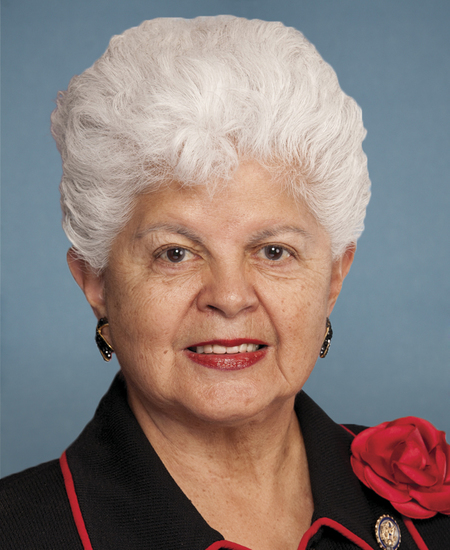
Rep. Grace F. Napolitano
Sponsored bills
This bill repeals the Authorization for Use of Military Force Against Iraq Resolution of 2002.
This resolution recognizes the historical significance to the nation of Juneteenth Independence Day (commemorating the end of slavery in the United States).
This bill recognizes the significance of the California Waterfowl Association on its 75th anniversary and the benefits of its work for California's waterfowl, wetlands, and public enjoyment of those waterfowl and wetlands.
Support UNFPA Funding Act This bill authorizes annual contributions to support the core functions and programs of the United Nations Population Fund for the five fiscal years following the bill's enactment.
Sustainable Skies Act This bill allows a business-related tax credit through 2031 for each gallon of sustainable aviation fuel used by a taxpayer in the production of a qualified mixture (i.e., a mixture of sustainable aviation fuel and kerosene that is sold for use in certain U.S. aircraft). The bill generally defines sustainable aviation fuel as liquid fuel that consists of synthesized hydrocarbons, meets certain recognized international standards, is derived from biomass, waste streams, renewable energy sources, or gaseous carbon oxides, is not derived from palm fatty acid distillates, and achieves at least a 50% life cycle greenhouse gas emissions reduction in comparison with petroleum-based jet fuel. To be eligible for such credit, a taxpayer must meet certification requirements showing that the sustainable aviation fuel conforms with one of the life cycle greenhouse gas emissions reduction tests set forth in this bill.
Shark Fin Sales Elimination Act of 20 21 This bill addresses the sale of shark fins and the inclusion of rays and skates in the Seafood Traceability Program. The Seafood Traceability Program has data reporting and recordkeeping requirements at the time of entry for imported fish or fish products entered into U.S. commerce. The bill makes it illegal to possess, buy, or sell shark fins or any product containing shark fins, except for certain dogfish fins. A person may possess a shark fin that was lawfully taken consistent with a license or permit under certain circumstances. Penalties are imposed for violations under the Magnuson-Stevens Fishery Conservation and Management Act. The Department of Commerce must revise its regulations to include rays and skates as species that are subject to the Seafood Traceability Program.
CHAMPVA Children's Care Protection Act of 2021 This bill provides that a child shall be eligible for medical care under the Civilian Health and Medical Program of the Department of Veterans Affairs (CHAMPVA) until the child's 26th birthday, regardless of the child's marital status.
Water Resources Research Amendments Act This bill reauthorizes through FY2025 the Water Resources Research Act Program and otherwise revises the program, including by increasing the federal share of grant funding under the program for water resources research and technology institutes.
American Dream and Promise Act of 2021 This bill provides certain aliens with a path to receive permanent resident status and contains other immigration-related provisions. The Department of Homeland Security (DHS) or the Department of Justice (DOJ) shall provide conditional permanent resident status for 10 years to a qualifying alien who entered the United States as a minor and (1) is deportable or inadmissible, (2) has deferred enforced departure (DED) status or temporary protected status (TPS), or (3) is the child of certain classes of nonimmigrants. The bill imposes various qualifying requirements, such as the alien being continuously physically present in the United States since January 1, 2021, passing a background check, and being enrolled in or having completed certain educational programs. DHS shall remove the conditions placed on permanent resident status granted under this bill if the alien applies and meets certain requirements, such as completing certain programs at an educational institution, serving in the military, or being employed. Furthermore, DHS and DOJ shall cancel the removal of certain aliens who had TPS, were eligible for TPS, or were eligible for DED status on certain dates. Such an alien shall receive permanent resident status upon meeting certain requirements and applying for such status within three years of this bill's enactment. For an alien seeking permanent resident status under this bill, DHS may (1) waive certain grounds of inadmissibility, or (2) provisionally deny the application if the alien poses a danger to public safety or has knowingly participated in certain offenses involving a criminal street gang. An alien shall have the right to administrative and judicial review of a denial or revocation of permanent resident status granted under this bill. An alien seeking judicial review of a provisional denial shall be appointed counsel upon request. An alien who appears to be prima facie eligible for relief under this bill shall receive a reasonable chance to apply for such relief and may not be removed until there is a final decision on that application for relief. DHS may not use information from applications filed under this bill or for Deferred Action for Childhood Arrivals status for immigration enforcement purposes. DHS shall establish a grant program for nonprofit organizations that assist individuals with certain immigration-related issues. This bill also repeals a restriction that bars a state from providing higher education benefits to undocumented aliens unless those benefits are available to all U.S. nationals without regard to residency in the state.