

Assault Weapons Ban of 2022 This bill makes it a crime to knowingly import, sell, manufacture, transfer, or possess a semiautomatic assault weapon (SAW) or large capacity ammunition feeding device (LCAFD). The prohibition does not apply to a firearm that is (1) manually operated by bolt, pump, lever, or slide action, except for certain shotguns; (2) permanently inoperable; (3) an antique; (4) only capable of firing rimfire ammunition; or (5) a rifle or shotgun specifically identified by make and model. The bill also exempts from the prohibition the following, with respect to a SAW or LCAFD: importation, sale, manufacture, transfer, or possession related to certain law enforcement efforts, or authorized tests or experiments; importation, sale, transfer, or possession related to securing nuclear materials; and possession by a retired law enforcement officer. The bill permits continued possession, sale, or transfer of a grandfathered SAW, which must be securely stored. A licensed gun dealer must conduct a background check prior to the sale or transfer of a grandfathered SAW between private parties. The bill permits continued possession of, but prohibits sale or transfer of, a grandfathered LCAFD. Newly manufactured LCAFDs must display serial number identification. Newly manufactured SAWs and LCAFDs must display the date of manufacture. The bill also allows a state or local government to use Edward Byrne Memorial Justice Assistance Grant Program funds to compensate individuals who surrender a SAW or LCAFD under a buy-back program.
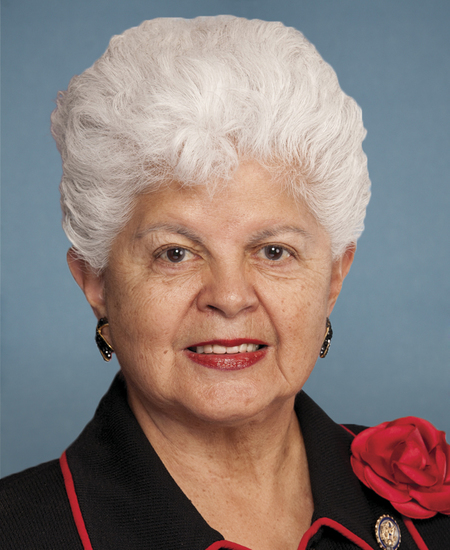
Rep. Grace F. Napolitano
Sponsored bills
Summer Meals Act of 2021 This bill revises provisions related to the Summer Food Service Program (SFSP) of the Department of Agriculture (USDA), which provides meals to children and teens in low-income areas during the summer months when school is not in session. The bill redefines areas in which poor economic conditions exist , where the SFSP may operate, as areas in which at least 40% (currently, 50%) of the children have been determined to be eligible for free or reduced price school meals under the school lunch and breakfast programs. The bill reimburses service institutions (other than school food authorities) for up to one meal and one snack per child each day during after-school hours, weekends, and school holidays during the regular school calendar. Currently, such institutions are reimbursed for meals and snacks served to children over the summer months or to children who are on vacation under a continuous school calendar. USDA may award competitive grants to service institutions to increase participation in the summer food service program for children at congregate feeding sites through innovative approaches to limited transportation and mobile meal trucks. Service institutions that are participating in the summer food service program for children may serve up to three meals, or two meals and one snack, during each day of operation. Currently, this option is reserved for camps and service institutions that serve meals primarily to migrant children.
Billionaire Minimum Income Tax Act This bill imposes a minimum tax on individual taxpayers whose net worth for the taxable year exceeds $100 million. The tax is equal to 20% of the sum of a taxpayer's taxable income, plus net unrealized gains for the taxable year. The tax may not exceed 40% of the amount by which the taxpayer's net worth exceeds $100 million.
National Plan to End Parkinson's Act This bill requires the Department of Health and Human Services (HHS) to carry out a project to prevent and cure Parkinson's disease (a progressive brain disorder that causes unintended or uncontrollable movements) and related conditions. Among other components of the project, HHS must (1) implement and periodically update a national plan to coordinate and guide efforts to prevent and cure the disease; (2) improve diagnosis, treatment, and care of those with the disease; and (3) address health and other disparities related to the disease. HHS must also conduct annual assessments on the preparation for and response to the increased burden of Parkinson's disease. In addition, the bill establishes a council, comprised of federal and nonfederal stakeholders, to advise HHS on and make recommendations concerning the prevention and cure of Parkinson's disease. The bill's provisions terminate at the end of calendar year 2035.
Keeping Girls in School Act This bill authorizes the U.S. Agency for International Development (USAID) to enter into agreements to address social, cultural, health, and other barriers that adolescent girls face in accessing quality secondary education. The USAID shall seek to ensure that such activities meet various requirements related to monitoring and evaluating outcomes, collecting data, and using specified indicators and methodologies for international basic education. The Department of State shall periodically update and report to Congress a publicly available U.S. global strategy to empower adolescent girls, and the USAID shall periodically report to Congress on the activities initiated under this bill and efforts to monitor and evaluate such activities.
Gabriella Miller Kids First Research Act 2.0 This bill reauthorizes through FY2027 a pediatric disease research initiative within the National Institutes of Health (NIH) and requires the NIH to coordinate pediatric research activities to avoid duplicative efforts. Additionally, the Department of Health and Human Services must report, within five years, to Congress about research funded through the initiative.
This resolution recognizes the importance of Chicano Heritage Month and asserts that Mexican Americans enhance the diversity and strength of the United States.
Shirley Chisholm Congressional Gold Medal Act This bill provides for the posthumous presentation of a Congressional Gold Medal in commemoration of Shirley Chisholm, in recognition of her activism, independence, and groundbreaking achievements in politics, election as the first African American woman in Congress, and campaign to be the first African American to gain the nomination of a major political party for President of the United States. Following its award, the gold medal shall be given to the Smithsonian Institution where it shall be available for display and research.
Overdraft Protection Act of 2021 This bill prohibits a financial institution from engaging in unfair or deceptive acts in connection with overdraft coverage. Each financial institution that offers overdraft coverage for accounts must disclose overdraft coverage fees. It must also disclose that the consumer's transaction may be declined if there are insufficient funds in the related account, and the consumer will not be charged a fee if such transaction is declined. A financial institution must provide certain other disclosures regarding its overdraft protection program, including prompt notification of the account's overdraft status. The bill limits the number of overdraft fees a consumer may be charged each month and year, and provides that such fees must be reasonable. The bill prohibits an overdraft coverage fee if the overdraft results solely from a debit hold amount that exceeds the actual dollar amount of the transaction. The bill also prohibits a financial institution from charging a non-sufficient fund fee for any automated teller machine or debit card transaction, or reporting negative information regarding consumer use of overdraft coverage to any consumer reporting agency when the overdraft amounts and coverage fees are paid under the terms of an overdraft coverage program.
Behavioral Health Coverage Transparency Act of 2022 This bill increases oversight of the insurance coverage parity requirements for mental health and substance use disorder, including providing a process for auditing insurance providers and filing formal complaints for violations of the requirements.