

Housing for All Act of 2022 This bill modifies existing, and creates new, grants and programs concerning affordable housing and homelessness. In particular, the bill authorizes federal funding of the Housing Trust Fund, which supports affordable housing activities. Currently, contributions to the fund come from the earnings of Fannie Mae and Freddie Mac. Additionally, the bill (1) expands eligibility for housing choice vouchers, which provide rental assistance to low-income individuals; and (2) entitles certain individuals to the vouchers. Other matters addressed in the bill include permanently authorizing the U.S. Interagency Council on Homelessness (which terminates on October 1, 2028) and modifying existing programs that support housing for the elderly, individuals with disabilities, and individuals experiencing homelessness or at risk of homelessness. The bill also creates various housing-related grant programs to, for example, support overnight parking for individuals who live in vehicles and no-cost legal assistance with evictions for low-income individuals. The bill also incorporates housing into certain transportation grants and programs.
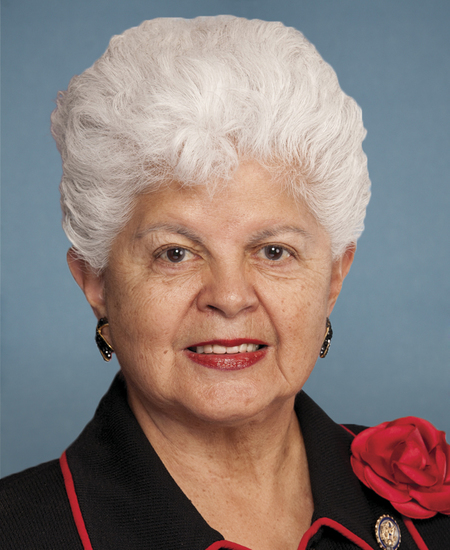
Rep. Grace F. Napolitano
Sponsored bills
Latonya Reeves Freedom Act of 2022 This bill prohibits government entities and insurance providers from denying community-based services to individuals with disabilities that require long-term service or support that would enable such individuals to live in the community and lead an independent life. Specifically, these entities may not discriminate against such individuals in the provision of community-based services by such actions as imposing prohibited eligibility criteria, cost caps, or waiting lists or failing to provide a specific community-based service. Additionally, community-based services must be offered to individuals with such disabilities prior to institutionalization. Institutionalized individuals must be notified regularly of community-based alternatives. The bill requires the Department of Justice to issue regulations requiring government entities and insurance providers to offer community-based long-term services to individuals with such disabilities who would otherwise qualify for institutional placement. Government entities must ensure sufficient availability of affordable, accessible, and integrated housing that is not a disability-specific residential setting or a setting where services are tied to tenancy. Regulations shall also (1) require government entities and insurance providers to perform self-evaluation on current services, policies, and practices and concerning compliance with requirements of this bill; and (2) require government entities to submit a transition plan. The bill provides funds for FY2022 for the Department of Health and Human Services to provide technical assistance with respect to transition plans. The bill allows civil actions by individuals subjected to, or about to be subjected to, a violation of its requirements.
Climate Resilience Workforce Act This bill sets forth provisions to establish a climate resilience workforce, a national climate resilience action plan, an Office of Climate Resilience within the White House, and related efforts and entities.
This bill extends posthumous citizenship to an otherwise qualified noncitizen who enlisted, reenlisted, extended enlistment, or was inducted into the U.S. Armed Forces in the Philippines and died as a result of such active duty service during the period beginning September 1, 1939, and ending December 31, 1946. The executive department under which an individual served must determine whether the individual satisfied the requirements for posthumous citizenship under this bill. Specified naturalization and other posthumous benefit provisions shall not apply to the surviving spouse, child, or parent of such an individual.
Repeal Existing Policies that Encourage and Allow Legal HIV Discrimination Act of 2022 or the REPEAL HIV Discrimination Act of 2022 This bill addresses federal and state laws, policies, and regulations that may burden people living with HIV/AIDS. Specifically, the bill directs the Department of Justice (DOJ), the Department of Health and Human Services (HHS), the Department of Defense (DOD), and the White House Office of National AIDS Policy to initiate a national review of federal (including military) and state laws, policies, regulations, and judicial precedents and decisions regarding criminal and related civil commitment cases involving people living with HIV/AIDS. DOJ must transmit to Congress and make publicly available the results of such review with related recommendations. The White House Office of National AIDS Policy must also develop and publicly release guidance to assist states with handling relevant cases. The office, DOJ, HHS, and DOD must transmit to the President and Congress any proposals necessary to implement adjustments to federal laws, policies, or regulations. This bill shall not be construed to discourage the prosecution of individuals who act with the intent to do harm to another individual by intentionally transmitting HIV.
Stop Wall Street Looting Act This bill generally revises provisions related to the regulation of private equity funds. Among other things, the bill increases financial and legal liability for these funds in the event of certain violations of law, gives employee compensation higher priority in bankruptcies, and generally prohibits the payment of dividends for two years from an acquired asset firm to a private equity fund. The bill modifies the tax treatment of carried interest—compensation that is typically received by a partner of a private equity fund and is based on a share of the fund's profits. (Under current law, carried interest is taxed as investment income rather than at ordinary income tax rates.) Among other things, the bill treats as ordinary income the net capital gain with respect to a private equity fund.
Lifting Immigrant Families Through Benefits Access Restoration Act of 2021 or the LIFT the BAR Act of 2021 This bill repeals certain limits on the eligibility of noncitizens who lawfully reside in the United States for federal means-tested programs, including Medicaid, the Children's Health Insurance Program (CHIP), programs funded through Temporary Assistance for Needy Families (TANF) grants, Supplemental Security Income (SSI), and certain nutrition and housing programs.
Journalist Protection Act This bill establishes new criminal offenses for intentional acts (or attempts to commit acts) that cause bodily injury to a journalist.
Higher Education Dream Act of 2021 This bill prohibits institutions of higher education that receive federal student aid from discriminating against Dreamer students (e.g., students who have been granted Deferred Action for Childhood Arrivals status) based on their immigration status, including charging out-of-state tuition to students who would qualify as residents of the state. The bill also makes Dreamer students eligible for federal financial aid. The bill prohibits the use or publication of certain identifiable information related to such students, subject to civil penalties.
Ending Homelessness Act of 2021 This bill expands the housing choice voucher program and provides assistance to homeless individuals and families. Specifically, the bill provides FY2022-2025 funding for the expansion of the housing choice voucher program for certain extremely low income families. Furthermore, beginning in FY2026, the bill creates and funds an entitlement to housing choice vouchers for certain extremely low income families. Eligibility for the entitlement expands annually, extending to low-income families by FY2030. The bill also reduces the geographic area used to calculate an area's fair market rent for purposes of voucher payment standards and prohibits the use of criminal history in determining eligibility for certain housing assistance. Additionally, the bill prohibits housing discrimination on the basis of a renter's source of income or a renter's veteran status. The bill also provides additional FY2022-FY2026 funding for the Department of Housing and Urban Development (HUD) to assist the homeless, including to award emergency relief grants in jurisdictions with the highest need and award grants to provide outreach and coordinate services. Furthermore, the bill provides additional FY2022-FY2026 funding for the Housing Trust Fund, which provides affordable housing for extremely low-income and very low-income families. While this additional funding is available, HUD must ensure that priority for occupancy in assisted units is given to individuals and families who are homeless. Finally, the bill permanently reauthorizes certain homeless assistance grants and makes permanent the U.S. Interagency Council on Homelessness.