

Maddy summaryHRES 36 is a symbolic resolution supporting Korean American Day, introduced by multiple House members on January 13, 2023. It honors the 120th anniversary of the 1903 arrival of the first large wave of Korean immigrants to the U.S. and recognizes Korean Americans' contributions to U.S. society, economy, and the U.S.-South Korea alliance. The resolution urges all Americans to observe Korean American Day to appreciate these contributions but does not create new laws or affect any specific group through policy changes. It is a commemorative measure without binding requirements.
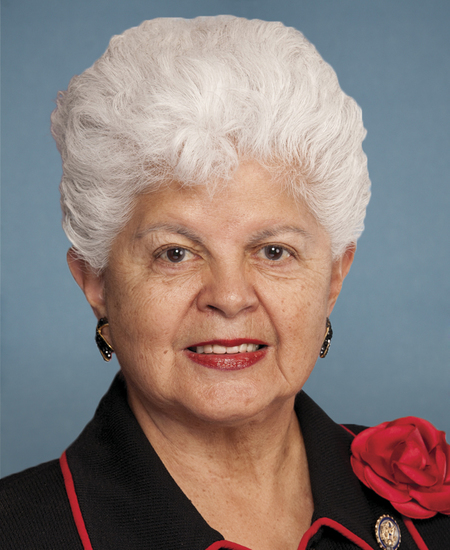
Rep. Grace F. Napolitano
Sponsored bills
Maddy summaryHRES 30 is a ceremonial House resolution recognizing two milestones: the 94th anniversary of Dr. Martin Luther King, Jr.'s birth (January 15, 1929) and the 40th anniversary of the federal Martin Luther King, Jr. Holiday (observed January 16, 2023). It contains no policy changes or binding requirements, as it is purely commemorative. The resolution urges the House to observe both dates and encourages the public to honor Dr. King’s legacy and his vision of equality. It does not affect any individuals, groups, or government programs.
This resolution condemns all acts of political violence, as well as attacks on health care facilities, health care personnel, and patients. The resolution also states that all people have the freedom to access reproductive health care services and medical advice without fear of violence, intimidation, or harassment. Finally, the resolution calls on the Biden Administration to use all appropriate authorities to uphold public safety, protect health care facilities, and safeguard health care personnel and patients.
This joint resolution proposes a constitutional amendment authorizing Congress and the states to (1) regulate and impose reasonable viewpoint-neutral limitations on the raising and spending of money by candidates and others to influence elections; and (2) regulate and enact public campaign financing systems, including those designed to restrict the influence of private wealth by offsetting the raising and spending of money by candidates and others with increased public funding. The amendment grants Congress and the states the power to implement and enforce this amendment by legislation. They are allowed to distinguish between natural persons and corporations or other artificial entities created by law, including by prohibiting such entities from spending money to influence elections.
Maddy summaryHR 51, the Washington, D.C. Admission Act, would admit Washington, D.C. as the 51st state, named "Washington, Douglass Commonwealth," granting its residents full representation in Congress with two Senators and one Representative. The bill establishes procedures for admission, including elections for state officials, with the state initially having one Representative until the next congressional apportionment. It would create a "Capital" area (including the White House, Capitol, and other key federal buildings) that remains under federal jurisdiction as the seat of the U.S. government, while the rest of the District becomes the new state. The bill also includes provisions to ensure continuity of federal services, property management, and legal procedures during the transition to statehood.
Commission to Study and Develop Reparation Proposals for African Americans Act This bill establishes the Commission to Study and Develop Reparation Proposals for African Americans. The commission must (1) compile documentary evidence of slavery in the United States; (2) study the role of the federal and state governments in supporting the institution of slavery; (3) analyze discriminatory laws and policies against freed African slaves and their descendants; and (4) recommend ways the United States may recognize and remedy the effects of slavery and discrimination on African Americans, including through a formal apology and compensation (i.e., reparations). The commission consists of individuals from civil society and reparations organizations and individuals appointed by the President and congressional leadership; Members of Congress and governmental employees may not serve on the commission. The commission may hold hearings, subpoena witnesses and records, and contract with other entities to conduct its work. The commission must submit its final report within 18 months of its first meeting.
Cover Outstanding Vulnerable Expansion-eligible Residents Now Act or the COVER Now Act This bill establishes a demonstration program to allow local governments to provide health benefits to the Medicaid expansion population in states that have not expanded Medicaid. Under the program, local governments may provide coverage for individuals who are newly eligible for Medicaid under the Patient Protection and Affordable Care Act (i.e., the Medicaid expansion population) for a maximum of 10 years, or until their respective states expand Medicaid. The bill provides a 100% federal matching rate for the first three years of program participation. The bill prohibits states from taking certain actions against participating localities, such as withholding funding, increasing taxes, or restricting provider participation. States that violate these requirements are subject to certain funding penalties.
Sustaining America's Fisheries for the Future Act of 202 2 This bill sets forth and revises various provisions relating to fisheries conservation and management, including to increase the adaptive capacity of fishery management to the impacts of climate change, implement working waterfront plans, establish an innovation prize for data collection technology used in fisheries management, and establish a national standardized reporting program for bycatch.
Ocean-Based Climate Solutions Act of 2022 This bill establishes a variety of requirements to reduce carbon emissions and protect oceans, coastal habitats, marine mammals, and fish populations from climate change and other threats.
Insular Area Climate Change Act This bill provides support through programs and financial assistance for climate change planning, mitigation, adaptation, and resilience in U.S. territories (American Samoa, Guam, Northern Mariana Islands, Puerto Rico, and the U.S. Virgin Islands) and the Freely Associated States (Micronesia, Marshall Islands, and Palau). For example, the bill requires the Technical Assistance Program of the Department of the Interior's Office of Insular Affairs to provide technical assistance for climate change planning, mitigation, adaptation, and resilience to the territories and Freely Associated States. It also establishes an Insular Area National Program Office within the Environmental Protection Agency to build and strengthen infrastructure to withstand natural disasters, expand renewable energy and energy efficiency, and provide technical assistance in the territories and Freely Associated States. Additionally, the bill establishes several grant programs to assess and reduce the impacts of climate change, expand renewable energy and energy efficiency, or expand sustainable infrastructure to withstand natural disasters in the territories and Freely Associated States.