

Maddy summaryThe Stop Corporate Capture Act requires agencies to disclose conflicts of interest when industry-funded studies or research are submitted for rulemaking consideration. It mandates that such studies be made publicly available and requires agencies to assess the social equity impacts of proposed rules. The bill creates an Office of the Public Advocate to help improve public participation in rulemaking, particularly for historically excluded groups. These provisions aim to increase transparency in regulatory decision-making and ensure rulemaking considers broader public interests beyond corporate interests.
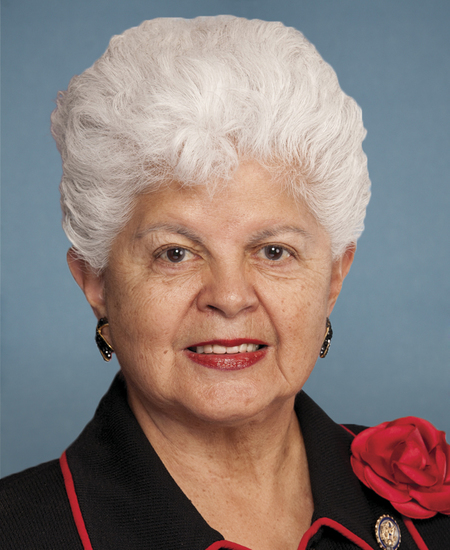
Rep. Grace F. Napolitano
Sponsored bills
Maddy summaryHR 1511 amends Section 249 of the Immigration and Nationality Act to change eligibility criteria for certain immigration provisions. The bill replaces outdated language about entry dates (prior to July 1, 1924, or January 1, 1972) with a requirement that applicants must have been long-term residents of the United States for at least seven years before applying. This change would directly affect individuals seeking immigration status under the amended provisions who meet the new residency timeline. The bill is procedural in nature, updating the legal definition of qualifying residency without creating new benefits or restrictions. (Note: The bill's title incorrectly references the "Immigration Act of 1929," which never existed; the actual law amended is part of the 1952 Immigration and Nationality Act.)
Maddy summaryHR 1452 requires the Coast Guard to provide specific water quality data about approved ballast water systems to any state, the District of Columbia, or U.S. territory upon request. The bill mandates the Coast Guard to share detailed information on both "challenge" (pre-treatment) and "post-treatment" water quality, including biological organism concentrations, for systems with Coast Guard type approval. This applies to data related to systems approved under federal regulations for managing ballast water on ships. The provision aims to improve transparency about ballast water management system performance for environmental oversight by state and local authorities.
Maddy summaryHRES 200 is a non-binding House resolution condemning two mass shootings in California: 11 victims in Monterey Park (January 21, 2023) at a Lunar New Year celebration and 7 victims in Half Moon Bay (January 23, 2023) at a farm. It honors all victims - primarily Asian-American seniors and immigrant farmworkers - expresses condolences to their families, and reaffirms the House’s commitment to supporting Asian-American and Pacific Islander communities. The resolution specifically addresses the rise in anti-Asian hate crimes during the pandemic and recognizes the vulnerability of immigrant communities. As a symbolic gesture, it does not create new laws or allocate funding but formally condemns the violence and affirms solidarity.
Don't BLock Our Communities Act or the D-BLOC Act This bill prohibits railroad carriers from obstructing travel at public highway-rail crossings for more than 10 minutes, except under limited circumstances (e.g., safety issues). The Department of Transportation (DOT) must investigate and send notices to carriers of repeated incidents; carriers are subject to civil penalties for violations that occur after having received notice. Additionally, each Class I railroad carrier must publish on its home page an active link to the blocked highway-rail crossing portal that is maintained by the Federal Railroad Administration. The portal is used to (1) collect information from the public, including first responders, regarding blocked highway-rail grade crossing events; (2) solicit the apparent cause of the blocked crossing and provide examples of common causes of blocked crossings; (3) provide each complainant with the contact information for reporting a blocked crossing to the relevant railroad; and (4) encourage each complainant to report the blocked crossing to the relevant railroad.
Maddy summaryThis bill requires airlines to train flight crews and maintenance staff on identifying and responding to cabin smoke/fume incidents, implement a standardized reporting system for such events, and install real-time air quality monitors to detect dangerous contaminants like carbon monoxide. It directly affects airline crews, maintenance technicians, and passengers by mandating new safety protocols and equipment on commercial flights. Key provisions include annual training on fume sources and health impacts, detailed incident reports covering flight details and symptoms, and public databases of reported events (with personal information redacted). The law also mandates aircraft manufacturers to include monitoring procedures in flight manuals and requires the FAA to investigate incidents involving health symptoms. These changes aim to improve cabin air safety through better detection, reporting, and response systems.
Maddy summaryHR 1322 expands federal retirement benefits to include specific non-traditional law enforcement roles. It adds IRS employees focused on tax collection, U.S. Postal Inspection Service staff, Department of Veterans Affairs police officers, and U.S. Customs and Border Protection seized property specialists to the definition of "law enforcement officer" under federal retirement systems. Current employees in these newly covered positions must elect to pay deposits for past service to receive full retirement credit, while their agencies must contribute additional funds for that past service. The bill also temporarily prevents mandatory separation for current law enforcement officers for three years after enactment.
Maddy summaryHR 1247 would award a Congressional Gold Medal to the Freedom Riders collectively, honoring their pivotal role in challenging segregation in interstate travel during the Civil Rights movement. The medal, to be struck by the U.S. Mint and displayed at the Smithsonian Institution, recognizes their nonviolent protests that led to the 1961 federal ban on segregation in interstate public facilities. This is a symbolic tribute with no legal effect, as the bill does not create new policies or alter existing laws.
Maddy summaryHR 1244 authorizes Congress to award a gold medal collectively to Africans and their descendants who were enslaved in the U.S. from 1619 to 1865, recognizing their contributions to America's economic foundation. The bill directs the Treasury Secretary to design and strike the medal, which will be permanently displayed at the Smithsonian's National Museum of African American History & Culture. It also permits the sale of bronze duplicates to cover costs, with proceeds going to the U.S. Mint. This is a commemorative measure, not a policy change, focusing on symbolic recognition of historical contributions.
Maddy summaryHR 1263, the Transformation to Competitive Integrated Employment Act, aims to end the use of special certificates that allow employers to pay people with disabilities below minimum wage or customary rates for similar work. The bill requires employers currently using these certificates to transition to competitive integrated employment where individuals with disabilities receive at least minimum wage or the customary rate for similar work. It creates grant programs for states and specific employers to support this transition, with a timeline to phase out special certificates over four years. The act also establishes reporting requirements and technical assistance to help individuals with disabilities find and retain integrated employment.