

Maddy summaryHR 1139, the GUARD VA Benefits Act, amends federal law to strengthen penalties for individuals or organizations charging veterans unauthorized fees when helping with VA benefit claims. It directly affects veterans seeking assistance with VA claims and the representatives (like advocates or attorneys) who might charge them fees. The bill adds a new provision making it a violation to solicit, charge, or receive any fee for preparing, presenting, or prosecuting VA claims, punishable by fines under Title 18. This change specifically targets unauthorized fee-charging while excluding fees covered under existing exceptions in sections 5904 or 1984 of the law.
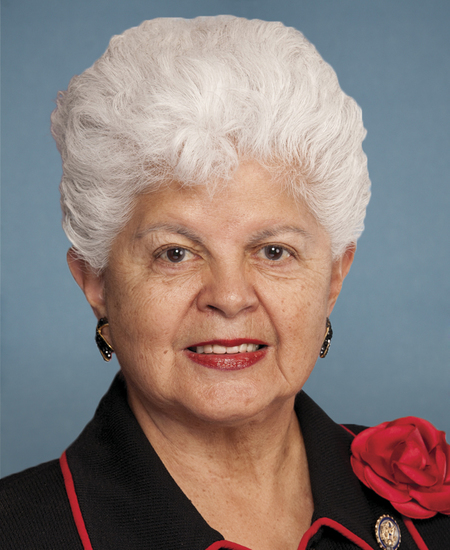
Rep. Grace F. Napolitano
Sponsored bills
Protect Our Workers from Exploitation and Retaliation Act or the POWER Act This bill expands protections for non-U.S. nationals ( aliens under federal law) who are victims of crimes or serious workplace violations. U visas (nonimmigrant visas for certain crime victims) shall be available to individuals who have suffered substantial harm related to workplace claims. The Department of Homeland Security (DHS) may allow a non-U.S. national to work and temporarily remain in the United States if the individual (1) has filed for a U visa or T visa (nonimmigrant visas for victims of human trafficking), or (2) has filed or is a material witness to a workplace claim or civil claim arising from criminal activity and is helpful to authorities investigating the claim. The bill removes direct numerical limitations on U visas. A notice to an individual to appear at removal proceedings must contain specified certifications, if the individual was taken (1) at a facility where a workplace claim has been filed, or (2) as a result of information provided in retaliation against individuals exercising their legal rights. Specifically, the notice must state that (1) an adverse immigration determination may not be based solely on information furnished by the party engaged in the unlawful activity, and (2) the individual's information may not be disclosed. Such an individual may not be removed until law enforcement has had a chance to interview the individual. Removal proceedings against an individual who has filed or is a witness to a workplace claim must be stayed until the resolution of the claim, with limited exceptions.
Maddy summaryHR 1831 would award Billie Jean King a Congressional Gold Medal to honor her lifelong advocacy for equal rights in sports and society. The bill directs the Secretary of the Treasury to strike the medal and have it presented by congressional leaders, recognizing her pivotal role in advancing women's equality through tennis (including founding the Women’s Tennis Association and securing equal prize money) and her broader impact on society through initiatives like Title IX advocacy.
Maddy summaryThis bill changes how U.S. foreign aid is provided to international health organizations. It prevents U.S. agencies from denying aid to foreign non-governmental organizations (NGOs) solely because they offer health services (like counseling or referrals) using their own funds, as long as those services follow local laws. It also stops applying stricter rules about how foreign NGOs can use their own funds for advocacy compared to U.S. NGOs receiving similar aid. The bill directly affects foreign health-focused NGOs that rely on U.S. foreign assistance funding.
Maddy summaryHR 1794 authorizes the minting of commemorative coins to honor the 2028 Los Angeles Olympic and Paralympic Games. It specifies four coin types ($5 gold, $1 silver, half-dollar clad, and proof silver $1) with defined weights, sizes, and mintage limits (e.g., up to 100,000 gold coins). A surcharge is added to each coin sale (e.g., $35 for gold coins), with all surcharge funds directed to the U.S. Olympic and Paralympic Properties to support legacy programs and the Games' operations. The coins must be issued only during 2028 and are legal tender, though the bill focuses solely on commemorative coinage, not policy changes.
Office of Manufacturing and Industrial Innovation Policy Act of 202 3 This bill addresses the manufacturing capacity of the United States. The bill establishes the Office of Manufacturing and Industrial Innovation Policy, led by the Chief Manufacturing Officer, to serve as a source of manufacturing and industrial innovation analysis and judgment for the President with respect to the major policies, plans, and programs of the federal government. The office must establish a national strategic plan for manufacturing and industrial innovation that identifies critical needs to the manufacturing sector, including emergency readiness and resilience. Additionally, the bill establishes the President's Advisory Committee on Manufacturing and Industrial Innovation to promote regular communication between the federal government and the U.S. manufacturing sector. The Government Accountability Office must report on the efforts of the office along with recommendations for improvements. The bill also establishes the Federal Strategy and Coordinating Council on Manufacturing and Industrial Innovation within the executive branch to be chaired by the President to coordinate manufacturing and industrial innovation policy. Further, the bill establishes the Manufacturing and Industrial Innovation Policy Institute to assemble information relating to significant manufacturing and industrial development and trends in research and applications. Finally, the bill establishes the National Medal of Manufacturing and Industrial Innovation to be awarded for outstanding contributions to knowledge in manufacturing and industrial innovation.
Maddy summaryHR 1723, the Abortion is Health Care Everywhere Act of 2023, amends the Foreign Assistance Act to remove restrictions on using U.S. foreign aid funds for abortion services. It explicitly allows U.S. foreign assistance programs to fund comprehensive reproductive health care, including abortion services, training, and equipment. This change directly affects U.S. international health programs and recipient countries, enabling them to integrate safe abortion care into broader reproductive health services. The bill aims to align U.S. policy with global health guidelines by making abortion services a standard part of reproductive health care funded through foreign assistance.
California Clean Coast Act of 2023 This bill prohibits oil and gas exploration and leasing in areas of the outer Continental Shelf located off the coast of California.
Maddy summaryThe Outdoors for All Act establishes a federal grant program to fund outdoor recreation projects in underserved communities. It authorizes the Secretary of the Interior to award grants to eligible entities (like states, cities, tribal organizations, or nonprofits) for acquiring land, developing parks, or renovating outdoor facilities in qualifying urban areas (population 25,000+ or tribal lands) or low-income communities (where 30%+ of residents have incomes at or below 80% of local median income or 200% of the federal poverty line). Grants require a 100% cash or in-kind match (with limited waivers), prohibit funding for indoor facilities or maintenance, and prioritize projects enhancing park access, engaging youth, creating jobs, or improving environmental benefits like reducing urban heat islands. The program mandates annual reporting and focuses on concrete community outcomes rather than speculative results.
Bipartisan Ban on Congressional Stock Ownership Act of 2023 This bill prohibits Members of Congress and their spouses from owning or trading stocks, bonds, commodities, futures, or any other form of security. Each current Member must divest within 180 days after the bill is enacted and each new Member must divest within 180 days after becoming a Member. However, Members and their spouses have 5 years to divest from specified complex investment vehicles. The bill does not apply to certain investments, such as investments in widely held investment funds that are diversified and do not present a conflict of interest and investments held in government employee retirement plans. A Member or spouse who violates the bill may be subject to a fine of up to $50,000 for each violation. The bill permits a Member or spouse who is required to divest property under the bill to avoid recognizing gain for income tax purposes from the sale of that property to the extent that the Member or spouse purchases permitted bonds or diversified investment funds within 60 days of the divestiture.