

Maddy summaryHR 2715, the Keep Our PACT Act, mandates increased federal funding for two key education programs. It requires specific annual funding levels for Title I of the Elementary and Secondary Education Act (which supports high-poverty schools) and the Individuals with Disabilities Education Act (IDEA), guaranteeing students with disabilities access to a high-quality education. The bill sets mandatory funding amounts that rise each year, with IDEA funding gradually increasing to reach 40% of the national average per-pupil expenditure for students with disabilities by fiscal year 2033. This directly affects school districts receiving Title I funds and states administering IDEA services for students with disabilities. The bill fulfills a prior commitment made under the Individuals with Disabilities Education Improvement Act of 2004.
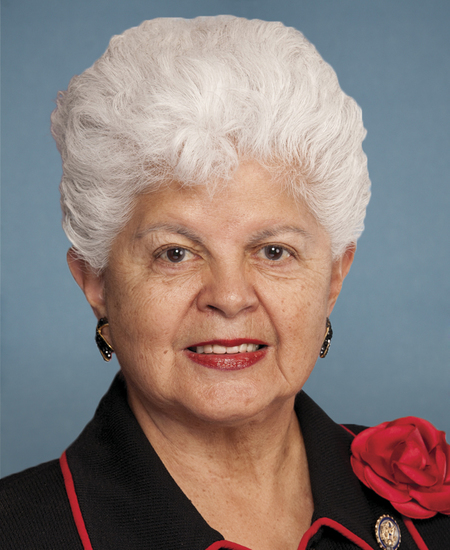
Rep. Grace F. Napolitano
Sponsored bills
Maddy summaryHR 2725, the "Do No Harm Act," amends the Religious Freedom Restoration Act (RFRA) to clarify that RFRA does not apply when federal laws protect against discrimination or promote equal opportunity. It specifically exempts protections under the Civil Rights Act, Americans with Disabilities Act, workplace benefits like leave, child labor safeguards, and healthcare access from RFRA challenges. The bill also clarifies that RFRA does not block private lawsuits between individuals, applying only to cases involving government entities. This amendment ensures that existing federal civil rights and workplace protections remain enforceable under RFRA.
Maddy summaryThe Latonya Reeves Freedom Act of 2023 strengthens the Americans with Disabilities Act's requirement that individuals with disabilities receive long-term services and supports in community settings rather than institutions. It defines "community-based" services to include specific housing options where individuals with disabilities can live independently with maximum control over their lives, including access to integrated housing, employment, and community participation. The bill requires states to develop transition plans to move people from institutional settings to community-based services within 12 years, with measurable annual targets for reducing institutionalization. It establishes enforcement mechanisms through the Department of Justice and Department of Health and Human Services to ensure compliance with these requirements.
Return to Prudent Banking Act of 2023 This bill generally separates the activities of commercial banks and investment banks. Specifically, the bill prohibits an insured depository institution from affiliating with any person or firm engaged principally in, among other things, issuing or selling stocks, bonds, notes, or other securities. Officers, directors and employees of securities firms are prohibited from simultaneously serving as an officer, director, or employee of a depository institution, except in specified circumstances. No entity issuing or selling stocks, bonds, or other securities may engage in the business of receiving deposits, which includes the establishment and maintenance of transaction accounts. The bill declares that Congress ratifies the interpretation by the Supreme Court in Investment Company Institute v. Camp (ICI) of specified statutory language regarding permissible activities of banks and securities firms. It further declares that the reasoning of the Court in that case shall continue to apply to the limitations placed upon security affiliations as enacted by this bill. No federal banking agency or federal court shall issue an interpretation regarding such security affiliations that is narrower than that of the Court in ICI.
Maddy summaryThe Puppy Protection Act of 2023 sets new standards for businesses that sell dogs (dealers), directly affecting pet stores and breeders operating under the Animal Welfare Act. It requires specific housing with space allowances based on dog size (e.g., 12-30 square feet per dog), temperature control (45-85°F), clean food twice daily, and daily exercise or socialization with humans/dogs for at least 30 minutes. The bill also mandates annual veterinary exams including dental care, strict breeding limits (e.g., age restrictions, maximum 2 litters in 18 months), and efforts to place retired breeding dogs in homes instead of selling them to other breeders. Regulations must be finalized within 18 months of enactment.
Maddy summaryHR 2665 delays Medicaid payment reductions for safety net hospitals by two years, changing the effective date from 2024 to 2026 under Section 1923(f)(7)(A) of the Social Security Act. This bill directly affects hospitals that serve high numbers of low-income and uninsured patients, providing them with additional time before facing reduced federal Medicaid payments. The key mechanism is a technical amendment to existing law, postponing an already scheduled payment adjustment without altering funding levels or eligibility. As a procedural bill, it does not create new programs or change hospital requirements.
Maddy summaryThe Fairness to Freedom Act of 2023 guarantees the right to government-funded legal counsel for immigrants facing removal, exclusion, deportation, or bond proceedings who cannot afford private representation. It establishes the Office of Immigration Representation to oversee this system, with Local Boards in each region managing appointments and ensuring quality representation through public defender organizations, community defender organizations, and attorney panels. The bill requires counsel to be appointed within 24 hours for detained individuals, ensures continuous representation through all proceedings, mandates minimum funding based on a prosecution-defense ratio, and prohibits using appointed counsel as a basis for public charge determinations.
Maddy summaryThe "For the 99.5 Percent Act" (HR 2676) would increase estate and gift taxes for large estates by lowering the basic exclusion amount from $750,000 to $3.5 million and implementing higher tax rates for estates over that threshold. It would limit discounts on estate valuations for family-owned businesses and nonbusiness assets, require minimum 10-year terms for certain trusts, and eliminate tax exemptions for transfers to certain beneficiaries. These changes would directly affect individuals with estates valued over $3.5 million, particularly those using complex trust structures to minimize tax liability. The bill aims to increase tax revenue from the top 0.5% of estates by making it harder to avoid estate taxes through various valuation techniques and trust arrangements. The changes would take effect for estates of decedents dying, and gifts made, after December 31, 2023.
Maddy summaryThe Optimizing Postpartum Outcomes Act of 2023 requires the Health and Human Services Secretary to issue guidance within one year on covering pelvic health services (like pelvic floor exams and physical therapy) during the postpartum period under Medicaid and CHIP programs. This guidance will include best practices for payment models, financing options, and standardized terminology to improve access for postpartum women. It also mandates a GAO study on coverage gaps for postpartum services and funds a new CDC-led education campaign to train healthcare providers and inform postpartum women about pelvic health care. The bill directly affects postpartum women enrolled in Medicaid or CHIP, aiming to standardize and expand access to these specific health services.
Maddy summaryHR 2441, the Servicemembers and Veterans Empowerment and Support Act of 2023, improves support for veterans who experienced military sexual trauma by reforming disability claims processing and expanding access to mental health care. The bill establishes new standards for evaluating claims involving military sexual trauma, requiring specialized VA teams to process these claims and creating clearer guidelines for evidence and communication with veterans. It expands eligibility for counseling and treatment to include all former reserve members and creates a pilot program providing interim mental health care when veterans face wait times exceeding 14 days for residential treatment. The legislation also mandates a Comptroller General study on access to care and requires the VA to provide better communication and support throughout the claims process.