

Maddy summaryHR 4914, the South Asian Heart Health Awareness and Research Act of 2023, provides $2 million annually from 2024-2028 to fund grants for states to address heart disease disparities in communities disproportionately affected by it, specifically targeting South Asian populations in the U.S. The grants require states to develop culturally tailored heart health materials (like nutrition and exercise programs), support community organizations serving these groups, improve research methodologies to better include South Asian participants, and conduct studies on cardiovascular disease and type 2 diabetes in at-risk communities. States must report on these activities and heart disease data to Congress within two years of the bill's enactment. The legislation directly affects South Asian communities by aiming to reduce health disparities through targeted awareness, community support, and inclusive research.
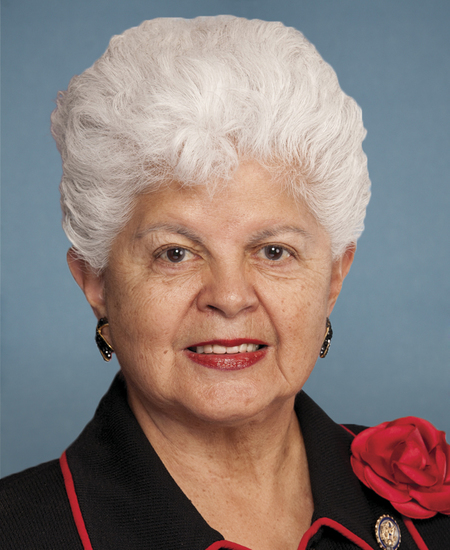
Rep. Grace F. Napolitano
Sponsored bills
Maddy summaryThis bill creates a federal loan repayment program to help mental health professionals (like counselors, psychologists, and social workers) repay student loans. It directly affects individuals who have taken out education loans for mental health degrees and agree to work in underserved areas. Key provisions require participants to commit to 3-6 years of full-time service in designated mental health shortage areas or counties with high overdose death rates, with funding increased to $100 million annually for 2023-2032. The program expands eligibility to cover all mental health-related fields, including behavioral health roles.
Maddy summaryHR 4884, the Mental Health for Latinos Act of 2023, directs the U.S. Department of Health and Human Services to create a culturally tailored mental health outreach strategy for Hispanic and Latino communities. The strategy must address language needs, reduce stigma, provide information on culturally appropriate treatments, and consider pandemic impacts, developed with community input. It requires annual reports to Congress on the strategy's effectiveness and authorizes $1 million for fiscal year 2024. The bill directly affects Hispanic and Latino populations by aiming to improve access to relevant mental health resources and outcomes.
Maddy summaryThe Communications, Video, and Technology Accessibility Act of 2023 requires video programming providers to provide closed captions and audio description for all online video content, including live and near-live programming. It mandates that video playback devices (such as smart TVs and streaming devices) include accessible controls for captions and audio description, with specific requirements for labeling and discoverability. The bill establishes advisory committees to develop technical standards for accessibility and updates requirements for video conferencing services to include built-in captioning and compatibility with assistive technologies. These provisions directly affect video service providers, device manufacturers, and video conferencing platforms, aiming to improve accessibility for people who are deaf, hard of hearing, blind, or DeafBlind.
Maddy summaryHR 4987, the Democracy Restoration Act of 2023, would restore voting rights for people with felony convictions who are living in their communities (not incarcerated), directly affecting approximately 4.6 million disenfranchised Americans. The bill requires states to automatically restore voting rights upon completion of sentences, including probation or parole, without requiring payment of fines or fees. It mandates notification to individuals about their restored voting rights and prohibits states from conditioning voting rights on payment of legal financial obligations. The legislation addresses the disproportionate impact of voting restrictions on racial minorities, particularly Black and Latino communities, who face significantly higher rates of disenfranchisement. This bill would apply to all federal elections held on or after its enactment date.
Maddy summaryHR 4963, the Tax Fairness for Workers Act, would restore tax deductions for certain employee expenses. It creates an above-the-line deduction for union dues and expenses paid by wage-earning employees, and allows miscellaneous itemized deductions for other work-related expenses (like uniforms or supplies) that were previously disallowed after 2017 tax law changes. These provisions directly affect employees who pay union dues or incur qualifying job-related costs. The bill amends specific sections of the Internal Revenue Code to make these deductions available for taxable years beginning after December 31, 2022. It does not change tax rates or provide new benefits, only reinstating previously eliminated deductions for eligible workers.
Maddy summaryThe Rebuild America's Schools Act of 2023 creates a $20 billion annual federal grant program to fund long-term improvements to public school facilities across the United States. It requires states to prioritize school districts serving high-poverty students (with high percentages of students eligible for free/reduced lunch) and those with deteriorating infrastructure, while mandating that recipient schools develop 10-year facilities master plans. The bill specifies that funds must be used for construction, renovation, and modernization projects that improve energy efficiency, address environmental health hazards (including lead, asbestos, and poor air quality), and ensure school safety, while requiring the use of American-made materials for construction projects.
Maddy summaryHR 4954, the Immigrants’ Mental Health Act of 2023, requires U.S. Customs and Border Protection (CBP) to train agents to identify mental health risks in immigrants and refugees arriving at the border, using trauma-informed approaches and language assistance. It mandates that each CBP facility employ at least one bilingual mental health expert qualified in trauma-informed care, particularly for children and families, and authorizes $3 million annually for this staffing. The bill also prohibits sharing mental health information collected by Health and Human Services (HHS) with Immigration and Customs Enforcement (ICE) for asylum, immigration, or deportation proceedings. These provisions directly affect immigrants/refugees in CBP custody, CBP personnel, and HHS/ICE staff handling mental health data. The law aims to improve mental health screening and privacy while addressing stress for CBP staff.
Maddy summaryThe Break the Cycle of Violence Act establishes federal grants to fund community-based violence intervention programs in areas disproportionately affected by gun violence, particularly communities of color. It authorizes $300 million for 2024, increasing to $700 million annually through 2031, for evidence-informed strategies including trauma-responsive care, violence interruption, and economic opportunities for opportunity youth (ages 16-25 not in school or employment). The bill requires grantees to implement culturally competent services targeting individuals at high risk of violence or victimization, with a focus on reducing gun violence without contributing to mass incarceration. It creates a National Community Violence Response Center to coordinate data collection, research, and best practices for community violence prevention. The legislation also includes provisions for job training and workforce development programs through the Department of Labor to connect opportunity youth with in-demand occupations.
Maddy summaryHR 5025 establishes the National Office of New Americans within the Executive Office of the President to coordinate federal efforts supporting immigrant and refugee integration. The Office, led by a presidentially appointed Director, aims to improve access to English language programs, workforce development, citizenship pathways, and education for immigrants, refugees, and their children. Key mechanisms include creating three Deputy Director roles (Citizenship, Workforce, Children's Integration), forming a Federal Initiative with cabinet secretaries to coordinate agency responses, and requiring biannual reports to Congress on integration progress and policy impacts. The bill directly affects federal agencies, state/local governments, and the immigrant/refugee communities they serve by standardizing and enhancing integration support across government programs.