

Maddy summaryHRES 1040 is a ceremonial House resolution recognizing February as Black History Month. It formally acknowledges the achievements of Black Americans throughout U.S. history and encourages continued celebration of this observance. The resolution highlights the cultural and artistic contributions of Black Americans, including historical figures and movements like the Harlem Renaissance and hip-hop. As a non-binding resolution, it does not create new programs or affect any specific group, but serves to affirm the importance of commemorating Black history.
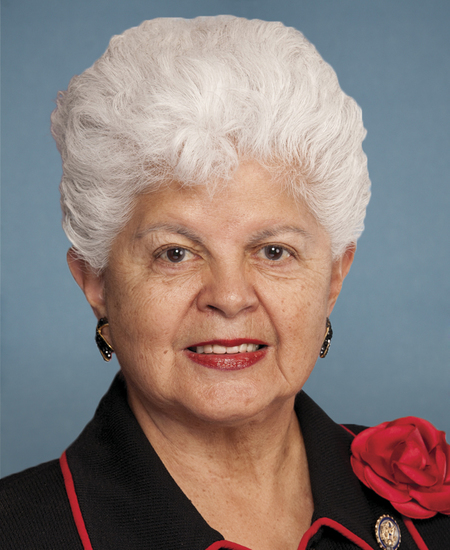
Rep. Grace F. Napolitano
Sponsored bills
Maddy summaryThe Increasing Access to Mental Health in Schools Act creates a federal grant program to increase mental health staff in low-income schools. It provides funding for partnerships between low-income schools (where at least 20% of students are from families below the poverty line) and graduate programs in school counseling, psychology, and social work. Grant funds can cover training costs, salary support for new mental health providers, recruitment of underrepresented students, and student loan repayment for mental health staff working in qualifying schools. The bill sets target ratios for staff-to-student ratios (like 1 counselor per 250 students) and requires annual reporting on program outcomes. The program is authorized for $200 million annually to address mental health staffing shortages in schools serving high-poverty communities.
Maddy summaryHR 7424, the Renewable Roadsides Act, requires the U.S. Departments of Transportation and Energy to study the feasibility of developing solar energy projects (including generation, storage, and transmission) on federal land adjacent to the National Highway System. The study, due by December 2025, will assess land suitability, identify barriers like safety concerns or competing land uses, and evaluate federal requirements. By December 2026, the agencies must submit a report to Congress with findings, recommendations for enabling such projects, and a process for entities to apply for leases or agreements to build and operate these facilities. The bill does not fund or mandate solar projects but sets the stage for potential future development by analyzing logistical and regulatory pathways. It directly affects federal agencies and could influence future policy on utilizing highway-adjacent federal land for renewable energy.
Maddy summaryHR 7389, the Accessible Voting Act of 2024, requires states to improve voting accessibility for individuals with disabilities, older voters (60+), Native Americans, Alaska Natives, and people with limited English proficiency. The bill establishes an Office of Accessibility within the Election Assistance Commission to oversee implementation, mandates accessible election websites with detailed voting information, and requires polling places to meet accessibility standards. It expands access to absentee voting procedures and provides federal funding to help states implement these requirements. The bill aims to address documented barriers to voting, including architectural barriers at polling places and challenges in absentee ballot processes. It will take effect for elections held on or after January 1, 2025.
Maddy summaryHR 7378, the Frederick Douglass Congressional Gold Medal Act, authorizes Congress to posthumously award a gold medal to honor Frederick Douglass's legacy as a pivotal abolitionist, writer, and advocate for civil rights. The medal, designed by the Treasury Secretary, will be presented to the National Museum of African American History and Culture for display, with bronze duplicates available for sale to cover costs. This ceremonial bill does not create new laws or affect current policies - it solely commemorates Douglass's historical contributions to ending slavery and advancing equality.
Maddy summaryHRES 1003 is a symbolic resolution recognizing the contributions of Vietnamese Americans. It acknowledges that approximately 800,000 Vietnamese refugees resettled in the U.S. after the Vietnam War and that over 1.7 million Vietnamese Americans now live in the U.S., forming the fourth largest Asian American group. The resolution highlights their achievements in fields like business, education, the military, and public service, as well as their support for democracy and cultural diversity. As a non-binding resolution, it has no legal effect or direct impact on policy or individuals.
Maddy summaryHRES 1002 is a symbolic House resolution recognizing the cultural and historical significance of Lunar New Year (celebrated as the Year of the Dragon in 2024). It acknowledges the holiday's 4,000-year history in China, its celebration across Asia (including Seollal and Tết), and its significance to Asian Americans and others in the U.S. The resolution expresses respect for those observing the holiday and wishes them a happy new year, but it does not create new laws, policies, or funding. As a ceremonial resolution, it has no direct effect on legislation or constituents.
Maddy summaryHR 7127, the FAIR Act, establishes pay adjustments for federal employees in 2025. It increases base pay by 4% for most federal workers under statutory pay systems and for "prevailing rate" employees (like those in specific geographic areas), while raising locality pay rates by 3.4%. The bill directly affects all federal employees receiving pay under these systems, as it modifies their 2025 salary calculations. These changes are based on statutory formulas under Title 5 of the U.S. Code, with no new policy mechanisms beyond the specified percentage increases. The adjustments apply to pay rates in effect as of the end of fiscal year 2024.
Maddy summaryThis bill requires the U.S. Army Corps of Engineers to prioritize water supply and conservation as a core mission when planning, building, and managing all water projects. It directly affects the Corps' project decisions, mandating they consider these factors alongside existing priorities like flood control and navigation. Key provisions explicitly state that this change does not alter the Corps' current authorities, pending permit processes, or state water management rights. The bill focuses on operational priorities within the Corps' existing framework, without creating new federal water regulations or overriding state water laws.
Maddy summaryThe PRESS Act protects journalists' sources and unpublished materials from government subpoenas. It requires courts to approve any request for a journalist's protected information (like source identities or notes) only if the government proves it is necessary to prevent terrorism or imminent violence threatening life or safety. Service providers (like phone companies or social media platforms) must also obtain court approval before handing over journalists' personal accounts or devices. The law explicitly excludes civil defamation cases and does not shield journalists who are suspects in criminal investigations or terrorism-related cases.