

Parity Implementation Assistance Act This bill provides grants to assist states with the implementation of the federal mental health parity requirements. States receiving the grants must request and review from private health insurance plans their required comparative analysis of nonquantitative treatment limitations (NQTLs) with respect to mental health or substance use disorder benefits. (NQTLs are limitations on the scope or duration of benefits for treatment, such as preauthorization requirements.)
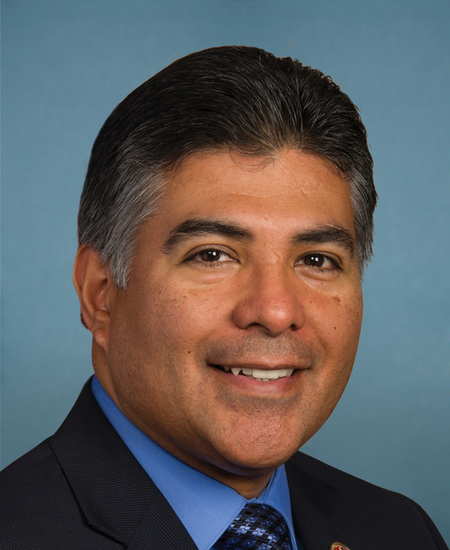
Rep. Tony Cárdenas
Sponsored bills
Paycheck Fairness Act This bill addresses wage discrimination on the basis of sex, which is defined to include pregnancy, sexual orientation, gender identity, and sex characteristics. Specifically, it limits an employer's defense that a pay differential is based on a factor other than sex to only bona fide job-related factors in wage discrimination claims, enhances nonretaliation prohibitions, and makes it unlawful to require an employee to sign a contract or waiver prohibiting the employee from disclosing information about the employee's wages. The bill also increases civil penalties for violations of equal pay provisions. Additionally, the Equal Employment Opportunity Commission (EEOC) and the Office of Federal Contract Compliance Programs must train EEOC employees and other affected parties on wage discrimination. The bill directs the Department of Labor to (1) establish and carry out a grant program to provide training in negotiation skills related to compensation and equitable working conditions, (2) conduct studies to eliminate pay disparities between men and women, and (3) make available information on wage discrimination to assist the public in understanding and addressing such discrimination. The bill establishes the National Award for Pay Equity in the Workplace for an employer who has made a substantial effort to eliminate pay disparities between men and women. It also establishes the National Equal Pay Enforcement Task Force to address compliance, public education, and enforcement of equal pay laws. Finally, the bill requires the EEOC to issue regulations for collecting from employers compensation and other employment data according to the sex, race, and national origin of employees for use in enforcing laws prohibiting pay discrimination.
Toxic Free Food Act of 2021 This bill requires the Food and Drug Administration (FDA) to revise its regulations relating to food additives that may be considered generally recognized as safe (GRAS). (A substance deemed GRAS is not subject to the premarket review requirements for food additives. A manufacturer may notify the FDA that it has determined that a substance is GRAS.) The revised regulations must prohibit a manufacturer from marketing a substance as GRAS (or manufacturing or selling a food containing that substance) unless the manufacturer has notified the FDA that it has determined that the substance is GRAS and submitted certain information supporting this position, including information about the substance's cumulative effects. The FDA must maintain a public website with each GRAS submission and supporting information. There must be a period of at least 90 days for the FDA and the public to review and object to such submissions. Furthermore, under the revised regulations, newly synthesized or novel chemicals and carcinogenic substances may not be deemed GRAS. The FDA may not rely on experts with conflicts of interest when making a GRAS determination. The FDA must also (1) incorporate in its rules certain best practices for convening a GRAS panel, (2) create a process to systematically reassess any substances previously determined to be GRAS, and (3) reestablish the Food Advisory Committee to assist with establishing standards and procedures for reassessing substances.
Vaccine Access Improvement Act of 2021 This bill modifies the excise tax on certain vaccines to (1) automatically impose the tax on vaccines that the Department of Health and Human Services (HHS) adds to the Vaccine Injury Table, and (2) require HHS to notify the Department of the Treasury and Congress when new vaccines are added to the table. (The excise tax funds the National Vaccine Injury Program, which compensates people who have been injured by vaccines listed on the table.)
This bill authorizes the President to posthumously award the Medal of Honor to Marcelino Serna for acts of valor during his service in the Army during World War I, for which he was previously awarded the Distinguished Service Cross.
Affordable Solar Energy for Our Communities Act This bill directs the Department of Energy to establish a program to provide financial assistance, such as grants or low-interest loans, to certain entities for the planning or installation of solar facilities that benefit certain low-income households.
Social Media Disclosure And Transparency of Advertisements Act of 2021 or the Social Media DATA Act This bill requires consumer-facing websites and mobile applications with a large number of users to maintain advertisement libraries and make them available to academic researchers and the Federal Trade Commission (FTC). Each library must include, among other things, a digital copy of the advertisement content, a description of the target audience, and the number of views generated from the advertisement. The FTC and state attorneys general are authorized to enforce these requirements, and the FTC must use information from the advertisement libraries to enforce other laws within its jurisdiction. Additionally, the bill establishes a working group to address social media research access and make policy recommendations with respect to the information an interactive computer service (e.g., a social media company) should make available to academic researchers.
United States Army Rangers Veterans of World War II Congressional Gold Medal Act This bill provides for the award of a single Congressional Gold Medal to the U.S. Army Rangers Veterans of World War II in recognition of their dedicated service during World War II.
Reproductive Rights are Human Rights Act of 2021 This bill directs the Department of State to include in its annual reports on human rights in countries receiving U.S. development and security assistance a discussion of the status of reproductive rights in each country. This must include whether a country has adopted and enforced policies to (1) promote access to contraception and accurate, nondiscriminatory family planning and sexual health information; (2) provide services to ensure safe and healthy pregnancy and childbirth; (3) expand or restrict access to safe abortion services; and (4) prevent and treat sexually transmitted diseases. For each country, the reports shall also contain (1) data concerning pregnancy-related injuries and deaths; and (2) a description of the nature and extent of discrimination and violence against women, girls, and LGBTQI+ individuals in health care settings and the relevant government's response to such actions.
John Lewis Every Child Deserves a Family Act This bill prohibits discrimination on the basis of sexual orientation, gender identity, marital status, or religion in the provision of child welfare programs and services by entities receiving federal funding. The Department of Health and Human Services (HHS) must provide technical assistance to help states follow this requirement, including (1) guidance for bringing state laws into compliance, (2) developing training to increase cultural competency related to social identity, and (3) training for judges and attorneys involved in child welfare cases, among other supports. Additionally, HHS must establish the National Resource Center on Safety, Well-Being, Placement Stability, and Permanency for LGBTQ Children and Youth Involved with Child Welfare Services to provide training, technical assistance, and guidance to applicable state and local agencies and service providers. Further, the Religious Freedom Restoration Act may not be the basis for challenging the application or enforcement of this bill. The Government Accountability Office must study and report on states' compliance with the requirements of the bill no later than three years after enactment.