

Maddy summaryThis bill designates the United States Postal Service facility at 28081 Marguerite Parkway in Mission Viejo, California, as the "Major Megan McClung Post Office Building." It changes all official references to this specific post office location to the new name. The bill directly affects the USPS facility and any government documents or records referencing it. This is a procedural naming resolution with no policy changes or financial impact.
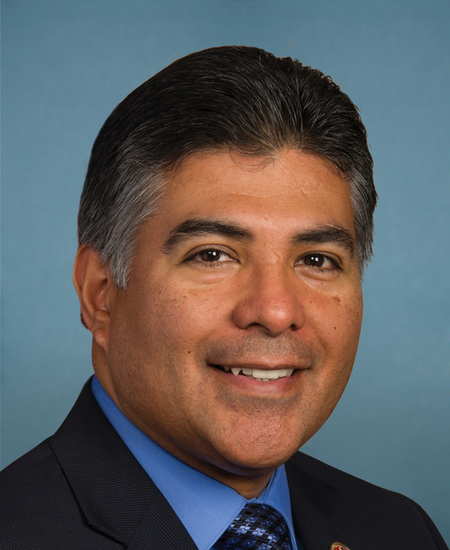
Rep. Tony Cárdenas
Sponsored bills
Maddy summaryHR 1060 designates the United States Postal Service facility at 1663 East Date Place in San Bernardino, California, as the "Dr. Margaret B. Hill Post Office Building." The bill updates all federal references - such as in laws, maps, regulations, and official documents - to use this new name for the building. This is a procedural designation with no policy changes or direct impact on residents or services. The bill was passed by Congress and signed into law on November 25, 2024.
Maddy summaryThis bill redesignates a United States Postal Service facility at 3500 West 6th Street, Suite 103 in Los Angeles, California, as the "Dosan Ahn Chang Ho Post Office." It directly affects the postal service location by changing its official name to honor Dosan Ahn Chang Ho, a Korean independence activist and community leader. The bill amends prior legislation to update references to the facility’s address and name in all federal records and documents. This is a ceremonial naming resolution with no policy changes to postal services or operations.
Maddy summaryHR 7189, the Congenital Heart Futures Reauthorization Act of 2024, reauthorizes a federal program under the Public Health Service Act focused on congenital heart disease (CHD). It requires the Department of Health and Human Services to issue a report within two years detailing current efforts to raise public awareness and train healthcare providers about CHD, including addressing lifelong patient needs. The bill also mandates a strategy within one year to address gaps in public awareness, workforce shortages for adult CHD care, and improve collaboration among federal agencies, providers, and patient groups. This directly affects patients with congenital heart disease (especially adults needing long-term care) and healthcare providers treating them. The law updates the program's funding period to cover 2025-2029.
Maddy summaryHR 10126, the Public Health Funding Restoration Act, restores annual funding for the Prevention and Public Health Fund to $2 billion starting in fiscal year 2025. This bill directly affects the Centers for Disease Control and Prevention (CDC), state, local, tribal, and territorial health departments, and community-based public health programs. It amends the Affordable Care Act to set the annual funding level at $2 billion, reversing previous cuts and enabling expanded investments in evidence-based prevention efforts like immunizations, chronic disease management, tobacco cessation, and pandemic preparedness. The restored funding aims to support proven programs that reduce healthcare costs and improve public health outcomes nationwide.
Maddy summaryThe Fix Our Forests Act creates a new system for managing wildfire risk on federal lands by designating "firesheds" (landscape-scale areas with high wildfire risk) and establishing a central coordination center called the Fireshed Center. It streamlines environmental reviews for vegetation management projects in these areas, requires public tracking of wildfire risk and management activities through a Fireshed Registry, and limits legal challenges to these projects. The bill affects federal land management agencies (like the Forest Service and Bureau of Land Management), communities in wildfire-prone areas, and utility companies managing vegetation near power lines. It also includes provisions for community wildfire risk reduction programs and research on new wildfire management technologies, aiming to accelerate risk reduction while maintaining transparency about where and how these projects are implemented.
Maddy summaryHRES 1544 designates September 22, 2024, as "National Hispanic Nurses Day" and formally recognizes the National Association of Hispanic Nurses (NAHN) as the leading organization representing Hispanic nurses. The resolution acknowledges Hispanic nurses' contributions to healthcare equity, cultural competence, and reducing disparities in underserved communities. It has no binding policy changes or funding implications - it serves as symbolic recognition to honor their work and NAHN's advocacy role. This is a ceremonial resolution, not a law with enforceable provisions.
Maddy summaryHR 9878, the No Shame at School Act of 2024, requires schools to automatically certify students from households with unpaid meal fees for free or reduced-price meals (instead of allowing discretion), and mandates retroactive reimbursement for past unpaid meals. It directly affects school districts and students in households owing meal fees by prohibiting stigmatizing practices like special tokens, public lists of names, or withholding grades due to unpaid fees. Key provisions ban schools from physically segregating students, using debt collectors, or taking food away from students who owe fees, while requiring clear communication to households about meal applications. The bill defines "covered child" as any student enrolled in a participating school meal program whose household owes fees or is eligible for free/reduced meals.
Maddy summaryHCONRES 131 is a symbolic resolution recognizing the wage gap between Latina women and White, non-Hispanic men in the U.S. workforce. It highlights that Latina women working full-time earn 58 cents for every dollar earned by White, non-Hispanic men, with an average lifetime earnings loss of over $1.2 million. The resolution designates October 3, 2024, as "Latina Equal Pay Day" to draw attention to this disparity, citing Bureau of Census data showing the gap has persisted for decades. It does not create new laws or policies but formally acknowledges the economic impact on Latina women and their families.
Maddy summaryThis resolution expresses the U.S. House of Representatives' support for designating October 1, 2024, as "National Latino Physician Day." It highlights that only 6% of U.S. physicians are Latino or Latina - despite Latinos making up over 1 in 4 Americans by 2050 - and notes that increasing physician diversity improves health outcomes for Latino communities. The resolution does not create new policies but formally supports raising awareness about the need to grow Latino/Latina representation in medicine. It specifically endorses the day's designation to promote diversity in the medical field and acknowledges the 2022 observance of the day. As a non-binding resolution, it has no legal effect but serves as a symbolic statement.