

Keep Infant Formula Safe and On the Shelves Act of 2022 This bill requires the Food and Drug Administration (FDA) to periodically inspect infant formula manufacturing facilities and addresses related issues. The FDA must periodically conduct inspections, including unannounced inspections, of infant formula manufacturer facilities. If the FDA makes a notable regulatory finding at such a facility, the manufacturer must undergo a comprehensive food safety audit that includes a root cause analysis, enhanced testing, and comprehensive environmental samples. A manufacturer of infant formula or essential medical food must notify the FDA no later than five business days after becoming aware of circumstances that could lead to a shortage of the relevant product in the United States. Further, the FDA must create and annually update a list of U.S. manufacturing facilities that could be converted to manufacture infant formula during a shortage. In the event of a shortage, the FDA may require infant formula manufacturers to provide certain information, such as the quantity of formula in a manufacturer's inventory. The bill also establishes under statute that food, including infant formula, is a critical material essential to the national defense and therefore subject to authorities under the Defense Production Act of 1950. (Such authorities authorize the President to take various actions, such as requiring businesses to prioritize certain government contracts and incentivizing the domestic industrial base to expand the production of critical materials.) The Occupational Safety and Health Administration must issue a fact sheet and provide technical assistance to infant formula manufacturers to promote compliance with occupational health and safety standards.
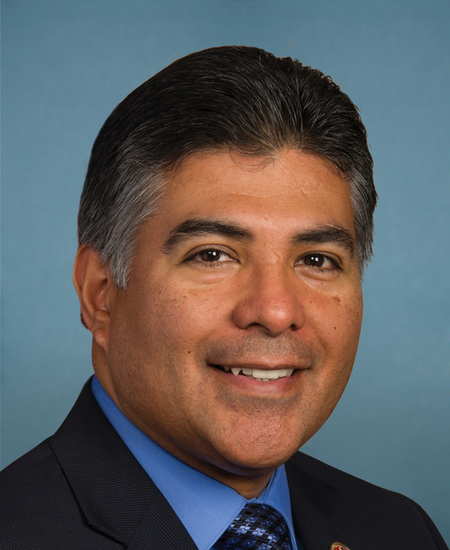
Rep. Tony Cárdenas
Sponsored bills
Military Access to Reproductive Care and Health for Military Servicemembers Act or the MARCH for Military Servicemembers Act This bill repeals the restriction on utilizing Department of Defense funds and facilities for performing abortions. The restriction only allows such funds and facilities to be used for abortions in cases of rape, incest, or where the mother's life is endangered.
Affordability is Access Act This bill establishes several requirements relating to health insurance coverage of, and access to, over-the-counter contraceptives. Specifically, the bill requires the Department of Health and Human Services, the Department of Labor, and the Department of the Treasury to specify that private health insurance plans must cover over-the-counter contraceptives that are approved by the Food and Drug Administration (FDA), even without a prescription. Under current law, private health insurance plans (with some exceptions) must cover FDA-approved prescription contraceptives, without cost-sharing requirements. The bill also prohibits retailers from interfering with an individual's access to oral contraceptives that are meant for routine, daily use and are FDA-approved for use without a prescription.
Domestic Terrorism Prevention Act of 2022 This bill establishes new requirements to expand the availability of information on domestic terrorism, as well as the relationship between domestic terrorism and hate crimes. It authorizes domestic terrorism components within the Department of Homeland Security (DHS), the Department of Justice (DOJ), and the Federal Bureau of Investigation (FBI) to monitor, analyze, investigate, and prosecute domestic terrorism. The domestic terrorism components of DHS, DOJ, and the FBI must jointly report on domestic terrorism, including white-supremacist-related incidents or attempted incidents. DHS, DOJ, and the FBI must review the anti-terrorism training and resource programs of their agencies that are provided to federal, state, local, and tribal law enforcement agencies. Additionally, DOJ must make training on prosecuting domestic terrorism available to its prosecutors and to assistant U.S. attorneys. It creates an interagency task force to analyze and combat white supremacist and neo-Nazi infiltration of the uniformed services and federal law enforcement agencies. Finally, it directs the FBI to assign a special agent or hate crimes liaison to each field office to investigate hate crimes incidents with a nexus to domestic terrorism.
Relief for Restaurants and other Hard Hit Small Businesses Act of 2022 This bill addresses support for restaurants, arts and entertainment venues, and small businesses impacted by the COVID-19 pandemic. The bill provides an additional $42 billion in FY2021 for the Restaurant Revitalization Fund and gives priority to previous applicants who have not received a grant. The Small Business Administration (SBA) must provide to applicants an explanation for denied applications, establish a reconsideration process for denied applications, and institute an audit and oversight plan with respect to grant recipients. Additionally, the bill establishes the Hard Hit Industries Award Program for small businesses that suffered a pandemic-related revenue loss of 40% or more. Aggregate grant amounts are capped at $1 million. Funds may be used for expenses including mortgage, rent, and utility payments and payroll. SBA must prioritize entities that have experienced significant pandemic-related revenue loss, with first priority going to those that experienced a loss of at least 80%, and second priority going to those that experienced a loss of at least 60%. Finally, the bill extends to March 11, 2023 (or a later date as determined by the SBA), the time frame during which Shuttered Venue Operators Grant recipients may use grant funds to cover their expenses.
Bipartisan Background Checks Act of 2021 This bill establishes new background check requirements for firearm transfers between private parties (i.e., unlicensed individuals). Specifically, it prohibits a firearm transfer between private parties unless a licensed gun dealer, manufacturer, or importer first takes possession of the firearm to conduct a background check. The prohibition does not apply to certain firearm transfers or exchanges, such as a gift between spouses in good faith.
This resolution expresses that the House of Representatives is deeply concerned for the latest years-long drought in the Horn of Africa and the ensuing food security crisis and severe socioeconomic disturbances it caused; acknowledges the role that climate change plays in increasing the frequency of extreme weather events like droughts, and pledges to take coordinated, international action to adapt to and avert further global warming; reaffirms the effectiveness and instrumentality of U.S. international food assistance for meeting humanitarian obligations, cultivating enduring self-reliance in developing nations, ensuring the stability of global financial markets, and mitigating the likelihood of conflict in accordance with our national security interests; and emphasizes the importance of funding urgently needed humanitarian assistance for hunger-stricken regions of the world, supporting the development of sustainable agricultural sectors in developing nations, and assisting with the international resettlement of refugees escaping droughts and extreme hunger.
Maddy summaryHRES 1141 is a symbolic resolution designating the week of May 23-27, 2022, as "Educator Mental Health Awareness Week." It expresses congressional support for recognizing the mental health challenges faced by teachers and school staff, particularly during the pandemic. The resolution highlights statistics showing heightened stress, depression, and anxiety among educators, as reported in 2021 surveys. It urges awareness of educator well-being but does not create new programs, funding, or legal requirements. The resolution serves only as a non-binding statement of support.
Fraud and Scam Reduction Act This bill expands activities to address mail, telephone, and internet fraud, particularly such scams targeting older adults. The bill establishes a Senior Scams Prevention Advisory Group, which must create model educational materials to educate employees of retailers, financial-services companies, and wire-transfer companies on how to identify and prevent scams that affect older adults. Further, the Federal Trade Commission (FTC) must establish an advisory office in the Bureau of Consumer Protection to assist the FTC in monitoring scams targeting older adults, educating consumers, and receiving complaints.
NIH Clinical Trial Diversity Act of 2022 This bill sets out requirements to increase the diversity of clinical trial participants. The bill also requires other activities to foster participation in clinical trials. As a condition of funding from the National Institutes of Health (NIH) for a clinical trial investigating a drug or device, a sponsor's application must include certain information related to diversity in its trial, such as goals for recruiting and retaining trial participants, plans for achieving the recruitment and retention goals and implementing less-burdensome clinical trial follow-up requirements, and education and training requirements related to diversity in clinical trials for researchers and other individuals who conduct or support the trial. A sponsor must also annually share demographic data of clinical trial participants with the NIH. The NIH must publish on its website information about the diversity of and other information concerning the clinical trials it funds. If a sponsor fails to meet its goals or other requirements with respect to trial diversity, the sponsor must develop and implement a strategic plan to increase the diversity of the clinical trial participants. Further, the NIH and the Food and Drug Administration must carry out a national campaign to increase awareness about the need for diverse clinical trials. The bill also requires studies on barriers to participation in clinical trials. The Government Accountability Office must study actions taken by federal agencies to address such barriers while the NIH must study regulations that govern reimbursements of out-of-pocket expenses of and incentives for clinical trial participants.