

Maddy summaryThe INFANTS Act of 2023 requires manufacturers of infant and toddler food (for children up to 24 months) to test their products quarterly for harmful contaminants like lead, arsenic, mercury, and cadmium. Companies must create written sampling plans, maintain detailed records for at least two years, and use internationally accredited labs for testing. The bill also adds new rules for environmental monitoring to prevent pathogens like Cronobacter in powdered infant formula and mandates that manufacturers report positive test results within 24 hours. These requirements apply to all manufacturers of infant and toddler food and take effect 180 days after the FDA issues guidance on sampling plans.
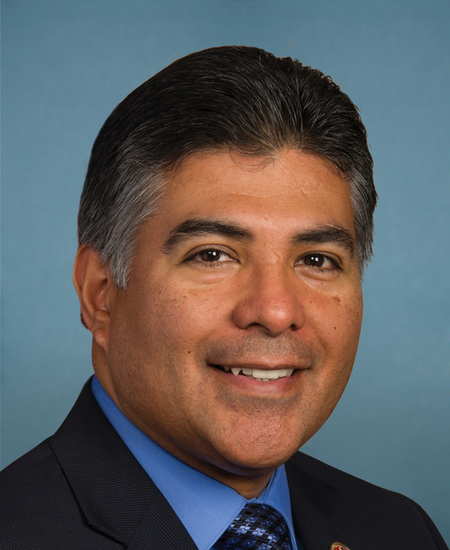
Rep. Tony Cárdenas
Sponsored bills
Maddy summaryThe Baby Food Safety Act of 2023 requires the FDA to establish legal limits for four toxic elements - lead, cadmium, mercury, and inorganic arsenic - in foods for infants and children under two years old, including infant formula. It mandates that the FDA set these limits through administrative orders with specific deadlines (e.g., proposed limits for lead/arsenic/cadmium by December 2025), after public comment periods and scientific review. The law also adds that baby food exceeding these limits becomes "adulterated" and triggers mandatory recalls for non-formula products. This directly affects baby food manufacturers, requiring them to comply with new safety standards by 2027-2030.
Maddy summaryHR 6754, the School Violence Prevention Act, establishes a federal grant program to fund evidence-based violence prevention programs in schools located in communities with high rates of youth gun violence. The bill authorizes $25 million annually for 5-year grants to partnerships between state/local education agencies (meeting specific homicide or violent crime thresholds) and community nonprofits serving youth. Grantees must implement trauma-informed, culturally competent programs for K-12 students, focusing on skills like conflict resolution, mental health support, and community engagement, while collecting data on outcomes like graduation rates. The program requires annual reporting to the Secretary of Education and CDC, with evaluations to assess impacts on reducing youth violence risks.
Maddy summaryThis bill reauthorizes and extends funding for programs addressing substance use disorders and opioid addiction, including residential treatment for pregnant and postpartum women, first responder training, and community recovery initiatives. It increases funding levels for these programs, adds xylazine to Schedule III of controlled substances, and requires a study on remote monitoring for patients prescribed opioids. The bill also expands Medicaid coverage requirements for medication-assisted treatment and mandates reporting on mental health condition data alongside substance use disorder data, directly affecting individuals with substance use disorders, healthcare providers, and state and tribal governments.
This resolution condemns all forms of discrimination and expresses support for policies to prevent and respond to hate crimes, including education and training on prevention and response.
Maddy summaryThis bill reauthorizes and extends federal funding for research and support services related to preterm birth through 2028, replacing the previous 2019-2023 funding period. Key provisions include adding chronic condition screening and treatment to maternal health education services, mandating an interagency working group on prematurity within 18 months, and requiring a National Academies study on preterm birth costs, risk factors, and program gaps. The study must assess neonatal care expenses, societal impacts, and effective prevention strategies, with a final report due within 24 months. These changes directly affect preterm infants, their families, healthcare providers, and federal agencies managing maternal health programs.
Maddy summaryThe Eviction Prevention Act of 2023 provides $125 million annually to states and local governments to fund legal counsel for eligible individuals (those with income below 125% of the federal poverty level) facing eviction. It establishes a national database requiring courts to collect detailed data on eviction cases, including tenant demographics, reasons for eviction, representation status, and case outcomes. The database will track court-ordered evictions, administrative evictions, and illegal evictions, with specific requirements for reporting by courts and law enforcement. This legislation authorizes $100 million annually for the database's operation through fiscal year 2028, aiming to improve understanding of eviction patterns and outcomes. The bill creates concrete mechanisms for increasing legal representation access and gathering comprehensive eviction data to inform policy decisions.
Maddy summaryHR 6556, the SNORE Act of 2023, requires San Francisco International Airport (SFO) to create a program mitigating aircraft noise for nearby residents. The bill mandates SFO to soundproof at least 200 homes annually in areas where excessive noise (measured as 10+ instances of 75 dBA or higher between 10 p.m. and 7 a.m.) is recorded. SFO must fund this program using its own revenue (like passenger fees) without typical restrictions, and if it fails to meet the 200-home target, it must remit funds to affected cities for noise mitigation. This directly affects residents near SFO and requires the airport to manage noise reduction through residential soundproofing.
Maddy summaryThe NOTIFIED Act requires the FAA to notify local officials and community groups 30 days before implementing new or modified flight paths below 18,000 feet near airports. It mandates specific details in notifications, including flight path maps, altitudes, and contact information, to help officials assess impacts on their communities. Directly affecting residents and local leaders in cities/counties within 5 miles of proposed changes, the bill targets flight procedures under the FAA's NextGen modernization program. This aims to improve transparency before changes take effect, allowing communities to provide input early in the process.
Maddy summaryHR 6549, the F-AIR Act, amends federal aviation law to change the Federal Aviation Administration's (FAA) airspace priorities. It requires the FAA Administrator to prioritize aircraft safety first, then treat efficient airspace use and minimizing aviation noise/health impacts on nearby residents and communities as equally important secondary goals. The bill mandates the FAA review its regulations and update its mission statement within one year of enactment to reflect these new priorities. This directly affects communities living under flight paths and the FAA's decision-making process regarding airspace assignments.