

Maddy summaryThe Pathways to Health Careers Act creates a federal grant program to help low-income individuals (those with family income at or below 200% of the Federal poverty level) enter health professions. It provides $425 million annually for fiscal years 2024-2028 to fund training programs that must include support services like adult basic education, child care, transportation, and career coaching. The bill requires grant recipients to serve at least 10% of participants who qualify for Temporary Assistance for Needy Families (TANF) and sets aside funding for demonstration projects focused on people with arrest/conviction records and maternal health career pathways. Recipients must track outcomes including credential attainment, employment in health professions, and earnings. This program directly affects low-income individuals seeking health careers and the organizations that will administer these training programs.
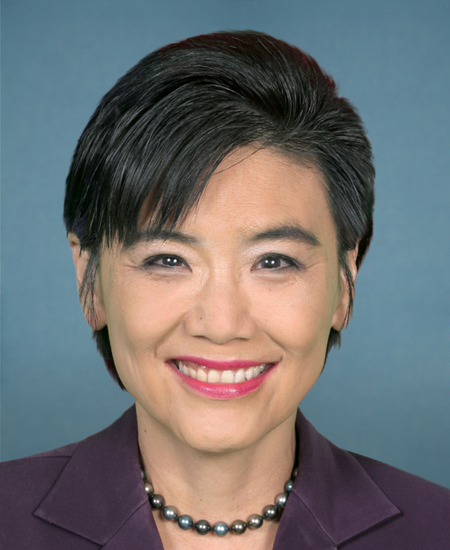
Rep. Judy Chu
Sponsored bills
Maddy summaryThe Breast Cancer Patient Equity Act would require Medicare to cover custom-made breast prostheses for women who have undergone mastectomies, directly affecting Medicare beneficiaries and influencing private insurance coverage practices. Currently, Medicare denies coverage for these prostheses as "not medically necessary" while covering surgical breast reconstruction, creating a gap that disproportionately impacts older and minority women. The bill amends Medicare’s coverage rules to explicitly include custom breast prostheses under the same category as other body part prostheses. This change would address the lack of access to a common, less invasive alternative to surgery for over 100,000 women undergoing mastectomies annually.
Maddy summaryThe Access to Infertility Treatment and Care Act would require most health insurance plans to cover infertility treatment (including assisted reproductive technology like IVF) and fertility preservation services for people undergoing medical treatments that might cause infertility, such as cancer therapies. It prohibits cost-sharing (like deductibles and copays) for these services that exceeds what's charged for similar medical services and applies to private insurance, federal employee health plans, TRICARE, veterans' benefits, and Medicaid programs. The bill also requires insurers to provide clear notice to plan members about these coverage requirements. This legislation aims to ensure infertility treatment is covered similarly to other medical conditions, as recognized by medical organizations.
Maddy summaryHR 4752 (the CHANGE Act of 2023) requires Medicare to include standardized cognitive impairment screening during annual wellness visits and initial preventive physical exams for beneficiaries starting in 2024. It mandates doctors use National Institute on Aging-approved tools to detect memory issues and document results in medical records. This directly affects Medicare patients aged 65+ and their healthcare providers, aiming to enable earlier Alzheimer’s diagnosis and care planning. The bill focuses on making routine screenings a standard part of Medicare-covered checkups, not on funding or new programs. It does not alter existing Medicare benefits but adds a specific screening requirement to two existing service categories.
Maddy summaryThe Social Security 2100 Act would significantly enhance Social Security benefits for millions of Americans by increasing monthly payments for retirees, disabled workers, widows/widowers, and children. Key provisions include raising the minimum benefit for long-term low earners, improving cost-of-living adjustments using a more accurate index, eliminating the 5-month waiting period for disability benefits, and extending child benefits to age 26. The bill also changes how Social Security taxes are calculated by applying them to income above $400,000 and establishes a unified Social Security Trust Fund to manage program finances. Most provisions would apply to benefits payable from 2025 through 2034, affecting all current and future Social Security beneficiaries.
Maddy summaryThe PrEP Access and Coverage Act of 2023 requires private health insurance plans, Medicare, Medicaid, and other public health programs to cover pre-exposure prophylaxis (PrEP) for HIV prevention without cost-sharing, including the medication, related lab tests, and follow-up care. The bill also prohibits life, disability, and long-term care insurance companies from denying coverage or charging higher premiums to people taking PrEP. It establishes public education campaigns to increase awareness of PrEP and PEP (post-exposure prophylaxis) and creates funding for state and community programs to expand access to HIV prevention services, particularly for populations disproportionately affected by HIV including Black, Hispanic/Latinx, and transgender individuals. The legislation specifically addresses current disparities in PrEP access, as data shows only 11% of Black/African American and 21% of Hispanic/Latinx individuals eligible for PrEP received prescriptions in 2022 compared to 82% of White individuals. Coverage requirements for most plans will take effect on January 1, 2025.
Maddy summary# Summary of the Farm Workforce Modernization Act of 2023 This comprehensive legislation introduces significant reforms to employment verification and immigration processes in the United States, with particular focus on agricultural workers. Key provisions include: ## Electronic Verification System (Section 301) - Establishes a new electronic verification system (replacing E-Verify) that must confirm identity and employment authorization within 3 business days - Includes photo matching tools, individual monitoring features, and fraud prevention measures - Requires employers to verify employment eligibility through this system ## Agricultural Industry Requirements (Section 302) - Mandates electronic verification for agricultural employers based on business size: * 500+ employees: 6 months after application period * 100-499 employees: 9 months after application period * 20-99 employees: 12 months after application period * 1-19 employees: 15 months after application period - Creates rural access points through USDA offices to assist with verification challenges ## System Modernization (Section 303) - Repeals the E-Verify Program and replaces it with the new verification system - Requires former E-Verify users to transition to the new system ## Compensation for Errors (Section 301) - Establishes an Electronic Verification Compensation Account to reimburse workers for lost wages due to government errors in verification - Includes procedures for contesting non-confirmations and appealing final nonconfirmations ## Additional Protections - Prohibits unfair immigration-related employment practices (e.g., terminating employees due to tentative nonconfirmations) - Creates a new compensation mechanism for workers wrongfully denied employment - Requires employers to provide specific notices to individuals with verification issues This legislation represents a major overhaul of employment verification processes, with special attention to agricultural workers and a focus on reducing errors that could lead to wrongful termination or denied employment. It also includes significant protections for workers against discrimination based on immigration status.
Maddy summary# Summary of Trade Legislation Document This is a comprehensive trade bill containing multiple sections that: 1. **Extends and modifies the Trade Adjustment Assistance (TAA) program** through 2030, with increased funding and expanded benefits for: - Workers (including child care, transportation, and mental health services) - Firms (with new eligibility criteria) - Communities (with strategic planning requirements) - Farmers (with new qualifying requirements) 2. **Increases health coverage tax credits** from 72.5% to 80% of premium costs for eligible individuals. 3. **Modifies and extends the Generalized System of Preferences (GSP)** through December 31, 2026, with new eligibility criteria including: - Human rights compliance - Environmental protection - Enforcement of labor rights - Review of laws relating to worker rights and equal protection 4. **Reauthorizes the American Manufacturing Competitiveness Act** through 2026, with new requirements for petitions including: - Certification that articles are not "finished goods" - Additional reporting requirements 5. **Provides new duty suspensions and reductions** for over 50 specific chemical and material products (sections 4101-4155), including: - Various chemicals (e.g., lithium hexafluorophosphate, potassium fluoride) - Specialty materials (e.g., scandium crystals, silica gel cat litter) - Food products (e.g., Irish dairy chocolate crumb, coconut water) - Industrial materials (e.g., tungsten concentrate, neodymium metal) The legislation includes detailed provisions for implementation, reporting requirements, and compliance reviews, with most provisions effective upon enactment and extending through 2030 for program funding.
Maddy summaryThis bill, the Public Servants Protection and Fairness Act of 2023, amends Social Security to better protect public servants who work in jobs not covered by Social Security (such as certain government positions). It creates a new formula for calculating retirement benefits that combines both covered and noncovered earnings, ensuring public servants receive the higher of two benefit calculations. The bill also provides an additional $150 monthly payment for certain public servants whose benefits were previously reduced by the windfall elimination provision. It improves Social Security account statements to clearly show noncovered earnings and requires a study of how state retirement plans handle these benefits. These changes will apply to benefits starting in 2025.
Maddy summaryThe LIFT the BAR Act removes barriers preventing lawfully present noncitizens from accessing federal benefits like food assistance, Medicaid, and school meals. It repeals specific 1996 welfare law provisions that excluded noncitizens and updates terminology to replace "alien" with "noncitizen" throughout federal law. The bill expands eligibility to include noncitizens in categories such as Deferred Action for Childhood Arrivals (DACA) recipients, individuals with special immigrant juvenile status, and those with pending U-visa applications. This change ensures more noncitizens lawfully present in the U.S. can access essential services without being denied based on immigration status.