

Maddy summaryThis bill requires states to prohibit physicians from performing specific non-emergency surgeries on foster children under age 6 who have variations in sex characteristics (commonly called intersex traits), unless the procedure addresses an immediate life threat. It targets procedures like clitoral reduction, gonadectomy, and vaginoplasty that are often done without consent on infants. States must enforce this through licensing penalties, and it applies only to children in foster care as a condition for receiving federal foster care funding. The bill explicitly states it does not restrict medically necessary surgeries or procedures for transgender youth.
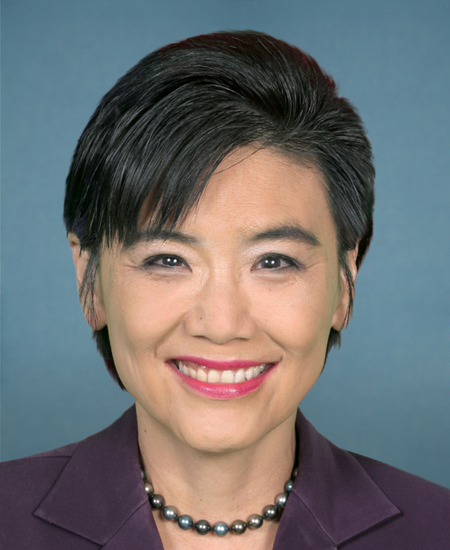
Rep. Judy Chu
Sponsored bills
Maddy summaryThis bill amends the International Emergency Economic Powers Act to explicitly prohibit the President from using emergency powers to impose import taxes (tariffs), tariff-rate quotas, or other import quotas. It directly affects the President's authority under this law, removing a potential tool for trade restrictions during emergencies. The key provision inserts a new subsection (c) clarifying that the President cannot impose such import barriers through emergency authority. This is a procedural change to existing law, not a new policy affecting specific industries or individuals.
Maddy summaryHR 9061 increases federal funding to support child welfare caseworkers by raising the annual appropriation under the Social Security Act from $345 million to $385 million. It specifically boosts the reserved amount for caseworker recruitment, retention, and training from $20 million to $60 million annually, and adds a requirement to include worker safety and well-being in these efforts. The bill directly affects state child welfare agencies and their caseworkers by providing more resources to address staffing challenges. The changes take effect in the first fiscal year after enactment.
Maddy summaryHR 8921, the Tribal Child Welfare Support Act, directly affects Indian tribes and tribal consortia by changing how federal child welfare funds are distributed. The bill requires the Secretary of Health and Human Services to pay funds directly to tribal organizations (instead of through states) for child welfare services under Section 428 of the Social Security Act. It also reserves 3% of funds from Section 425 specifically for these tribal payments each fiscal year. This change only applies if total funding meets or exceeds 103% of the 2024 level, ensuring state allotments aren't reduced when the tribal funds are allocated.
Maddy summaryHR 8796, the "Stop Comstock Act," removes outdated restrictions from federal law that previously banned the distribution of materials related to contraception and abortion as "obscene" or "indecent." The bill amends Title 18 and the Tariff Act by deleting references to "indecent," "immoral," "unlawful abortion," and "procuring abortion" from provisions governing obscene materials. It clarifies that the law only prohibits "obscene materials" in commerce, eliminating broad restrictions on reproductive health information. This directly affects internet platforms, healthcare providers, and individuals sharing reproductive health resources by removing legal barriers to their distribution.
Maddy summaryThis bill requires Medicare Advantage plans to implement electronic prior authorization systems by 2027 and publish detailed data on their approval and denial rates for medical services by 2026. It directly affects Medicare Advantage plans (private insurers offering Medicare coverage) and their enrollees (seniors 65+), mandating transparency about prior authorization decisions, processing times, and appeal outcomes. Key provisions include requiring plans to report annual statistics on request approvals/denials, average processing times, and use of technology, with this data published publicly by the Centers for Medicare & Medicaid Services. The bill also sets timelines for plan responses to prior authorization requests and mandates reports to Congress on implementation and impacts.
Maddy summaryThe Court Improvement Program Enhancement Act of 2024 expands federal funding for state court systems to support technological improvements that prevent disruptions (such as natural disasters, cyber-attacks, or public health crises) and enable remote court proceedings. It specifically requires states to assess and implement best practices for remote hearings in foster care and adoption cases, prioritizing participant engagement and privacy during emergencies. The bill mandates that the federal government issue updated guidelines every five years on conducting remote proceedings, with the first guidelines due by January 2025, including consultation with Indian tribes for cases involving Native children under the Indian Child Welfare Act. Additionally, it increases the annual funding reservation for the Court Improvement Program from $30 million to $40 million.
Maddy summaryThe Increasing Mental Health Options Act of 2024 would expand access to mental health care in rural and underserved areas by providing a 10% financial incentive to clinical psychologists who serve Medicare patients in designated health professional shortage areas starting in 2025. It also removes requirements for clinical psychologists to have physician supervision in specific Medicare-covered settings - such as outpatient rehabilitation centers, skilled nursing facilities, and home health services - when state law permits. These changes aim to encourage more clinical psychologists to work in areas with mental health provider shortages. The bill directly affects clinical psychologists and Medicare beneficiaries in underserved communities by streamlining access to mental health services.
Maddy summaryThe Essential Caregivers Act of 2024 requires nursing homes and similar facilities to allow residents to designate essential caregivers who provide emotional support or assistance with daily activities. During emergencies when regular visitation is restricted, facilities must permit at least one essential caregiver access to residents daily and cannot deny access without following specific procedures. Facilities may deny access for a maximum of 7 days during emergencies (or 14 days with state approval), and must provide a written explanation and appeal process if access is denied. The bill establishes a 48-hour appeal process for residents and caregivers to challenge denials, with facilities required to prove violations during appeals. This law applies to Medicare skilled nursing facilities, Medicaid nursing facilities, intermediate care facilities, and certain inpatient rehabilitation facilities.
Maddy summaryThis bill creates a new TANF Program Integrity Unit at the Administration for Children & Families to monitor state use of Temporary Assistance for Needy Families (TANF) funds, with $10 million in annual funding added to support its operations. If a state intentionally misuses TANF funds, the unit would require the state to repay the misused amount by providing direct cash assistance to families earning below 100% of the federal poverty line. The law applies directly to states administering TANF programs, mandating stricter oversight of fund usage and repayment of misused funds. It also requires the unit to submit annual reports to Congress on its activities.