

Maddy summaryHR 1255, the Investing in Our Communities Act, amends tax code rules for advance refunding bonds used by local governments and public entities. It restricts how certain bonds (particularly private activity bonds and older bonds issued before 1986) can be refinanced, limiting the number of times they can be advanced refunded and requiring debt service savings. Key provisions include banning "abusive" transactions for financial advantage, setting specific redemption timelines, and capping nonpurpose investments from refunded bonds. This directly affects municipal bond issuers who use advance refunding strategies to manage debt. The bill focuses on clarifying tax code compliance, not on community investment outcomes.
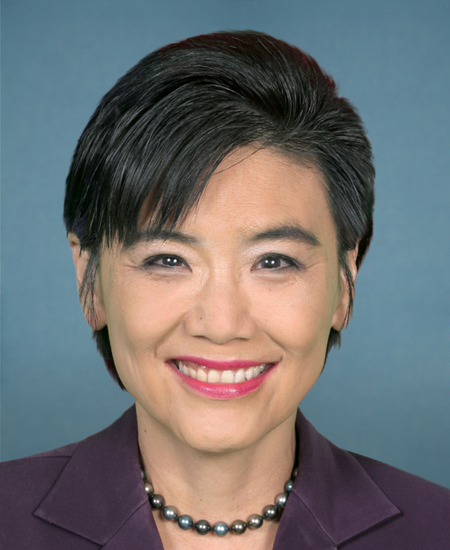
Rep. Judy Chu
Sponsored bills
Maddy summaryHR 1196 prohibits using federal funds to eliminate the U.S. Agency for International Development (USAID) as an independent agency, as defined by law. It requires the Secretary of State to certify annual compliance with this restriction to the House Foreign Affairs and Senate Foreign Relations committees. The bill directly affects USAID's operational status and U.S. foreign aid programs by preventing congressional or executive actions that would dismantle or merge the agency, maintaining its role in U.S. international development efforts.
Maddy summaryThis bill restricts access to Treasury payment systems (including the Bureau of the Fiscal Service) to only Treasury employees with a "fully successful" performance rating and at least one year of civil service, or contractors/outsiders with security clearances, required privacy/cybersecurity training, ethics agreements, and no conflicts of interest. It treats non-government users accessing these systems as government employees for ethics rules and defines specific actions (like stopping payments) as "personal and substantial participation" in government matters. The Treasury Inspector General must investigate any unauthorized access within 30 days and report to Congress, detailing the breach, security risks, and any halted payments. The bill directly affects Treasury staff, contractors, and any external entities accessing federal payment systems.
Maddy summaryHR 965, the Housing Unhoused Disabled Veterans Act, amends the U.S. Housing Act of 1937 to exclude certain disability benefits from income calculations for housing assistance. Specifically, it removes benefits received under Chapters 11 or 15 of Title 38 (veterans' disability compensation) from income counts for the Section 8 supported housing program and eligibility for other housing assistance. This change directly helps disabled veterans receiving these benefits by making them more likely to qualify for HUD-administered housing programs. The bill applies to veterans renting residential units on Department property under HUD housing assistance programs established after the bill's enactment.
Credit Union Board Modernization Act This bill reduces the required frequency of meetings held by the board of directors of certain credit unions. Under the bill, new credit unions and credit unions with a low soundness rating must meet monthly, as required under current law. All other credit unions must hold at least six meetings annually, with at least one meeting held during each fiscal quarter.
Maddy summaryThis proposed bill (HR 220) would expand VA healthcare benefits to cover infertility treatments like in vitro fertilization (IVF) and fertility preservation services for veterans with infertility or at risk of infertility (e.g., due to medical treatments), and their partners. It limits VA coverage to three successful IVF cycles or ten attempts, requires consent from veterans, partners, and donors, and allows use of donated eggs or embryos. Partners would receive travel reimbursement as if they were veterans, and temporary rules during implementation will immediately allow partners to access care without marriage requirements. The bill clarifies VA isn’t required to cover maternity care beyond existing rules and defers full implementation until VA issues final regulations within one year of enactment.
Maddy summaryHR 1164, the Fair Disaster Assistance Act of 2025, prevents FEMA from sending applicants a notice denying disaster assistance before an insurance claim for their damaged property is finalized. It requires the FEMA Administrator to issue regulations ensuring that applicants with insurance on their damaged home or facility do not receive such denial notices until after their insurance claim is approved or denied. This applies directly to homeowners and business owners who have filed for disaster aid under the Robert T. Stafford Act and hold insurance for their property. The bill changes the timing of notification procedures but does not alter eligibility or funding for disaster assistance.
Maddy summaryThis bill, titled the "Nobody Elected Elon Musk Act," makes the head of the Department of Government Efficiency personally liable for any legal claims against the federal government related to the department's activities. The department leader, defined as a special Government employee, would cover costs for claims arising from violations of labor laws, data privacy laws, security threats, or other federal statutes. This shifts financial responsibility from the government to the department leader for all such claims. The bill does not create new policies but directly imposes personal liability on the department head for the department's actions.
Maddy summaryThe Polluters Pay Climate Fund Act of 2025 imposes a tax on major fossil fuel companies for historical carbon dioxide emissions exceeding 1 billion metric tons during 2000-2023, with payments due by September 2026. The tax revenue will fund a new Climate Fund that must be used for climate resilience, adaptation, and disaster response programs, with 40% specifically directed to environmental justice communities. The bill requires at least $15 billion annually for FEMA climate programs and $6 billion for Clean Air Act climate resilience grants. It explicitly states the fund does not affect existing legal claims against polluters for climate-related harms.
Maddy summaryThe Department of Peacebuilding Act of 2025 would establish a new federal department within the executive branch dedicated to promoting peacebuilding, nonviolent conflict resolution, and violence prevention both domestically and internationally. The department would include seven specialized offices focused on peace education, domestic peacebuilding, international peacebuilding, technology for peace, arms control, research, and human rights. It would develop new policies to address violence in communities, create a Peace Academy for training peacebuilders, and establish grant programs for schools and community organizations to implement peacebuilding initiatives. The bill requires the department to consult with other federal agencies on matters related to conflict prevention and mandates that at least 85% of funds would support domestic peace programs. The department would also research and report on violence prevention metrics and develop peace education curricula for schools.