

Maddy summaryHR 4017, the American Royalties Too Act of 2025, requires art dealers to pay visual artists a royalty when their work is resold for $5,000 or more. Artists (or their successors) receive 5% of the sale price, capped at $50,000, paid to designated collecting societies within 90 days of the sale. These societies distribute the funds to eligible artists who are U.S. citizens, domiciled in the U.S., or created their work in the U.S. or a country with similar resale royalty laws, after deducting reasonable administrative costs. The bill establishes clear payment timelines, unclaimed funds procedures, and enforcement mechanisms for non-compliance.
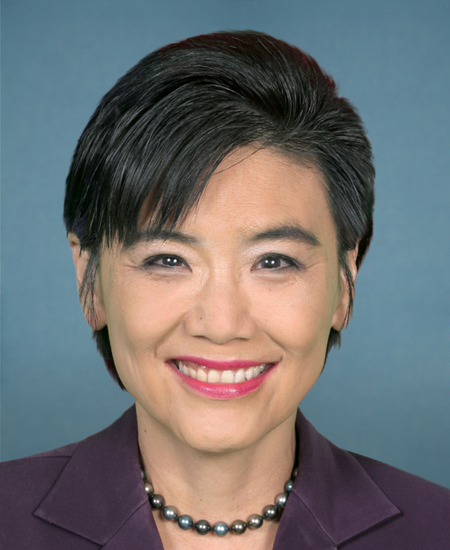
Rep. Judy Chu
Sponsored bills
Maddy summaryHRES 514 is a resolution commemorating the ninth anniversary of the June 12, 2016, Pulse nightclub shooting in Orlando, Florida, which killed 49 people. It honors the victims and their families, recognizes the bravery of first responders, and affirms the need for continued efforts on gun safety and mental health legislation. The resolution does not create new laws or policies but serves as a symbolic statement of remembrance and support for the affected community. It directly addresses the House of Representatives and the public, emphasizing unity in the face of hate.
Maddy summaryThis bill requires U.S. Immigration and Customs Enforcement (ICE) agents to visibly identify themselves during enforcement operations in the United States by not wearing facial coverings and wearing garments showing their name and agency affiliation. It directly affects ICE agents conducting activities like arrests, raids, or investigations. Exceptions exist for imminent threats or safety gear, but supervisors must review and document such uses within 48 hours. The bill also mandates annual reports to Congress on disciplinary actions and complaints related to violations.
Maddy summaryHR 3986 exempts small businesses (as defined by the Small Business Act) from import taxes imposed under Executive Order 14257. This means small businesses importing goods for their own use will no longer pay these specific taxes. The bill directly affects small businesses meeting the size standards outlined in the Small Business Act. It removes an existing tax burden without creating new regulations or requirements.
Maddy summaryHR 3946, the FIGHT Act of 2025, amends the Animal Welfare Act to specifically prohibit gambling on animal fighting events and restrict the interstate transport of roosters used in such ventures. It defines "rooster" as male chickens over six months old and makes it unlawful to sponsor, exhibit, attend (for those under 16), or gamble on animal fighting events - whether in-person or broadcast. The bill creates a civil enforcement mechanism allowing any person to file a lawsuit to stop violations after providing 60 days' notice to authorities, with potential fines up to $5,000 per violation. It also establishes seizure of property used to facilitate violations and clarifies that state laws on animal fighting remain in effect unless directly conflicting with federal provisions.
Maddy summaryHR 3975, the Tax Fairness for Disaster Victims Act, adjusts tax credits for individuals affected by federally declared disasters. It allows eligible taxpayers whose income dropped due to a disaster (like a hurricane or flood) to use their *previous year's* earned income and social security taxes instead of their current year's reduced income when calculating certain tax credits, such as the Earned Income Tax Credit (EITC). This applies only to those living in the disaster area on the date FEMA defines as the disaster period and requires them to elect this adjustment. The change ensures disaster victims aren't penalized with lower tax credits because their income temporarily fell due to the disaster.
Maddy summaryThe Domestic Workers Bill of Rights Act (HR 3971) would establish key labor protections for domestic workers, including nannies, housekeepers, and caregivers who work in private homes. The bill requires written agreements for workers employed 8+ hours per week, provides earned sick days (1 hour for every 30 hours worked), mandates fair scheduling practices with 72-hour notice for schedule changes, and extends overtime protections to live-in domestic employees. It also prohibits unfair wage deductions, guarantees meal and rest breaks, and ensures privacy protections including no monitoring in private living spaces. The bill directly affects approximately 2.2 million domestic workers across the U.S., who are disproportionately women of color and immigrants. Enforcement would be handled by the Department of Labor through new complaint resolution mechanisms and oversight.
Maddy summaryHRES 502 is a House resolution requesting transparency about a potential federal database project. It directs the President and three Cabinet Secretaries (Treasury, Labor, Health and Human Services) to provide documents to the House within 14 days regarding a proposed centralized database developed with Palantir Technologies Inc. The resolution seeks information about the database’s scope - compiling sensitive personal data like tax records, health information, financial accounts, and Social Security details across federal agencies - and its purpose, including potential uses like tax audits or benefit restrictions. This is a procedural inquiry (not a policy change) focused on obtaining documents for congressional review of the project’s development and contracts.
Maddy summaryThis bill codifies existing protections for designated roadless areas within the National Forest System by prohibiting new road construction, road reconstruction, and logging in these areas. It directly affects National Forest lands already identified as "inventoried roadless areas" under the current Roadless Rule, which covers roughly 58 million acres. The key mechanism requires the Secretary of Agriculture to enforce these prohibitions, maintaining current protections without expanding restrictions to other lands or altering existing multiple-use management. The bill does not create new protected areas but legally solidifies the existing regulatory framework to preserve ecological and recreational values.
Maddy summaryThis bill, HR 3916 (My Body, My Data Act of 2025), requires businesses and other "regulated entities" to minimize collection and sharing of personal reproductive or sexual health data - such as pregnancy status, contraceptive use, or abortion-related information - and gives individuals specific rights. It mandates that entities provide individuals with easy access to their data, the ability to correct inaccuracies, and the right to request deletion of such information within 15 days. The law also requires clear privacy policies detailing data practices and prohibits retaliation against individuals who exercise these rights, such as charging higher prices or denying services. It applies broadly to most businesses (excluding HIPAA-covered healthcare providers) and is enforced by the FTC with private lawsuits allowed for violations.