

Connecting Youth to Jobs Act This bill establishes and provides funding through FY2031 for grant programs to address barriers to youth employment. The bill also excludes certain youth employment income from Supplemental Nutrition Assistance Program (SNAP) eligibility determinations. Specifically, the bill requires the Department of Labor to provide formula grants to states and local areas, and competitive grants to community-based organizations and other eligible entities, to assist in carrying out subsidized public employment programs for youth with barriers to employment. Funding to states and local areas must be used for programs that lead eligible youth to unsubsidized full-time employment or to attainment of at least one recognized postsecondary credential. Grants to eligible entities must be used to match youth with employment barriers to subsidized employment programs funded by the bill and to provide hands-on work experience. The Government Accountability Office must evaluate and report on the activities funded by the bill. The bill also excludes from SNAP income eligibility determinations any income earned by a household member who is younger than 22 years old, is an elementary or secondary school student, and lives with a parent.
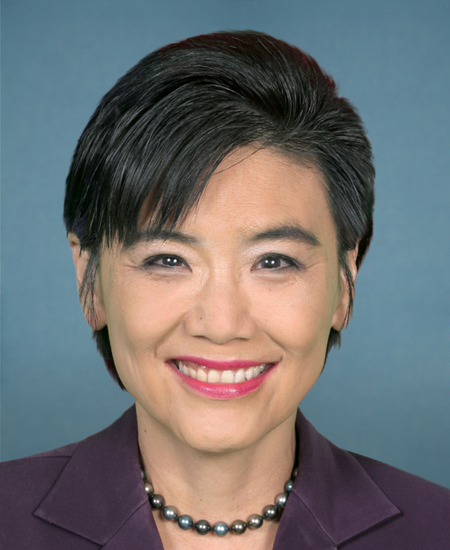
Rep. Judy Chu
Sponsored bills
Supporting America's Young Entrepreneurs Act of 2021 This bill provides deferment and cancellation of federal student loans for certain founders and employees of small business start-ups. The bill also establishes a young entrepreneurs business center. First, the bill allows a founder of a small business start-up to defer student loan payments for up to three years. Next, the bill directs the Department of Education (ED) to cancel up to $20,000 in federal student loan debt for a borrower who (1) has made 24 monthly payments on the loan while employed as a founder of a small business start-up in a distressed area, (2) is approved for loan cancellation by the young entrepreneurs business center established by the bill, and (3) is not currently in default on the loan. Further, ED must cancel up to $3,000 in federal student loan debt for a borrower who (1) has made 12 monthly payments on the loan while employed full-time by a small business start-up, and (2) is not currently in default on the loan. The bill also excludes from an individual's gross income, for income tax purposes, the amount of such canceled student loan debt. Finally, the bill establishes a young entrepreneurs business center within the Small Business Administration to certify small business start-ups, identify distressed areas, and approve loan cancellations. To be certified by the center, a start-up must have a founder who is a recent graduate of an institution of higher education.
Screening With Dignity Act This bill directs the Transportation Security Administration (TSA) to develop procedures to appropriately and respectfully screen self-identified transgender air passengers and passengers traveling with religious headwear or other articles of faith and begin training of all TSA Officers on such procedures. The TSA must implement protections for such passengers, including (1) prohibiting human viewing of passenger images and conducting pat downs by an officer of the gender requested by the passenger; and (2) ensuring secondary screening measures are no more intrusive than necessary to resolve an alarm or other concern raised by primary screening, including consideration of the sensitivity of the groin, chest, and other body areas and the sensitivity of religious articles of faith such as religious headwear. The TSA shall separately study and report on (1) the cost and feasibility of retrofitting advanced image technology screening equipment to distinguish between foreign objects and human body parts (including hair) in a manner that is gender neutral; and (2) the impact of imaging technology on transgender passengers, passengers whose religious faith requires them to travel with articles of faith, and passengers traveling with assistive devices. Additionally, the TSA must identify any policy, procedure, or training changes and complete any testing, certification, and assessment for qualifying additional technology to ensure that any advanced imaging utilized for passenger screening meets certain requirements, including not generating alarms based only on passengers' body parts (including hair), undergarments, or religious headwear.
Taskforce Recommending Improvements for Unaddressed Mental Perinatal & Postpartum Health for New Moms Act of 2021 or the TRIUMPH for New Moms Act of 2021 This bill temporarily establishes within the Department of Health and Human Services the Task Force on Maternal Mental Health. The task force must develop a national strategy for maternal mental health and report on best practices, policies, and programs to prevent, screen for, diagnose, treat, and reduce disparities in maternal mental health conditions. The report must identify opportunities for state- and local-level partnerships to address maternal mental health, and the task force must share those opportunities with state governors.
This concurrent resolution expresses the sense of Congress that title IX of the Education Amendments of 1972 applies to the National Collegiate Athletics Association (NCAA) and that the NCAA should work to prevent sex-based discrimination in its programs and activities.
National Climate Service Corps and Careers Network Act of 2021 This bill establishes the Climate Resiliency Service Corps as a national service program to assist communities in mitigating the effects climate change and establishes the Climate Careers Network to connect individuals with jobs in green industries.
Large-Scale Water Recycling Project Investment Act This bill requires the Department of the Interior to award grants to water or power delivery authorities for the planning, design, and construction of large-scale water recycling and reuse projects in drought-stricken regions of certain western states. Additionally, the Government Accountability Office must report on the selection process for each project.
Essential Caregivers Act of 2021 This bill requires skilled nursing facilities, nursing facilities, intermediate care facilities for the intellectually disabled, and nearby inpatient rehabilitation facilities to establish an essential caregivers program during a public health emergency. Under the program, facilities must allow each resident to select up to two essential caregivers to provide daily living assistance, emotional support, or companionship during the emergency. Facilities must afford such caregivers 12 hours of access to residents each day (or unlimited access for end-of-life care), and caregivers must agree to follow facility protocols for staff safety. Facilities may deny access to caregivers who violate protocols, subject to certain notification requirements; the Centers for Medicare & Medicaid Services must establish an appeals process relating to such decisions and may take specified enforcement actions against facilities that violate the bill's requirements.
Essential Skills and Child Care for Health Professions Act This bill requires recipients of grants that provide low-income individuals with education and training for health care occupations to make foundational skills training (e.g., English language proficiency training) and affordable child care available to participants.
Taxpayer Protection and Preparer Proficiency Act of 2021 This bill authorizes the Department of the Treasury to regulate tax return preparers, including by sanctioning preparers for incompetence and disreputable behavior and by establishing minimum competency standards for preparers.