

Help Extract Animals from Red Tape Act of 2021 or the HEART Act of 2021 This bill modifies notice requirements in a civil forfeiture proceeding that involves the seizure of an animal involved in animal fighting. Specifically, the government must notify interested parties of an animal's seizure within 30 days (currently, 60 days). The notice period may be extended only if a delay is warranted after considering certain factors, including the cost to the government of providing shelter for the animal, the health of the animal and the effect of a delay on its rehabilitation, any increased risk that a delay could necessitate the euthanasia of the animal, and any psychological harm incurred by the animal's owner due to the delay in disposition. Additionally, the bill authorizes amounts in the Department of Justice Assets Forfeiture Fund to be used to pay for costs associated with a seized animal, including transportation, shelter, care, veterinary services, and humane euthanasia.
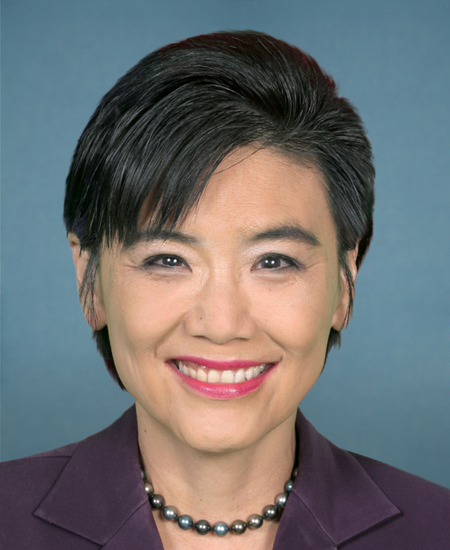
Rep. Judy Chu
Sponsored bills
PrEP Assistance Program Act This bill establishes a grant program to provide pre-exposure prophylaxis (PrEP) and related services to individuals at no cost. PrEP is medication given to individuals at risk of HIV to reduce their likelihood of contracting the virus. The Department of Health and Human Services must award the grants to state, tribal, and local governments; certain health clinics; and community-based organizations.
Outdoors for All Act This bill directs the Department of the Interior to establish an outdoor recreation legacy partnership grant program under which Interior may award grants to states, certain political subdivisions of a state, special purpose districts, Indian tribes, or Alaska Native or Native Hawaiian communities or organizations. Funds must be used for projects to (1) acquire land and water for parks and other outdoor recreation purposes in qualifying areas, and (2) develop new or renovate existing outdoor recreation facilities that provide outdoor recreation opportunities to the public in qualifying areas. A qualifying area is an area that has a population of 30,000 or more in the most recent census, or that is administered by an Indian tribe or an Alaska Native or Native Hawaiian community organization. Interior shall give priority to projects that create or significantly enhance access to park and recreational opportunities in an urban neighborhood or community, engage and empower underserved communities and youth, provide opportunities for employment or job training for youth or underserved communities, establish or expand public-private partnerships, and take advantage of coordination among various levels of government.
Arts Education for All Act This bill expands arts education and programming for children in early education, K-12 students, and juveniles and adults in the criminal justice system. Specifically, the bill allows Child Care and Development Block Grant funding to be used for additional activities, including arts programming. Additionally, the bill addresses arts programming in elementary and secondary schools by directing each state educational agency to include information on arts programming in its state plan, including how it will integrate arts education instruction into the curriculum and increase the number of arts teachers in schools; requiring state report cards to include information on arts courses; requiring local educational agency (LEA) plans to describe how the LEA will encourage the use of arts education to improve student achievement; and allowing certain funds to be used for professional development for arts teachers. The bill directs the National Center for Education Research to carry out research on the use of arts and arts education in elementary and secondary schools, including in low-performing schools. Further, the National Center for Education Statistics must compile data on arts education. The National Assessment of Educational Progress must include a specified arts assessment. The bill requires a state's juvenile justice and delinquency plan to describe how the state will coordinate services and activities for juvenile justice and delinquency prevention with arts agencies and arts organizations. Additionally, grants for adult offender reentry demonstration projects may be used for facilitating arts education.
Veterans Census-Enabled National Treatment Equitable Resource Supplement for Mental Health Act of 2021 or the Vet CENTERS for Mental Health Act of 2021 This bill requires the Department of Veterans Affairs (VA) to ensure the number of Vet Centers in certain states is increased by at least one additional center if the VA determines the state meets specified requirements. The VA must also establish a community-based outpatient clinic in each state that does not share a land border with another state, is located at least 2,000 miles from the contiguous United States, and contains no such clinic.
Revising and Expediting Actions for the Crisis Hotline for Veterans Act or the REACH for Veterans Act This bill requires the Department of Veterans Affairs (VA) to update training and procedures for call responders of the Veterans Crisis Line. Specifically, the VA must enter into an agreement with an outside organization to review the training for crisis line call responders. The VA must update the training if any deficiencies are identified after the review. Among other requirements, the VA must develop guidelines on retraining and quality management for when a call responder has an adverse event or needs improvement, annually perform a common cause analysis for identified callers to the crisis line who died by suicide in situations where the crisis line was the last point of contact, develop enhanced guidance and procedures to respond to calls to the crisis line related to substance use and overdose risk, review the current emergency dispatch standard operating procedure of the crisis line, and solicit feedback from veterans service organizations on how to conduct outreach regarding the move to 988 as the new suicide and mental health crisis hotline. Each call responder must be subject to at least two calls per month that are silently monitored by a supervisor to check for quality of conduct. The Veterans Crisis Line, Office of Mental Health and Suicide Prevention of the VA, and National Center for Patient Safety of the VA must establish quality management processes and expectations for staff of the crisis line.
Cosmetic Safety for Communities of Color and Professional Salon Workers Act of 2021 This bill imposes labeling requirements on cosmetics intended for professional use, requires research on health issues relating to cosmetics, and addresses related issues. The Food and Drug Administration (FDA) must require (1) the labeling for cosmetics intended for professional use to include the name of each ingredient in descending order of predominance; and (2) the manufacturer, distributor, or seller of such a cosmetic to provide this information on its website. The Occupational Safety and Health Administration must issue a standard requiring each manufacturer or importer selling a cosmetic intended for professional use to (1) obtain or develop a safety data sheet for the cosmetic in various languages; and (2) make the data sheet available to relevant distributors and employers, such as hair salon owners. The standard must also require employers to make the data sheet available to employees exposed to the product and provide to employees versions of the sheet in languages other than English upon request. The FDA must conduct (or award grants for) research into chemicals linked to adverse health effects and most commonly found in cosmetics that are (1) marketed to women and girls of color; or (2) used by professional nail, hair, and beauty salon workers. The FDA must also award grants to support research focused on designing safer cosmetic chemicals, such as those with no inherent toxicity. The FDA must take actions to ensure that cosmetics marketed to women and girls of color are in full compliance with FDA requirements.
Improving Mental Health and Wellness in Schools Act This bill requires local educational agencies (LEAs) participating in the school lunch or breakfast programs to include in their local school wellness policies (1) goals for mental health promotion and education, and (2) nutrition guidelines for reducing childhood eating disorders. Such LEAs must also include registered dietitians and school-based mental health services providers in the development, implementation, and periodic review of such policies. The bill also requires the Department of Agriculture to provide information and technical assistance to school health professionals (including school-based mental health services providers) for use in establishing healthy school environments. Such technical assistance must promote mental health, encourage mental health assessments, and establish resilient school environments.
Animal Freedom from Testing, Experiments, and Research Act of 2021 or the AFTER Act of 2021 This bill requires federal research facilities to facilitate the adoption or nonlaboratory placement of certain warm-blooded animals (e.g., dogs, cats, monkeys, guinea pigs, hamsters, and rabbits) with animal rescue organizations, animal sanctuaries, animal shelters, or individuals. In order to be adopted or placed, the animals must (1) no longer be needed for research; (2) be suitable for release; (3) not be birds, rats, or mice.
Bringing Regulatory Advances Into Neuroscience Act of 2021 or the BRAIN Act of 2021 This bill requires the Food and Drug Administration (FDA) to establish the Neuroscience Center of Excellence. The center must develop and implement processes to coordinate FDA activities related to a major disease area or areas affecting the brain or central nervous system. The FDA must also establish and maintain the Neuroscience Translation Working Group to advise the center. If the FDA terminates the center, the working group shall advise the FDA.