

Excess Urban Heat Mitigation Act of 2022 This bill requires the Department of Housing and Urban Development (HUD) to establish a grant program for state, tribal and local governments; metropolitan planning organizations; and certain nonprofits (or consortia of nonprofits) to carry out activities to mitigate heat in urban areas. HUD must coordinate with the Environmental Protection Agency on the program.
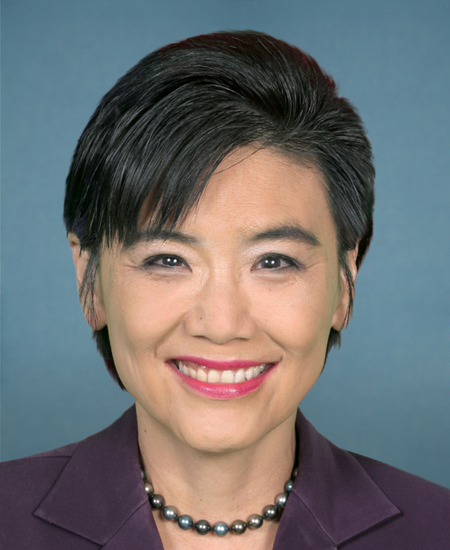
Rep. Judy Chu
Sponsored bills
Guaranteeing Overtime for Truckers Act This bill requires employers of commercial truck drivers to provide overtime pay to such drivers engaged in a workweek longer than 40 hours.
Maddy summaryHRES 1045 (2022) is a symbolic resolution supporting National Youth HIV/AIDS Awareness Day (observed April 10). It calls on federal, state, and local entities to recognize the day and encourages efforts to address HIV disparities among youth, including promoting inclusive sex education, removing outdated HIV criminalization laws, and supporting youth-friendly healthcare access. The resolution does not create new laws or allocate funding but affirms existing policies like the Ryan White HIV/AIDS Program and the Affordable Care Act's protections for young people living with HIV. It focuses on raising awareness and reducing stigma rather than mandating specific actions.
Pharmaceutical Research Transparency Act of 2022 This bill requires the disclosure of costs associated with clinical trials and pharmaceutical research and development. Specifically, the National Institutes of Health must create a publicly available repository of cost data from certain clinical trials that test the efficacy of drugs, biological products, and devices in human subjects. For each applicable trial, the registry must, among other information, include the total and per patient cost of the trial, as well as costs for personnel, health care services, and other categories of expenditures. Information must be added to the registry within one year of the trial's completion. The bill also requires drug manufacturers to include their research and development expenditures for drugs and biological products in annual disclosures made to the Securities and Exchange Commission.
Targeting Resources for Equitable Access to Treatment for Long COVID Act or the TREAT Long COVID Act This bill requires the Department of Health and Human Services to award competitive grants to create or expand the capacity of clinics that treat patients with persistent, long-term symptoms following recovery from acute COVID-19 (i.e., Long COVID). Eligible recipients include federally qualified health centers, rural health clinics, urban Indian health centers, and state and local health departments.
Ending Importation of Russian Oil Act This bill prohibits the importation of energy products from Russia. Specifically, the bill prohibits the importation of Russian products that are classified under chapter 27 of the Harmonized Tariff Schedule (which includes mineral fuels, mineral oils and products of their distillation, bituminous substances, and mineral waxes). The President may terminate this prohibition, subject to congressional disapproval, if the President certifies that Russia (1) has reached an agreement to withdraw Russian forces and cease military hostilities in Ukraine, (2) poses no immediate military threat of aggression to any North Atlantic Treaty Organization member, and (3) recognizes the right of the Ukrainian people to independently and freely choose their own government.
This resolution recognizes the discrimination that Sikhs have faced and continue to face in the United States and elsewhere and condemns all acts of bias and hatred against the Sikh community. The resolution also expresses respect and gratitude for the contributions of all Sikh Americans.
Maddy summaryHR 7477, the CERTS Tax Exemption Act, ensures that grants provided under the Coronavirus Economic Relief for Transportation Services Act are tax-free for eligible transportation service providers. The bill directly affects companies and organizations providing transportation services that receive these specific federal grants. Key provisions state that grant amounts cannot be counted as taxable income, deductions related to grant-funded costs cannot be denied, and tax attributes (like basis increases) must be treated as tax-free for partnerships and S corporations. This change simplifies tax treatment for recipients by preventing unintended tax liabilities on relief funds.
Burma Unified through Rigorous Military Accountability Act of 2022 or the BURMA Act of 2022 This bill imposes sanctions pertaining to Burma (Myanmar) and addresses related issues. The President must impose property- and visa-blocking sanctions on certain foreign persons (i.e., an individual or entity), including those that (1) knowingly operate in Burma's defense sector, (2) are responsible for or complicit in undermining Burma's democratic processes, or (3) are senior leaders in Burma's military or government. The Department of the Treasury must prohibit or impose strict conditions on certain accounts used to facilitate transactions for such sanctioned persons. The President may impose sanctions on Myanma Oil and Gas Enterprise if such sanctions would support certain objectives, including reducing the Burmese military's ability to undermine democracy in Burma. Before removing certain foreign persons from a list of specially designated nationals and blocked persons (commonly known as the SDN list), the President must certify to Congress that the person in question has not knowingly engaged in certain activities, such as supporting terrorism. The bill authorizes Department of State and U.S. Agency for International Development activities in Burma and the surrounding region to support democracy activists, humanitarian assistance, and reconciliation efforts. The State Department may (1) continue to assist organizations supporting political prisoners in Burma, and (2) provide assistance to entities investigating crimes against humanity. The President must direct U.S. representatives to the United Nations to vote and advocate for certain actions related to Burma, such as cutting off assistance to Burma's government.
Ensuring Lasting Smiles Act This bill requires private health insurance plans to cover diagnosis and treatment of congenital anomalies and birth defects, such as reconstructive services and items. Coverage must include services and items that functionally improve, repair, or restore any body part that is medically necessary for normal bodily functions or appearance, as determined by the treating physician. Coverage limits and cost-sharing requirements for such services and items may not be more restrictive than those applicable to all medical and surgical benefits under the plan.