

Maddy summaryThis bill provides financial assistance to help low-income renters cover security deposits and moving costs. It directly affects families using housing choice vouchers (Section 8) and those receiving housing assistance through the HOME program. The law requires public housing agencies to use federal funds to pay for reasonable security deposits and moving expenses, and mandates that unused funds be returned to the agency for future use. It also directs the Department of Housing and Urban Development to study alternatives to traditional security deposits and report findings to Congress within 180 days.
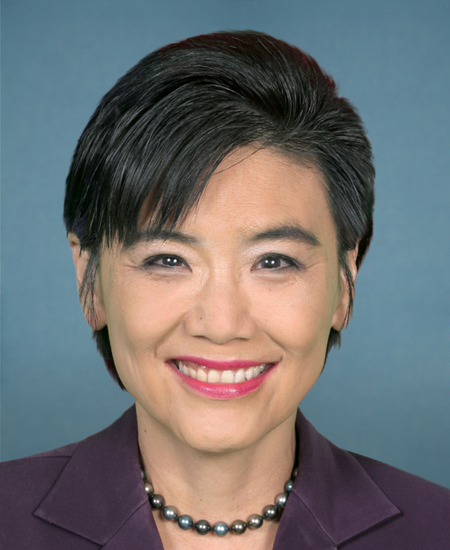
Rep. Judy Chu
Sponsored bills
Maddy summaryThis bill directs the Joint Committee of Congress on the Library to obtain a statue of Shirley Chisholm and place it permanently in the U.S. Capitol within two years of enactment. It authorizes the Architect of the Capitol to handle the agreement for the statue under the Committee's terms, with necessary funding approved as needed. The bill does not change laws or affect specific people or groups; it is a procedural measure to honor Shirley Chisholm, the first Black woman elected to Congress, through a permanent Capitol display.
Maddy summaryHR 1088, the Shirley Chisholm Congressional Gold Medal Act, authorizes a posthumous Congressional Gold Medal to honor Congresswoman Shirley Chisholm, the first African-American woman elected to Congress (1968) and the first Black candidate for a major party's presidential nomination (1972). The bill directs the Treasury Secretary to design and strike a gold medal featuring Chisholm's image, which will be presented by Congress and then permanently displayed at the Smithsonian Institution. Duplicate bronze medals may be sold to the public to cover production costs, with proceeds deposited into the U.S. Mint fund. This bill commemorates Chisholm's legacy and achievements without creating new laws or affecting any current policies.
Stop Hate Crimes Act of 2023 This bill lowers the statutory burden of proof for showing intent with respect to a federal hate crime offense. Current law makes it unlawful to willfully cause bodily injury, or attempt to do so using a dangerous weapon, because of the actual or perceived protected characteristic (e.g., race) of a person. In 2014, the U.S. Court of Appeals for the Sixth Circuit held that the because of standard requires proof that a person's actual or perceived protected characteristic was the sole motivating factor in the offense. This bill replaces the because of standard with a new standard. Specifically, willfully causing bodily injury, or attempting to do so using a dangerous weapon, is a hate crime offense if a person's actual or perceived protected characteristic was a contributory motivating factor in the offense.
Maddy summaryHR 907, the Protecting Community Television Act, is a procedural bill that modifies the legal definition of "franchise fee" in the Communications Act of 1934. It changes the wording from "includes" to "means" and adds "other monetary" before "assessment" in the fee definition. This amendment does not alter actual fee amounts, payment requirements, or protections for community television providers. It solely adjusts the technical language used in federal law to describe these fees. The bill has no direct impact on community TV operations or funding, as it only refines the statutory definition.
Maddy summaryHR 949, the Insular Area Medicaid Parity Act, removes federal funding caps on Medicaid for U.S. territories, directly affecting Puerto Rico, the U.S. Virgin Islands, Guam, the Northern Mariana Islands, and American Samoa. The bill amends the Social Security Act to eliminate the existing limit on federal Medicaid funding for these territories, allowing them to receive full federal matching funds like states. This change takes effect for fiscal year 2023, ending the previous restriction that required territories to fund a portion of their Medicaid costs themselves. The policy change ensures these territories can access the same level of federal Medicaid support as states.
Maddy summaryThe Heating and Cooling Relief Act significantly expands the Low-Income Home Energy Assistance Program (LIHEAP) to help low-income households with rising energy costs. It increases annual funding to $400 billion for fiscal years 2024-2033 (up from $2 billion), adds $1 billion yearly for cooling assistance during heat events, and expands eligibility to include households with a 3% energy burden. The bill requires states to provide protections against home energy shutoffs and late fees for program participants, and to prioritize energy-efficient, renewable energy solutions. It also creates new "just transition" grants to help communities move away from fossil fuels while reducing energy burdens for vulnerable households.
Aviation-Impacted Communities Act This bill addresses noise mitigation for aviation-impacted communities. ( Aviation-impacted community is defined as a community that is located not more than one mile from any point at which a commercial or cargo jet route is 3,000 feet or less above ground level.) Specifically, the bill expands Airport Improvement Program noise mitigation program funding for aviation-impacted communities that are not currently within the 65 day-night average sound level (DNL) standard; requires the Federal Aviation Administration (FAA) to enter into an agreement with the National Academy of Sciences to conduct a study that summarizes the relevant literature and studies done on aviation impacts worldwide and focuses on large hub commercial airports and surrounding communities, including communities currently outside of the 65 DNL contour; directs the FAA to conduct outreach to aviation-impacted communities to inform them of the opportunity to be a designated community; requires the FAA to devise an action plan that alleviates or addresses the concerns of a designated community; and provides grants for necessary noise mitigation in a designated community for residences, hospitals, nursing homes, adult or child day care centers, schools, and places of worship.
Maddy summaryThis bill authorizes a single Congressional Gold Medal to honor all U.S. Army Dustoff crews who served during the Vietnam War (1962-1973). It recognizes their critical role in evacuating nearly 900,000 wounded personnel, including U.S., South Vietnamese, and allied forces, under extreme combat conditions. The medal, designed with input from the Secretary of Defense, will be presented to the U.S. Army Medical Department Museum for permanent display. Duplicate bronze medals may be sold to cover costs, but the primary action is the commemorative recognition of these crews' service.
Maddy summaryThe SNAP Theft Protection Act of 2023 requires the Secretary of Agriculture to establish regulations allowing states to reissue Supplemental Nutrition Assistance Program (SNAP) benefits stolen through identity theft or skimming (like card skimming). It directs states to identify eligible households and reissue lost benefits meeting specific criteria, directly affecting SNAP recipients who experience benefit theft. Key provisions include setting criteria for reissuance, requiring a 240-day status report to Congress on implementation, and annual reports detailing the value and number of reissued benefits per state. The bill also mandates periodic reviews of electronic benefit transfer security to adapt to evolving theft threats.