

Maddy summaryThe Promising Pathway Act 2.0 creates a new FDA pathway for conditional approval of drugs treating rare, progressive, and serious diseases with substantial unmet medical need. It requires sponsors to provide evidence of safety and preliminary effectiveness, establish observational patient registries, and use specific labeling for conditionally approved drugs. The law mandates coverage without cost sharing by private health insurers and federal health care programs for patients with the intended condition. Conditional approval lasts up to 8 years total, with renewal requirements based on additional evidence and registry data, and the FDA can withdraw approval if safety concerns arise or requirements aren't met.
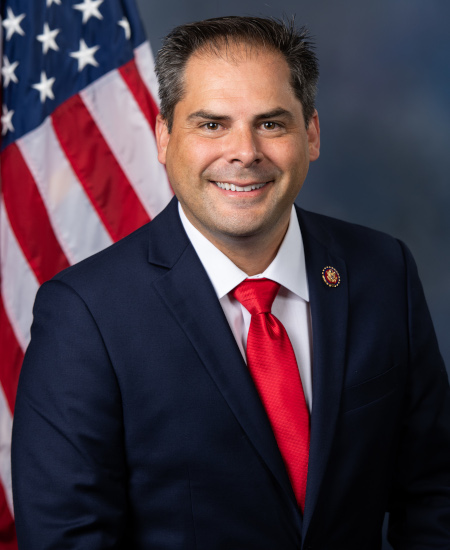
Rep. Mike Garcia
Sponsored bills
Maddy summaryThis resolution formally censures Representative Glen Clay Higgins (LA-03) for a September 25, 2024, social media post containing racist remarks and false claims about Haitians. The bill requires Higgins to appear in the House chamber to receive the censure, with the resolution publicly read by the Speaker. It specifically references his post describing Haiti as "the nastiest country," falsely accusing Haitians of eating pets, and labeling them "slapstick gangsters and thugs." The censure is a formal disciplinary action by the House, not a policy change.
Maddy summaryHR 1719, the Honoring Our Fallen Heroes Act of 2023, establishes a presumption that certain cancers diagnosed in public safety officers (like police and firefighters) are work-related if linked to their duties. It defines 22 specific cancers (including lung, mesothelioma, and WTC-related cancers) as "exposure-related," allowing officers or their families to receive benefits without proving direct work connection, provided they were diagnosed within 15 years of leaving active service. The bill also creates a process for adding new cancers to the list based on scientific evidence, requiring the Bureau to review petitions and make decisions within 180 days. This applies to deaths or disabilities occurring on or after January 1, 2023, directly affecting officers who developed covered cancers during service.
Maddy summaryHR 7630, the ANCHOR Act, requires the National Science Foundation (NSF) to develop and submit a plan within one year to improve cybersecurity and telecommunications for university-operated ocean research vessels in the U.S. Academic Research Fleet. The plan must assess each vessel’s secure communication needs, cybersecurity risks, required costs (including equipment and training), and implementation timelines, while considering scientific missions and telemedicine access for crew. It also mandates a progress report to Congress two years after the plan’s submission. The bill directly affects research vessels operated by universities and laboratories that receive NSF funding and participate in the U.S. Academic Research Fleet.
Maddy summaryHR 3433, the "Give Kids a Chance Act of 2024," requires pharmaceutical companies developing certain cancer drugs to conduct pediatric studies if the drugs target molecular pathways relevant to childhood cancers. It directly affects drug manufacturers submitting new applications for cancer treatments, particularly those combining previously approved adult cancer drugs or containing a single new active ingredient. The bill amends FDA regulations to mandate these pediatric investigations only when specific conditions are met, such as when a drug's molecular target is relevant to pediatric cancer growth. The FDA must issue implementing guidance within 12 months, and reports to Congress will track implementation and effectiveness starting 2 years after enactment.
Maddy summaryThis bill provides $2.29 billion for veterans' compensation and pensions and $597 million for readjustment benefits to address funding shortfalls. It requires the VA Secretary to submit reports on budget forecasting improvements and to regularly update Congress on fund usage through 2026. The bill mandates an Inspector General review of the causes behind the 2024 Veterans Benefits Administration funding shortfall and the expected 2025 Veterans Health Administration shortfall. These provisions focus on improving financial accountability and preventing future funding gaps for veterans' programs. The bill is focused on funding and oversight rather than changing benefit eligibility or amounts.
Maddy summaryH.J. Res. 117 is a joint resolution that would disapprove an Environmental Protection Agency (EPA) rule concerning the reconsideration of National Ambient Air Quality Standards for particulate matter. The EPA rule, published on March 6, 2024, was part of the agency’s process to review these standards, which set limits for harmful air pollutants. This resolution invokes a congressional disapproval procedure under federal law to block the rule from taking effect. If enacted, the rule would have no force or effect, preserving the existing air quality standards for particulate matter.
Maddy summaryThis bill requires states to check the Death Master File quarterly for Medicare and Medicaid providers and suppliers starting January 1, 2025. It directly affects all states administering Medicaid programs and every healthcare provider or supplier enrolled in Medicare or Medicaid. The key provision amends existing law to mandate these death checks during initial enrollment, revalidation, and at least every three months while providers remain enrolled. This aims to prevent fraud by ensuring providers listed on billing systems are still living.
Maddy summaryHR 7686 amends Section 10638 of the Research and Development, Competition, and Innovation Act to clarify the definition of "foreign country" for restrictions on "malign foreign talent recruitment." The bill adds "of concern" after "foreign country" in the definition and revises the description of programs/positions affected to include those "whether directly or indirectly provided." This clarification directly affects federal research programs and positions subject to the existing talent recruitment restrictions. The change streamlines the definition without altering the scope of the underlying restriction policy.
Maddy summaryHR 9405, the Foreign Adversary Investment Prohibition Act, prohibits current Members of Congress (Senators and Representatives) from engaging in certain financial transactions with entities tied to specific foreign adversaries, including China, Russia, Iran, North Korea, Cuba, and Venezuela under Maduro. It defines prohibited transactions broadly to include gifts, loans, investments in securities or commodities, and similar financial dealings. Violations can result in civil penalties of up to $15,000 per offense, enforced by the Attorney General through civil action. The law directly affects Members of Congress by restricting their financial interactions with entities linked to designated countries during their service.