

Maddy summaryThis symbolic House resolution (HRES 72) recognizes independent workers, contractors, and freelancers for their economic contributions to the U.S. It highlights their role in the growing flexible work economy and acknowledges the benefits of flexible work arrangements, such as freedom in hours and locations. The resolution does not create new laws or alter existing policies - it solely serves as a formal acknowledgment of these workers' significance to the economy. It references their $1.35 trillion economic contribution in 2022 and their growing share of the workforce (39% of U.S. workers).
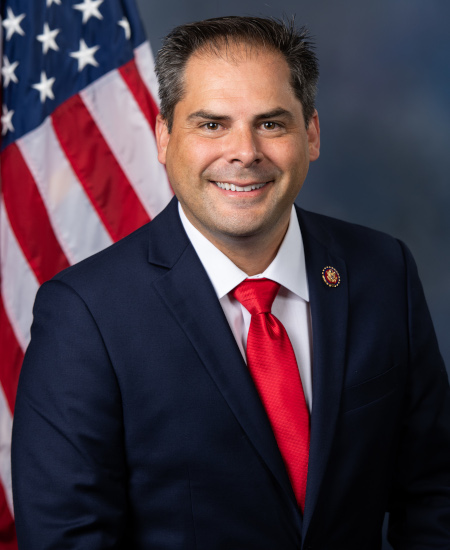
Rep. Mike Garcia
Sponsored bills
SALT Marriage Penalty Elimination Act This bill increases from $10,000 to $20,000 the amount that a married couple filing a joint tax return may deduct as state and local taxes (thus eliminating the tax effect known as the marriage penalty with respect to the deduction).
Fire Information and Reaction Enhancement Act of 2023 or the FIRE Act of 2023 This bill establishes certain programs to improve wildfire forecasting and detection within the National Oceanic and Atmospheric Administration, including the development of weather research testbeds. (Testbeds are collaborative spaces where researchers and forecasters work alongside each other to integrate new systems into models, test and streamline data assimilation methods, and otherwise improve weather products and services for the benefit of the public.)
Maddy summaryThis bill prohibits all federal funding from being provided to EcoHealth Alliance, Inc. and its directly controlled subsidiaries, related organizations, or subgranted entities. It directly affects EcoHealth Alliance by cutting its access to federal grants, contracts, or other funding sources. The bill also requires the Government Accountability Office (GAO) to study and report on all federal funds provided to EcoHealth Alliance - whether intentionally or accidentally - to Chinese entities like the Wuhan Institute of Virology or the Chinese Communist Party, during the prior decade. The report must detail these funds and include any related agreements involving foreign entities. The bill focuses on restricting funding flows and requiring transparency, not on policy outcomes or advocacy.
Maddy summaryHR 22, the *Protecting America’s Strategic Petroleum Reserve from China Act*, blocks the U.S. government from selling petroleum from the Strategic Petroleum Reserve to entities under Chinese Communist Party control or unless sellers guarantee the oil won’t be exported to China. It directly affects the Department of Energy’s management of the reserve and any foreign entities seeking to purchase reserve petroleum. The key mechanism requires the Secretary of Energy to prohibit sales to China-linked entities or impose strict export restrictions on any sale. This policy change aims to prevent strategic petroleum resources from reaching entities tied to China’s government.
Maddy summaryHR 451, the Protecting Families from Fertility Fraud Act of 2023, creates a federal crime for knowingly misrepresenting the source or nature of DNA used in fertility treatments like IVF or sperm insemination. It directly affects fertility clinics, patients, and individuals who commit such fraud by making it punishable by fines or up to 10 years in prison. The law applies when the fraud involves interstate commerce (e.g., payments, communications, or materials crossing state lines) or occurs within U.S. territories. It also extends the statute of limitations for prosecution to 10 years after DNA identifies the perpetrator. This bill targets specific deceptive practices in assisted reproductive technology, not broader fertility care.
Maddy summaryHR 484, the Natural Gas Tax Repeal Act, repeals Section 136 of the Clean Air Act, which established a methane emissions and waste reduction incentive program for natural gas systems. This directly affects natural gas operators who previously participated in the program by ending their eligibility for associated incentives. The bill also rescinds any unobligated funds allocated under that program before its repeal. The change removes a federal requirement for the industry to reduce methane emissions through this specific incentive mechanism.
Authorization for the Use of Military Force to Combat, Attack, Resist, Target, Eliminate, and Limit Influence Resolution or the AUMF CARTEL Influence Resolution This joint resolution authorizes the President to use the Armed Forces against foreign nations, foreign organizations, or foreign persons affiliated with foreign organizations that the President determines are involved in trafficking fentanyl or fentanyl-related substances into the United States. The joint resolution also authorizes the use of force against those determined to have used force or violence in specified ways, such as engaging in violence or intimidation to control territory to be used for illicit means. The joint resolution deems nine named cartels as having met the criteria for the President to use force against them. Force authorized by this joint resolution may only be used against organizations and persons located outside of the United States. The authority expires five years after the date of this joint resolution's enactment.
Maddy summaryThe GAS Act (HR 337) prohibits any federal agency from banning the sale or use of gas-burning stoves in the United States. This applies to all agencies defined under federal law, including the Environmental Protection Agency and Consumer Product Safety Commission. The bill directly blocks agencies from enacting new regulations that would restrict gas stoves, preventing future regulatory actions. It does not affect existing stove sales or current agency authority but sets a clear restriction on future rulemaking.
Maddy summaryHR 252, the Inflation Prevention Act of 2023, would require Congress to block any new spending bill or amendment that could increase inflation above 4.5%, as measured by the Consumer Price Index (CPI). If current inflation exceeds 4.5%, the bill would prevent consideration of new spending measures unless a three-fifths Senate supermajority votes to override the rule. The Congressional Budget Office (CBO) would estimate the inflation impact of proposed spending and notify Congress if inflation rises above 4.5%. This rule applies to all spending bills, amendments, and conference reports in both the House and Senate, directly affecting how Congress processes budget-related legislation. The bill focuses on procedural rules for spending decisions, not on specific policies or affected groups.