

Maddy summaryHR 3045, the West Bank Violence Prevention Act of 2025, imposes U.S. sanctions on foreign individuals and entities responsible for violence, displacement, or property destruction in the West Bank. It targets those directly involved in attacks on civilians, forced displacement, or property seizures, including settler leaders or officials of groups engaged in such activities. Key provisions require freezing assets of sanctioned individuals within U.S. jurisdiction and blocking their entry into the United States via visa restrictions. The law applies to foreign nationals meeting specific criteria outlined in the bill, not U.S. citizens or entities.
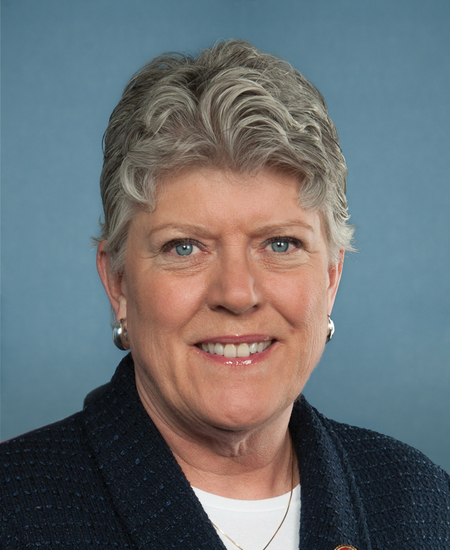
Rep. Julia Brownley
Sponsored bills
Maddy summaryHRES 351 is a symbolic House resolution supporting the designation of April as National Arab American Heritage Month (NAAHM) to celebrate the cultural contributions of Arab Americans. It recognizes Arab Americans' historical and ongoing impacts on U.S. society, including their roles in economy, science, arts, and social justice movements. The resolution highlights that 48 states and numerous cities already observe April as NAAHM, building on the White House's 2023 proclamation. It urges the public to engage in activities celebrating Arab American heritage, without creating new laws or altering existing policies.
Maddy summaryHR 2994, the Child and Dependent Care Tax Credit Enhancement Act of 2025, increases financial support for families covering childcare costs. It raises the credit rate to 50% (reduced for higher incomes), boosts the maximum creditable amount from $3,000 to $8,000 per child under 13 (or $6,000 to $16,000 for other dependents), and adjusts these limits annually for inflation starting in 2026. The bill also ensures married couples filing separately calculate their credit as if filing jointly, preventing reduced benefits. It directly affects low- and middle-income taxpayers with childcare expenses who itemize deductions. The changes take effect for tax years beginning after December 31, 2024.
Maddy summaryHRES 341 is a symbolic House resolution expressing support for Earth Day, not a substantive bill. It urges the President to issue an Earth Day proclamation, encourages Americans to address environmental challenges (like climate change and litter), and calls for rejoining the Paris Agreement - though these are non-binding recommendations with no legal force. The resolution references historical environmental legislation (like the Clean Air Act) but does not create new policies, allocate funds, or change regulations. It directly affects no specific group, as it solely serves to affirm environmental values through symbolic recognition. (Note: The document header incorrectly lists "Federal Water Pollution Control Act" as the bill text, but this is a formatting error; the actual resolution is about Earth Day.)
Maddy summaryHRES 340 is a ceremonial resolution recognizing April 2025 as "Community College Month" to celebrate the role of over 1,000 U.S. community colleges. It highlights these institutions' work in providing affordable higher education, workforce training, and economic support - serving 10.2 million students annually and contributing significantly to national economic growth (e.g., generating $898 billion in alumni income in 2020). The resolution emphasizes community colleges' accessibility (average $3,990 tuition for in-district students, 10-mile average student commute) and their role in workforce development across sectors like healthcare and manufacturing. As a non-binding recognition, it does not create new laws or funding.
Hot Foods Act of 2025 This bill expands the Supplemental Nutrition Assistance Program (SNAP) to permit the use of SNAP benefits to purchase hot foods or hot food products ready for immediate consumption.
Maddy summaryHR 2357, the Food Secure Strikers Act of 2025, removes a restriction that previously barred workers on strike from receiving Supplemental Nutrition Assistance Program (SNAP) benefits. The bill amends the Food and Nutrition Act of 2008 to eliminate language making workers ineligible for SNAP "as a result of being on strike," ensuring striking workers are not automatically denied food assistance during labor disputes. This change directly affects workers participating in strikes who would otherwise lose access to SNAP benefits. The key mechanism updates the eligibility rules to prevent SNAP ineligibility solely due to strike participation.
Maddy summaryHR 2910, the Youth Workforce Readiness Act of 2025, establishes a federal grant program to fund community-based organizations in creating after-school and out-of-school-time workforce readiness programs for youth aged 6-18. The bill authorizes $100 million annually (2026-2030) to support activities like career pathway planning, paid work experiences (including apprenticeships), occupational skill training aligned with local job needs, and employer partnerships. It directly affects eligible youth - particularly those in underserved communities - and requires grantees to coordinate with schools, employers, and local workforce boards, while mandating youth councils to advise on program design. The program emphasizes measurable outcomes, including improved school attendance, skill development, and transitions to postsecondary education or employment.
Maddy summaryThis bill amends the Elementary and Secondary Education Act to explicitly include accounting education as part of a well-rounded K-12 curriculum. It requires schools to develop and strengthen programs teaching accounting, including increasing access to high-quality accounting courses for students from groups historically underrepresented in accounting careers. The key provision inserts specific language into existing law, directing schools to promote accounting career awareness and expand course availability through grade 12. This directly affects K-12 students, particularly those from underrepresented backgrounds, by making accounting education a recognized component of career-focused learning.
Maddy summaryThe DRIVE Act of 2025 requires the Department of Veterans Affairs (VA) to set mileage reimbursement rates for veterans at the federal government's current standard rate for employees using personal vehicles on official business, replacing the previous fixed rate of 41.5 cents per mile. It also mandates that the VA process and pay these reimbursements within 90 days of a veteran's valid request. This directly affects veterans who travel for VA medical appointments or services using their personal vehicles. The bill aligns veteran travel reimbursements with federal employee standards and ensures timely payments.