

Domestic Workers Bill of Rights Act This bill provides rights and protections for domestic workers (e.g., housekeepers, nannies, caretakers, personal assistants, and chauffeurs), including pay and leave rights, and health and safety protections. Specifically, the bill repeals the exemption of domestic live-in employees from certain minimum wage and maximum hour requirements. Employers must provide written notice of termination and provide at least 30 days of lodging and two weeks of severance pay to terminated live-in employees. Live-in employees also must be provided with reasonable access to telephone and internet service during their employment. The bill requires employers to provide domestic workers with a written agreement covering wages, sick leave, benefits, and other matters. Further, domestic workers may request and be granted changes to work schedules due to personal events. The bill also provides domestic workers with certain privacy rights, extends to domestic workers protections against discrimination in employment, and increases the federal medical assistance percentage (FMAP) for certain Medicaid-funded medical services provided by domestic workers. The Department of Labor must (1) award grants for a domestic worker national hotline for reporting emergencies, training on hazards facing domestic workers, and workforce investment activities for domestic workers; and (2) establish a Domestic Worker Wage and Standards Board to investigate standards in the domestic workers industry. Labor must publish online a document that describes the rights and protections for domestic workers under this bill.
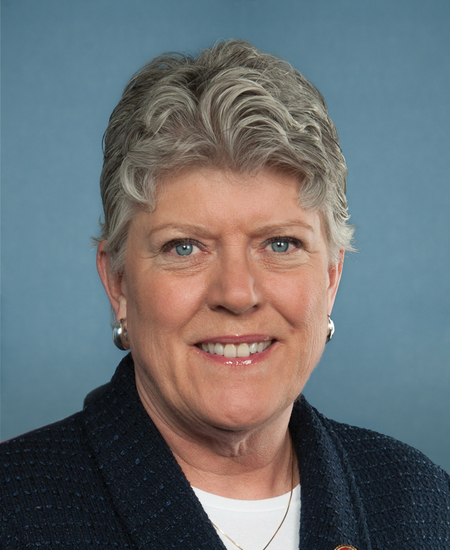
Rep. Julia Brownley
Sponsored bills
Alexander Lofgren Veterans in Parks (VIP) Act This bill makes the America the Beautiful-National Parks and Federal Recreational Lands Pass available, without charge, to members of the Armed Forces, veterans, and Gold Star Families. The pass covers the entrance fee and standard amenity recreation fee for all federal recreational lands and waters.
Critically Endangered Animals Conservation Act of 2021 This bill provides statutory authority for the Critically Endangered Animals Conservation Fund, which finances a grant program to protect critically endangered species. Specifically, the bill requires the Department of the Interior to establish the fund as a separate account in the Multinational Species Conservation Fund. Critically endangered species means any animal species categorized on the International Union for Conservation of Nature (IUCN) Red List of Threatened Species as either endangered or critically endangered. The term also means any other animals species categorized on such list as data deficient or under a threat category lower than endangered if Interior determines that (1) the most recent IUCN Red List assessment indicates that the population is decreasing, or (2) such species is facing new or emerging threats.
Performing Artist Tax Parity Act of 2021 This bill modifies the tax deduction for the expenses of performing artists (including commissions paid to managers or agents) to provide for a phaseout of such deduction for taxpayers whose adjusted gross income exceeds $100,000 ($200,000 for joint return filers). The $100,000 phaseout threshold is adjusted for inflation annually for taxable years beginning after 2021.
Mature Technology Node Resiliency and Manufacturing Act of 2021 This bill provides $2 billion in FY2022 funds for the Department of Commerce to give financial assistance that incentivizes investment in semiconductor facilities and equipment at mature technology nodes. (A technology node is a specific semiconductor manufacturing process and its design rules.) This assistance shall be provided to certain entities with a demonstrated ability to substantially finance, construct, expand, or modernize a semiconductor facility. Such entities must also (1) provide equipment or materials or operate at mature technology nodes, and (2) commit to using federal financial assistance received pursuant to the bill to increase semiconductor production at such nodes. Commerce must prioritize entities that support the resiliency of the semiconductor supply chain for critical manufacturing industries in the United States.
Closing the Meal Gap Act of 202 1 This bill revises the requirements for calculating Supplemental Nutrition Assistance Program (SNAP) benefits. The bill increases the minimum SNAP benefit and requires benefits to be calculated using the value of a low-cost food plan. The Department of Agriculture (USDA) must determine the requirements for the low-cost food plan, which is the diet required to feed a family of four, consisting of a man and a woman 19-50 years of age, a child 6-8 years of age, and a child 9-11 years of age. USDA must (1) reevaluate and publish the market baskets of the plan by January 1, 2027, and every five years thereafter, based on current food prices, food composition data, consumption patterns, and dietary guidance; and (2) make adjustments to the plan to account for household size, changes in the cost of the diet, and the costs of food in specified areas. The bill modifies the requirements for calculating household income to determine SNAP eligibility by (1) authorizing a standard medical expense deduction for households containing an elderly or disabled member, and (2) eliminating the cap on the excess shelter expense deduction. The bill eliminates certain work requirements for SNAP. The requirements apply to able-bodied adults who are ages 18-49 and have no dependent children. The bill allows Puerto Rico, American Samoa, and the Northern Mariana Islands to participate in SNAP. Currently, the three territories receive block grants instead of participating in SNAP.
American Indian and Alaska Native Veterans Mental Health Act This bill directs the Department of Veterans Affairs (VA) to provide mental health and suicide prevention outreach to American Indian and Alaska Native veterans. Specifically, the bill requires that each VA medical center have a full-time minority veteran coordinator. The coordinator must receive training in the delivery of culturally appropriate mental health and suicide prevention services to American Indian and Alaska Native veterans. Further, the suicide prevention coordinator and minority veteran coordinator of each VA medical center must develop and disseminate a written plan for conducting mental health and suicide prevention outreach to all tribes and urban Indian health organizations within the area of the medical center.
Humane Research and Testing Act of 2021 This bill establishes the National Center for Alternatives to Animal Research and Testing within the National Institutes of Health to promote alternatives to animal research and testing and to reduce the number of animals used in such research and testing. In addition, federal departments or agencies and federally funded research entities that use animals for research and testing must develop plans to reduce the use of animals in their activities. They must also annually report the number of animals that they use to the center, and the center must make this information publicly available.
Empowering Parents' Healthcare Choices Act of 2021 This bill provides a 60-day time frame within which parents with separate health insurance plans may choose which plan provides primary coverage for their newborn child. The bill limits the application of certain standard health insurance provisions that determine which plan becomes the primary coverage of a dependent child based on the order of the parents' birthdays.
Smoke Planning and Research Act of 2021 This bill requires the Environmental Protection Agency (EPA) to research and mitigate the impacts of smoke emissions from wildland fires. Specifically, the EPA must establish (1) four Centers of Excellence for Wildfire Smoke at institutions of higher education, and (2) a grant program to support community mitigation efforts.