This concurrent resolution recognizes the disparity between wages paid to Latina women, and its impact on women, families, and the nation and reaffirms Congress' commitment to supporting equal pay and to narrowing the gender wage gap.
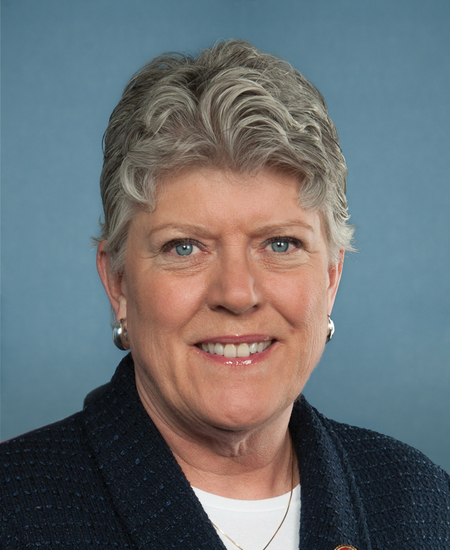
Rep. Julia Brownley
Sponsored bills
Higher Education Mental Health Act of 2021 This bill requires the Department of Education to establish an Advisory Commission on Serving and Supporting Students with Mental Health Disabilities in Institutions of Higher Education. The commission must conduct a study and report on services available to students with mental health disabilities in institutions of higher education (IHEs) and the effectiveness of such services in supporting these students; the impact of policies and procedures, such as reasonable accommodation and disciplinary policies, that help or hinder the goal of providing equal opportunity to these students; the use of protected health information of these students by IHEs; the impact of providing mental health services on a student's academic performance, well-being, and ability to complete college; conclusions on the major challenges facing these students; and recommendations to improve the overall education, retention, and graduation of these students.
Coffee Plant Health Initiative Amendments Act This bill expands the research and extension grant program for the coffee plant health initiative. Under current law, the Department of Agriculture (USDA) may provide competitive grants under the initiative to support research and extension activities to combat the insect known as the coffee berry borer (Hypothenemus hampei). Specifically, the bill authorizes USDA to provide competitive grants for developing and disseminating science-based tools and treatments to combat plant pests and noxious weeds that impact coffee plants; establishing an area-wide integrated pest management program in areas affected by, or at risk of being affected by, plant pests or noxious weeds that impact coffee plants; surveying and collecting data on coffee plant production and health; investigating coffee plant biology, immunology, ecology, genomics, and bioinformatics; and conducting research on various factors that may contribute to or be associated with coffee plant immune systems and other serious threats to coffee plants.
This resolution supports the designation of National Dyslexia Awareness Month and calls on Congress, schools, and educational agencies to recognize that dyslexia has significant educational implications that must be addressed.
This bill generally addresses the adverse effects of climate change with a particular focus on immigration. Specifically, the bill establishes an immigration pathway to admit climate-displaced persons into the United States. These are individuals (1) who need durable resettlement because of an environmental change that adversely affects their living conditions, and (2) whose government cannot or will not provide a resettlement solution. Persons admitted to the United States under this pathway are entitled to the same resettlement assistance and benefits available to refugees. Additionally, the bill authorizes the President to provide foreign assistance for promoting resilience and reducing vulnerability among communities facing adverse effects of climate change. It also creates the position of Coordinator of Climate Change Resiliency in the Department of State. Moreover, the State Department must implement, and periodically report on, a strategy to mitigate the impact of climate change on displacement and humanitarian emergencies. The State Department must also provide (1) training on climate displacement to foreign service officers assigned to countries from which climate-displaced persons originated, and (2) guidance on the humanitarian impacts associated with climate change to all U.S. diplomatic missions. The bill also requires the President to report on displacement caused by climate change.
Jaime's Law This bill establishes background check requirements for the sale and transfer of ammunition. Specifically, the bill prohibits a licensed importer, manufacturer, or dealer from transferring ammunition to an unlicensed individual prior to submitting a background check through the National Instant Criminal Background Check System. It also establishes penalties for violations. (Currently, background checks are required under these circumstances for the transfer of firearms, but not for ammunition.) Additionally, it prohibits an ammunition transfer between private parties (i.e., unlicensed individuals) unless a licensed importer, manufacturer, or dealer first takes possession of the ammunition to conduct a background check. However, this prohibition does not apply to certain ammunition transfers, such as a gift between spouses in good faith.
Honoring Our Fallen TSA Officers Act This bill extends public safety officers' death benefits to Transportation Security Administration employees performing official duties related to protecting the nation's transportation systems.
Keep Americans Safe Act This bill establishes a new criminal offense for the import, sale, manufacture, transfer, or possession of a large capacity ammunition feeding device (LCAFD). The bill does not prohibit certain conduct with respect to an LCAFD, including the following: importation, sale, manufacture, transfer, or possession related to certain law enforcement efforts, or authorized tests or experiments; importation, sale, transfer, or possession related to securing nuclear materials; and possession by a retired law enforcement officer. The bill permits continued possession of, but prohibits sale or transfer of, a grandfathered LCAFD. Newly manufactured LCAFDs must display serial number identification and the date of manufacture. Additionally, the bill allows a state or local government to use Edward Byrne Memorial Justice Assistance Grant Program funds to compensate individuals who surrender an LCAFD under a buy-back program.

Khalid Jabara and Heather Heyer National Opposition to Hate, Assault, and Threats to Equality Act of 2021 or the Jabara-Heyer NO HATE Act of 2021 This bill creates grants for state and local governments to combat hate crimes. It also authorizes additional penalties for hate crime offenses. Specifically, it establishes grants for states to create state-run hate crimes reporting hotlines. It also authorizes grants for states and local governments to implement the National Incident-Based Reporting System and to conduct law enforcement activities or crime reduction programs to prevent, address, or respond to hate crimes. Finally, in the case of an individual convicted of a hate crime offense and placed on supervised release, the bill allows a court to order that the individual participate in educational classes or community service as a condition of supervised release.
Healthcare Workforce Resilience Act This bill makes previously unused immigrant visas available to nurses and physicians who petition for such a visa before the date that is 90 days after the end of the declared national emergency relating to the COVID-19 (i.e., coronavirus disease 2019) outbreak. The number of visas available shall be the total number of unused employment-based immigrant visas from FY1992-FY2020, up to 40,000. Of such visas, 25,000 shall be reserved for nurses and 15,000 for physicians. Certain family members may accompany the principal beneficiary of a visa provided under this bill, and visas for such family members shall (1) be made available from the unused visas from FY1992-FY2020, and (2) not be counted against the 40,000 cap. Visas provided under this bill shall be exempt from per-country limitations.