

This bill authorizes the Department of Agriculture to waive the matching funds requirement for grants under the specialty crop research initiative. Currently, entities that receive grants under the initiative must provide nonfederal matching funds (including funds from an agricultural promotion, research, and information program) equal to not less than the amount of the grant.
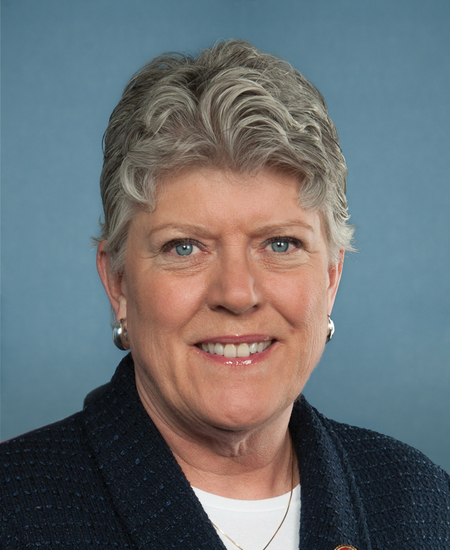
Rep. Julia Brownley
Sponsored bills
Maddy summaryThe COMPOST Act (HR 651) makes composting a recognized conservation practice under federal farm programs, directly affecting farmers, local governments, and community organizations. It creates a new $200 million annual grant and loan program (2024-2033) to fund projects like composting facility construction, food waste collection systems, and onsite composting programs. Priority is given to projects serving low-income communities, supporting minority-owned businesses, and using distributed infrastructure (e.g., home, farm, or community-scale composting). The bill requires projects to demonstrate waste processing capacity, high-quality compost production, and environmental justice considerations.
Maddy summaryHR 1124, the Federal Death Penalty Abolition Act of 2023, would eliminate the federal death penalty by repealing provisions in over 30 sections of U.S. Code that currently allow for capital punishment in various criminal offenses. The bill would affect anyone convicted of a federal crime that currently carries the death penalty, including murder during drug trafficking, terrorism, and other violent crimes. It would remove the death penalty as a sentencing option for these offenses and require resentencing for those already under a death sentence. The bill also makes related changes to military justice procedures that currently permit capital punishment.
Maddy summaryThe RISEE Act of 2023 creates a National Oceans and Coastal Security Fund to support coastal communities and ecosystems. It allocates 37.5% of offshore wind revenue directly to eligible coastal states using a formula based on tidal shoreline length, coastal population density, and distance from offshore wind projects. States must use these funds for coastal protection, habitat restoration, infrastructure, or fisheries research, with strict annual reporting requirements to the Department of the Interior. The bill prohibits using these funds for litigation or creating marine monuments, ensuring resources directly support coastal community needs.
Maddy summaryHR 724, the Arctic Refuge Protection Act, repeals the existing oil and gas program for the Arctic National Wildlife Refuge in Alaska and designates approximately 1.56 million acres of the refuge's coastal plain as federal wilderness. This bill directly affects the Arctic Refuge by permanently prohibiting oil and gas leasing and development in that specific area. The key mechanism is adding the designated land to the National Wilderness Preservation System under the Wilderness Act, requiring it to be managed for its natural conditions. This change legally protects the area from future fossil fuel extraction activities.
Boundary Waters Wilderness Protection and Pollution Prevention Act This bill withdraws approximately 234,328 acres of federal land and waters in a specified area in the Rainy River Watershed of Superior National Forest in Minnesota from entry, appropriation, and disposal under the public land laws; location, entry, and patent under the mining laws; and operation of the mineral leasing, mineral materials, and geothermal leasing laws. The area is adjacent to the Boundary Waters Canoe Area Wilderness and the Boundary Waters Canoe Area Wilderness Mining Protection Area. Land or interest in land within such area that is acquired by the United States shall be immediately withdrawn in accordance with this bill. The Forest Service is authorized to permit the removal of sand, granite, iron ore, and taconite from national forest system lands within such area if the removal is not detrimental to the water quality, air quality, and health of forest habitat within the Rainy River Watershed.
Maddy summaryThis bill prohibits the federal government from issuing oil and gas leases for exploration, development, or production on the outer Continental Shelf off the coasts of California, Oregon, and Washington. It amends the Outer Continental Shelf Lands Act to specifically block the Secretary of the Interior from authorizing such leasing in those coastal areas. The direct effect is on the Department of the Interior, which would no longer be permitted to conduct lease sales in these regions. The bill does not create new programs or funding but changes existing leasing authority.
Maddy summaryThis resolution (HRES 99) is a non-binding statement supporting National Black HIV/AIDS Awareness Day, observed annually on February 7. It directly addresses the disproportionate impact of HIV/AIDS on Black communities in the U.S., citing data showing Black Americans face higher diagnosis rates, later care access, and greater mortality compared to other groups. The resolution encourages state/local governments and health agencies to promote HIV testing and awareness, supports the National HIV/AIDS Strategy, and advocates for culturally competent care and the "U=U" (Undetectable equals Untransmittable) messaging. It does not create new laws or allocate funding but urges recognition of existing disparities and community-led solutions.
Maddy summaryHR 1088, the Shirley Chisholm Congressional Gold Medal Act, authorizes a posthumous Congressional Gold Medal to honor Congresswoman Shirley Chisholm, the first African-American woman elected to Congress (1968) and the first Black candidate for a major party's presidential nomination (1972). The bill directs the Treasury Secretary to design and strike a gold medal featuring Chisholm's image, which will be presented by Congress and then permanently displayed at the Smithsonian Institution. Duplicate bronze medals may be sold to the public to cover production costs, with proceeds deposited into the U.S. Mint fund. This bill commemorates Chisholm's legacy and achievements without creating new laws or affecting any current policies.
Maddy summaryHR 1078, the Veteran Education Empowerment Act, establishes a federal grant program to help colleges and universities create or improve dedicated Student Veteran Centers. The bill authorizes up to $500,000 per institution over four years for centers providing lounge space, benefits counseling, academic support, and peer mentorship specifically for veterans, active-duty service members, and their families. Eligible institutions must serve a significant veteran population and demonstrate long-term sustainability. The program requires annual reporting on center usage, veteran demographics, and outcomes like degree completion, with the Department of Education mandated to share best practices via a public website. This directly supports veterans navigating higher education challenges like transition difficulties and isolation.