

Maddy summaryThis bill improves the VA Work-Study program for veterans and active-duty military members by expanding eligible work opportunities to include roles with state/local governments and nonprofits that support veterans. It establishes a higher minimum wage standard, requiring payments to meet the highest of federal, state, or local minimum wage rates. The bill also requires electronic time tracking for participants and annual public reporting on program data, including participant demographics, wages, hours worked, and participating schools. These changes apply to work-study payments made on or after January 1, 2026.
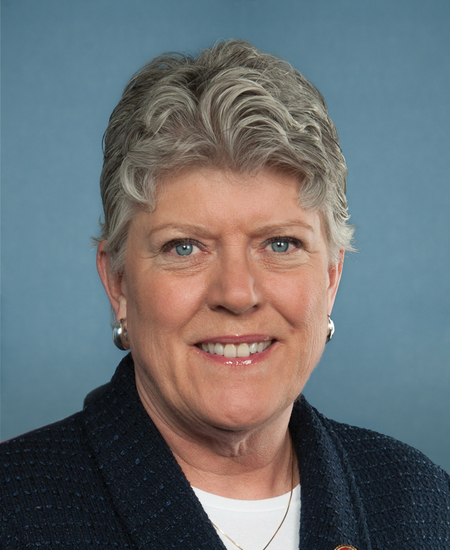
Rep. Julia Brownley
Sponsored bills
Maddy summaryThe Equality Act (HR 15) would amend federal civil rights laws to explicitly prohibit discrimination based on sexual orientation and gender identity in public accommodations, housing, employment, credit, and jury service. It amends the Civil Rights Act of 1964 to include sexual orientation and gender identity as protected characteristics under existing sex discrimination provisions. The bill would require businesses, housing providers, employers, and government entities to provide equal access and services without regard to a person's sexual orientation or gender identity. It includes specific definitions for gender identity and sexual orientation to clarify protections across all covered areas. The law would apply to all entities covered by the Civil Rights Act of 1964, including those receiving federal funding.
Maddy summaryHRES 520 is a symbolic resolution expressing the U.S. House of Representatives' support for designating the second week of June as "Children's Week" in the United States. It does not create new laws or allocate funds but urges the President to issue a proclamation encouraging public observance through ceremonies and activities focused on children's well-being. The resolution highlights challenges children face, such as poverty and safety concerns, and calls for collaboration between organizations, businesses, and individuals to support children's futures. It directly affects the public and participating organizations by promoting awareness of children's issues during this designated week. As a non-binding resolution, it serves only as a formal expression of support without altering existing policies.
Maddy summaryHR 4178, the Quiet Communities Act of 2023, reestablishes the Environmental Protection Agency's (EPA) Office of Noise Abatement and Control, which was defunded in 1982. The bill directly affects communities exposed to harmful noise pollution from sources like aircraft, traffic, and highways, impacting millions with hearing impairments or health risks. Key mechanisms include authorizing $25 million annually for the EPA office to provide technical assistance and grants to states for local noise control programs, fund national research on noise health impacts, and conduct a study on aircraft noise effects. The bill also repeals outdated provisions from the 1970 Noise Control Act to modernize the EPA's role in addressing noise pollution.
Maddy summaryHR 4121, the Right to Contraception Act, establishes a federal statutory right for individuals to access contraceptives and contraception services without government restriction or coercion, directly affecting all people seeking reproductive care and health care providers. The bill prohibits state or federal laws that limit access to contraceptives (defined broadly to include devices, drugs, and fertility methods), prevent individuals from obtaining or using them, or allow providers to refuse services based on personal beliefs. It preempts conflicting state laws, requires any restrictions to be justified by "clear and convincing evidence" of advancing access with no less restrictive alternative, and allows private lawsuits to challenge violations. The Act applies nationwide to all health care providers and individuals, protecting access regardless of factors like race, income, or location.
Maddy summaryThis bill gives the FDA authority to request access to concentrated animal feeding operations (CAFOs) for microbial sampling during foodborne illness outbreaks. CAFOs must provide reasonable access for sampling plants, animals, water, or environmental samples to investigate outbreaks or address public health needs. The law does not impose new food safety requirements on CAFOs beyond this sampling during specific investigations and explicitly maintains existing USDA oversight for meat, poultry, and egg products. It also requires FDA to share collected data with USDA and state health agencies to support outbreak response efforts.
Maddy summaryHR 4052, the National Infrastructure Bank Act of 2023, would establish a federally chartered National Infrastructure Bank to address the estimated $2.6 trillion infrastructure financing gap identified by the American Society of Civil Engineers. The bank would provide loans, loan guarantees, and blended financing for infrastructure projects in transportation, energy, environmental systems, broadband, and community development, with a total loan limit of $5 trillion. Projects must demonstrate public benefits including economic growth, job creation, environmental improvements, and community development, with priority given to disadvantaged communities and projects meeting specific criteria. The bank would be capitalized with up to $500 billion through the purchase of Treasury securities and other means, operating under a 25-member Board of Directors with oversight mechanisms to ensure accountability.
Maddy summaryHR 4076 establishes a joint U.S.-Israel program to fund health technology development, authorizing $4 million annually (2024-2026) through the U.S. Health and Human Services Department. It requires Israel to match U.S. funding and focuses on collaborative projects in artificial intelligence, vaccines, telemedicine, diagnostic tests, and data-driven personalized medicine for emerging infectious diseases. The program can either build on an existing U.S.-Israel agreement or create a new one under a 2008 science cooperation framework. This bill directly affects U.S. federal health agencies and the Israeli government, with funds restricted to joint projects meeting specific technological and health priorities.
Maddy summaryHR 3946, the FASD Respect Act, establishes a new federal program within the Department of Health and Human Services (HHS) to address fetal alcohol spectrum disorders (FASD). The bill creates FASD Centers for Excellence to build state, tribal, and national capacity for prevention, identification, and support services - directly affecting individuals with FASD, their families, and healthcare providers. Key provisions include developing standardized diagnostic guidelines, expanding screening and training for medical professionals, creating a national resource directory for FASD services, and promoting culturally informed interventions. The program requires HHS to report to Congress on progress within four years. This legislation restructures existing HHS authority to focus comprehensively on FASD across the lifespan, replacing older terminology with consistent "FASD" references.
Maddy summaryHR 4184 repeals legal protections for gun manufacturers and sellers under the Protection of Lawful Commerce in Arms Act. It allows victims of gun violence to use gun trace data from the ATF's Firearms Trace System in civil court cases. This data, previously protected from discovery, can now be subpoenaed, admitted as evidence, and relied upon in lawsuits against gun sellers or manufacturers. The bill directly affects victims seeking legal recourse and gun industry defendants in civil litigation.