Strengthening Tribal Families Act of 2022 This bill requires a state plan for child welfare services and a state plan related to the Promoting Safe and Stable Families Program to ensure that the state shall comply with all federal standards established under the Indian Child Welfare Act of 1978. Additionally, the bill directs the Department of Health and Human Services to submit biennial reports to Congress on certain reviews of child and family service programs.
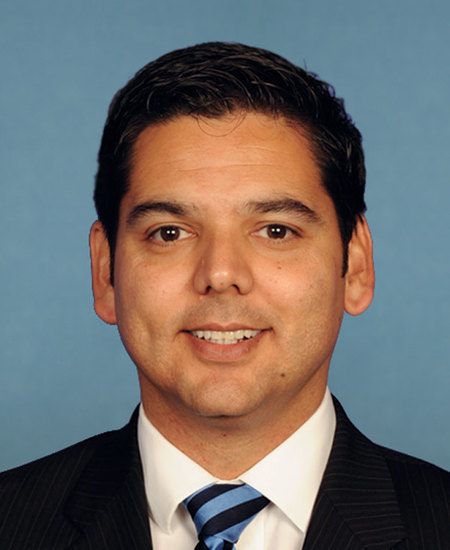
Rep. Raul Ruiz
Sponsored bills
Social Security Fairness Act of 2021 This bill repeals provisions that reduce Social Security benefits for individuals who receive other benefits, such as a pension from a state or local government. The bill eliminates the government pension offset , which in various instances reduces Social Security benefits for spouses, widows, and widowers who also receive government pensions of their own. The bill also eliminates the windfall elimination provision , which in some instances reduces Social Security benefits for individuals who also receive a pension or disability benefit from an employer that did not withhold Social Security taxes. These changes are effective for benefits payable after December 2021.
This resolution recognizes (1) the celebration of Hispanic Heritage Month; and (2) the integral role of Latinos and their manifold heritage in the economy, culture, and identity of the United States.
Physician Wellness Program Act of 2022 This bill exempts wellness programs that provide certain mental or behavioral health services for physicians from restrictions under the Stark law (i.e., the Physician Self-Referral Law) and federal anti-kickback laws.
Improving Seniors' Timely Access to Care Act of 2022 This bill establishes several requirements and standards relating to prior authorization processes under Medicare Advantage (MA) plans. Specifically, MA plans must (1) establish an electronic prior authorization program that meets specified standards, including the ability to provide real-time decisions in response to requests for items and services that are routinely approved; (2) annually publish specified prior authorization information, including the percentage of requests approved and the average response time; and (3) meet other standards, as set by the Centers for Medicare & Medicaid Services, relating to the quality and timeliness of prior authorization determinations.
This resolution condemns Azerbaijan's September 2022 military attack on Armenia and Nagorno-Karabakh and calls for an end to all U.S. assistance to Azerbaijan.
Supporting Medicare Providers Act of 2022 This bill extends a payment increase under Medicare's physician fee schedule through the end of 2023 (currently set to expire at the end of 2022).
Building a Health Care Workforce for the Future Act This bill establishes, within the Department of Health and Human Services (HHS), grant programs for health professional education and training. It also requires the National Academy of Medicine (formerly known as the Institute of Medicine) to study the documentation requirements for cognitive services under Medicare, Medicaid, and private health insurers, including administrative and labor costs of such documentation. For the first grant program, HHS must award matching grants to states for scholarships to ensure an adequate supply of health professionals. As a condition of receiving scholarships, recipients must agree to work in areas with shortages of health care providers for one year for each year they receive the scholarship. For the second grant program, HHS must award grants to medical and other health professions schools to improve curricula for, and education and training on, certain priority competencies, such as patient-centered medical homes and chronic disease management. The Advisory Committee on Training in Primary Care Medicine and Dentistry shall select these competencies annually. For the last grant program, HHS may award grants to medical schools for primary care mentorship programs to support faculty who serve as mentors and encourage interest in primary care among students.

Wounded Warrior Research Enhancement Act This bill requires the Department of Defense to award grants to advance orthotic and prosthetic care for members of the Armed Forces, veterans, and civilians who have undergone amputation, traumatic brain injury, and other serious injuries resulting from combat or military experience. The grants must fund research on (1) outcomes for such patients, (2) materials used in orthotics and prosthetics, and (3) improving existing orthotic and prosthetic technology and the development of new technology.
Wounded Warrior Workforce Enhancement Act This bill requires the Department of Veterans Affairs (VA) to award grants to eligible institutions to (1) establish a master's degree program in orthotics and prosthetics, or (2) expand upon an existing master's degree program in such area. The VA shall give grant priority to institutions that have entered into a partnership with a medical center administered by the VA or a facility administered by the Department of Defense. An eligible institution is an educational institution that is either accredited by the National Commission on Orthotic and Prosthetic Education or that demonstrates an ability to meet such accreditation requirements if it receives a grant. The bill also requires the VA to award a grant to an institution with orthotic and prosthetic research and education experience to (1) establish the Center of Excellence in Orthotic and Prosthetic Education; and (2) improve orthotic and prosthetic outcomes for veterans, members of the Armed Forces, and civilians by conducting orthotic and prosthetic research.