

Seasonal Worker Solidarity Act of 2022 This bill modifies the H-2B (temporary nonagricultural workers) visa program and expands protections for aliens who report workplace violations. Changes to the H-2B program include requiring the Department of Labor to establish a centralized national electronic platform for U.S. workers to find and apply for positions that employers are seeking to fill with H-2B workers; requiring employers to recruit U.S. workers nationwide, including by posting the openings on the platform, before applying for H-2B visas; requiring employers to guarantee at least 40 hours of paid work per week for each H-2B worker (currently employers may guarantee fewer paid hours in certain instances); requiring employers to pay for housing for H-2B workers and transportation to and from the work site (currently employers are allowed to deduct fees for lodgings from an H-2B worker's pay); modifying the requirements for determining the minimum wage for H-2B workers; and prioritizing H-2B visas for certain employers, such as those that pay higher wages. Furthermore, an alien who has worked a certain amount of time as an H-2B worker may obtain permanent resident status, subject to various requirements. In addition, an alien who is likely helpful in an investigation of a workplace claim (i.e., an alleged violation of law or workplace-related injury) may qualify for a U visa for victims of criminal activity. The bill also removes statutory numerical limitations on U visas. The bill also provides protections for certain aliens who file or assist in the investigation of workplace claims.
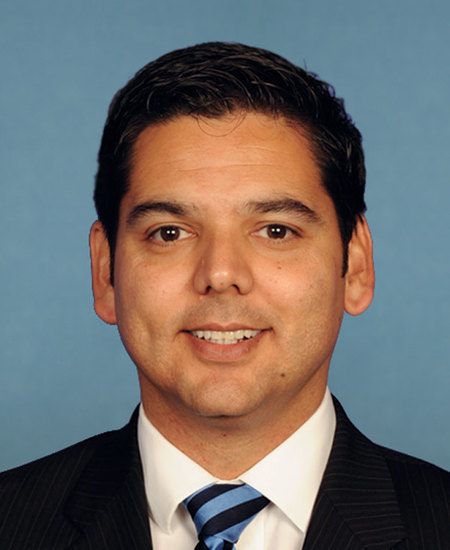
Rep. Raul Ruiz
Sponsored bills
Humanitarian Standards for Individuals in Customs and Border Protection Custody Act This bill imposes requirements and standards related to the care of aliens in U.S. Customs and Border Protection (CBP) custody. CBP must conduct an initial health screening of each individual in custody to identify those with acute conditions and high-risk vulnerabilities and to provide appropriate healthcare. CBP must conduct the screening within 12 hours of each individual's arrival at a CBP facility, and within 6 hours for certain priority individuals such as children and individuals with disabilities. The bill imposes various requirements related to providing such screenings, such as providing interpreters, chaperones, and mental health treatment when necessary. CBP must ensure detainees have access to drinking water, toilets, sanitation facilities, hygiene products, food, and shelter. The bill imposes certain standards relating to such requirements, such as the minimum amount of drinking water for each detainee and the acceptable temperature range of the shelters. The Department of Homeland Security (DHS) must enter into memoranda of understanding with various government agencies to address instances when surge capacity is necessary. The DHS Office of the Inspector General must conduct unannounced inspections of ports of entry, border patrol stations, and detention facilities and report the results to Congress. The Government Accountability Office must assess CBP's management of such facilities, whether CBP and DHS processes are in compliance with this bill's requirements, and the behavior of CBP personnel in carrying out this bill. DHS shall publicly release on its website, on a quarterly basis, aggregate data on complaints of sexual abuse at CBP facilities.
Latonya Reeves Freedom Act of 2022 This bill prohibits government entities and insurance providers from denying community-based services to individuals with disabilities that require long-term service or support that would enable such individuals to live in the community and lead an independent life. Specifically, these entities may not discriminate against such individuals in the provision of community-based services by such actions as imposing prohibited eligibility criteria, cost caps, or waiting lists or failing to provide a specific community-based service. Additionally, community-based services must be offered to individuals with such disabilities prior to institutionalization. Institutionalized individuals must be notified regularly of community-based alternatives. The bill requires the Department of Justice to issue regulations requiring government entities and insurance providers to offer community-based long-term services to individuals with such disabilities who would otherwise qualify for institutional placement. Government entities must ensure sufficient availability of affordable, accessible, and integrated housing that is not a disability-specific residential setting or a setting where services are tied to tenancy. Regulations shall also (1) require government entities and insurance providers to perform self-evaluation on current services, policies, and practices and concerning compliance with requirements of this bill; and (2) require government entities to submit a transition plan. The bill provides funds for FY2022 for the Department of Health and Human Services to provide technical assistance with respect to transition plans. The bill allows civil actions by individuals subjected to, or about to be subjected to, a violation of its requirements.
Porch Pirates Act of 2022 This bill extends federal criminal penalties for obstruction of correspondence and theft of stolen mail matter (which apply to U.S. Postal Service mail) to matter (e.g., packages) sent or delivered by private or commercial interstate carriers.
Good Samaritan Health Professionals Act of 2021 This bill extends liability protection for harm caused by acts or omissions by volunteer health care professionals in the course of providing certain health care services during specified public-health or national emergencies or major disasters. However, such liability protection shall not apply if (1) the harm was caused by willful or criminal misconduct, gross negligence, reckless misconduct, or a conscious flagrant indifference to the rights or safety of the individual harmed; or (2) the health care professional provided services under the influence of alcohol or an intoxicating drug.
Frank Harrison, Elizabeth Peratrovich, and Miguel Trujillo Native American Voting Rights Act of 2021 This bill addresses the voting rights of Native American and Alaska Native voters and voting access on tribal lands. The bill includes provisions expanding the types of facilities that can be used as voter registration agencies; increasing polling site accessibility, including by expanding early in-person voting and providing ballot drop boxes; providing enforcement power to citizens and attorneys general; requiring approval for actions like moving a polling place; validating certain tribal identification for voting or registering to vote; permitting voters to designate another individual to return a ballot on their behalf; and expanding requirements for bilingual voting accessibility. In addition, the bill establishes a Native American voting task force grant program for the purpose of increasing voter outreach, education, registration, turnout, and accessibility for Native American communities. The bill also directs the Government Accountability Office to study and report on (1) the prevalence of nontraditional or nonexistent mailing addresses among Indians, members of tribes, and individuals residing on Indian lands; and (2) the alternatives for removing barriers to voter registration, receipt of voter information and materials, and receipt of ballots.
Vote Without Fear Act This bill establishes new federal criminal offenses for possessing a firearm or causing a firearm to be present in or within 100 yards of a federal election site.
Disarm Hate Act The bill expands the categories of persons who are prohibited from receiving or possessing a firearm. Specifically, it prohibits firearm sale or transfer to and receipt, possession, shipment, or transport by a person (1) who has been convicted of a misdemeanor hate crime, or (2) who has received an enhanced hate crime misdemeanor sentence.
Greater Leadership Overseas for the Benefit of Equality Act of 2021 or the GLOBE Act of 2021 This bill contains provisions related to (1) the protection of LGBTQI individuals globally; and (2) immigration protections for vulnerable individuals. The bill establishes (1) an interagency group to respond to urgent threats to LGBTQI people in foreign countries, and (2) a permanent Special Envoy for the Human Rights of LGBTQI Peoples in the Department of State. The President shall impose visa-blocking sanctions on foreign persons responsible for violating the human rights of individuals based on sexual orientation, gender identity, or sex characteristics. The State Department shall establish the Global Equality Fund to provide assistance to nongovernmental organizations working to advance and protect human rights. The U.S. Agency for International Development shall establish the LGBTQI Global Development Partnership to work with the private sector and nongovernmental organizations to support LGBTQI rights. The bill removes prohibitions against providing foreign assistance to nongovernmental organizations that offer certain medical services (e.g., abortion-related services) using non-U.S. government funds. The bill contains several immigration-related provisions, such as those establishing that persecution based on sexual orientation or gender identity may form the basis of an asylum request, allowing certain applicants to file asylum claims more than a year after their arrival in the United States, including a permanent partnership between two partners as a marriage for immigration law purposes, providing for free counsel in certain immigration proceedings, and granting U.S. citizenship to a child born abroad through assistive reproductive technology from a U.S. citizen who is the child's nonbiological parent.
Requirements, Expectations, and Standard Procedures for Effective Consultation with Tribes Act or the RESPECT Act This bill establishes tribal consultation procedures for federal agencies. Specifically, the bill requires federal agencies to consult with tribal governments (1) before undertaking any proposed federal activity or finalizing any federal regulatory action that may have a tribal impact, and (2) for all activities that would affect any part of federal land sharing a border with Indian land. Tribal impact refers to any federal action that may have an impact on tribal governments, including tribal cultural practices and tribal treaty-protected rights. Agencies must prepare tribal impact statements to identify potential tribal impacts of a proposed activity or action. Agencies must also make a good faith effort to identify areas that contain sacred sites important to tribal governments. The bill further outlines consultation requirements, including outreach and meeting arrangements. In general, the consultation shall conclude only upon the execution of a memorandum of agreement between the agency and the tribal government or the members of a designated tribal leader task force. Next, the bill requires agencies to take certain actions during the decision stage for a proposed activity (e.g., public comment) and for a regulatory action. Agencies must recognize and respect tribal self-government and sovereignty and grant tribal governments maximum discretion in the administration of federal statutes and regulations. Tribal governments may seek judicial review of a determination of an agency under this bill if the tribal government has exhausted all other administrative remedies.