

Maddy summaryHR 6592, the Fight Book Bans Act, provides federal grants to reimburse public school districts for legal costs when they choose to keep instructional or library materials after parental objections. It directly affects school districts (covered local educational agencies) that select materials for students and handle challenges to their removal. The bill authorizes up to $100,000 per case in grants to cover attorney fees and court costs, provided the district didn’t remove the materials and wasn’t reimbursed by the state. Funding of $15 million is authorized for fiscal years 2024-2028. The grants are strictly for legal challenges to decisions not to remove materials, not for the content of the materials themselves.
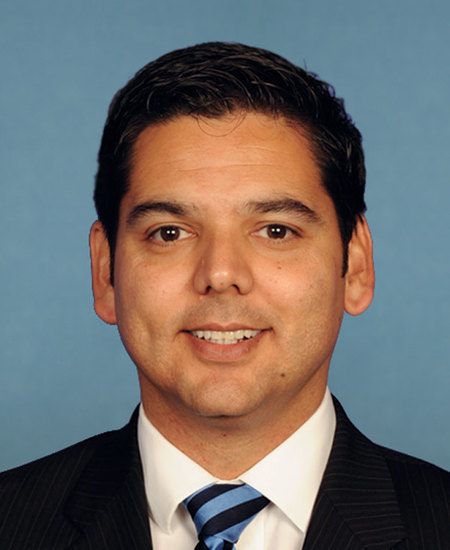
Rep. Raul Ruiz
Sponsored bills
Urban Indian Health Parity Act This bill applies a Federal Medical Assistance Percentage (i.e., the federal matching rate under Medicaid) of 100% with respect to amounts expended as medical assistance for services received through an Urban Indian organization under a grant or contract with the Indian Health Service.
Maddy summaryThis bill reauthorizes the Never Again Education program, which funds Holocaust education initiatives in schools. It extends the program's funding authorization period from ending after four fiscal years to continuing annually through fiscal year 2030. The bill modifies the existing law (Public Law 116-141) by updating the funding timeline without changing program requirements or eligibility. It directly affects the existing grant program supporting educational materials and teacher training on the Holocaust. The change ensures continued federal funding for these specific educational efforts until 2030.
Maddy summaryHRES 870 is a symbolic House resolution supporting National Rural Health Day, observed annually on the third Thursday of November. It recognizes rural health care providers and the 60+ million people living in rural communities who face challenges like hospital closures, limited access to care, and health disparities. The resolution expresses commitment to improving rural health care accessibility and affordability but includes no new funding, programs, or policy changes - only a formal acknowledgment of existing efforts. It directly affects rural communities by honoring their health care contributions through a non-binding statement.
Maddy summaryHRES 793 is a resolution passed by the U.S. House of Representatives calling on Hamas to immediately release all 199 hostages taken during Hamas' October 7, 2023 attack on Israel. The resolution condemns Hamas for the attack, the taking of hostages, and threats against hostages, while stating that holding hostages violates international humanitarian law under the Geneva Conventions. It demands the immediate release of all hostages and expresses sympathy for victims and their families. As a symbolic resolution, it does not create legal obligations but formally expresses the House's position.
Maddy summaryHR 6451, the Mental Health Justice Act of 2023, provides $250 million in federal grants to states, tribes, and localities to hire mental health professionals as first responders for specific emergencies. It directs these professionals to replace police in situations involving mental health crises, substance use, or intellectual/developmental disabilities - such as when a 911 caller describes a mental health emergency or a first responder identifies someone needing mental health support. The bill requires grantees to train responders in de-escalation techniques, link individuals to community-based services (not incarceration), and report on outcomes like reduced arrests or use of force. It also mandates data collection on demographics and prevents funneling people into institutional settings, with annual reports to Congress on program effectiveness.
Maddy summaryHRES 886 is a non-binding House resolution supporting Transgender Day of Remembrance (TDoR) by recognizing the epidemic of violence against transgender people and memorializing those lost in the year ending September 30, 2023. It specifically acknowledges the disproportionate impact of violence on transgender women of color, citing 33 documented deaths in the U.S. during that period (with estimates suggesting the actual number is higher due to underreporting). The resolution calls for Congress to prioritize studying and preventing such violence while affirming that all transgender people deserve dignity and respect. As a symbolic resolution, it does not create new laws or allocate funding but serves to raise awareness and honor victims.
Maddy summaryHRES 875 is a symbolic House resolution expressing support for National Adoption Day (November 18, 2023) and National Adoption Month (November). It does not create new laws or policies but formally encourages the public to consider adoption and recognizes the importance of permanent families for children in foster care. The resolution highlights that approximately 114,000 children in the U.S. foster system await adoption and emphasizes the goal of securing safety and permanency for all children. It urges Americans to support adoption efforts during November and throughout the year. This resolution has no direct legal effect on adoption processes or funding.
Maddy summaryHR 6433, the PARA-EMT Act of 2023, creates a federal grant program to address critical shortages in emergency medical services (EMS) personnel. It authorizes $50 million annually (2024-2028) for grants to EMS agencies to fund recruitment, training, and retention programs - including initiatives for veterans, rural communities, and youth - while requiring 20% of grants to support rural agencies. The bill also establishes a separate $20 million annual grant program to help veterans with military EMS training meet civilian certification requirements and mandates a federal study on projected EMS workforce needs through 2032. These provisions directly affect EMS agencies, training programs, and veterans seeking civilian EMS careers.
Maddy summaryHR 6251, the HERO Act, provides $1 billion in federal grants to K-12 schools (both public and private) to purchase opioid overdose reversal drugs and develop staff training programs. Schools receiving funds must create emergency response plans for staff and implement educational resources on overdose prevention, CPR, and emergency response. Priority is given to schools in areas with high opioid overdose rates. Grantees must report drug usage and training outcomes to national health databases like NEMSIS and ODMAP.