

Maddy summaryHR 8714, the "Home of Your Own Act of 2024," establishes a federal grant program administered by the Department of Housing and Urban Development (HUD) to assist first-time homebuyers. It provides up to $30,000 per person for down payments, closing costs, or necessary home repairs to make a home accessible for people with household incomes up to 120% of local median income (150% in high-cost areas). States and tribes receiving funds must distribute at least 25% through community development financial institutions and require financial counseling for applicants. The assistance must be repaid if the home is not occupied as a primary residence for 60 months, with exceptions for hardship or selling at a loss, and the program is funded at $6.7 billion annually for 2025-2029.
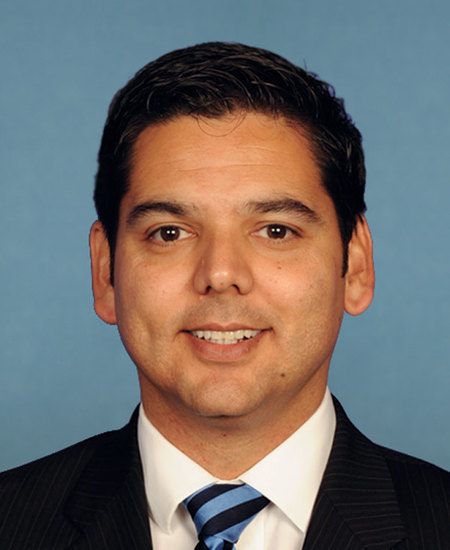
Rep. Raul Ruiz
Sponsored bills
Maddy summaryHR 537 authorizes a Congressional Gold Medal to honor 60 diplomats who saved Jewish lives during the Holocaust by issuing visas and passports against their governments' orders, risking expulsion and personal danger. The medal will be presented to the next of kin of these diplomats, alongside representatives from their home countries, and permanently displayed at the United States Holocaust Memorial Museum. The bill also permits the sale of bronze duplicates to cover production costs, with proceeds going to the U.S. Mint. This legislation recognizes the diplomats' humanitarian actions without creating new government programs or altering existing laws.
Maddy summaryHR 8682, the Water Conservation Rebate Tax Parity Act, expands tax-exempt treatment for rebates related to water conservation and management. It modifies the tax code to exclude from income tax subsidies provided by public utilities or local governments for residential water conservation measures (like low-flow fixtures), storm water management (such as rain gardens), and wastewater management (like septic systems) at a homeowner's principal residence. The bill defines these specific measures clearly and ensures rebates for these purposes are treated similarly to existing energy conservation tax exclusions. This change applies to rebates received after December 31, 2021.
Maddy summaryHR 8698, the SCREEN for Type 1 Diabetes Act of 2024, directs the CDC to launch a national public awareness campaign about type 1 diabetes detection and screening. The campaign will provide written materials on early symptoms and screening benefits, develop public service announcements across media platforms, and distribute culturally competent resources to healthcare providers, schools, and public health departments. It specifically targets communities with rising type 1 diabetes incidence and requires consultation with health organizations and affected communities. The bill authorizes $5 million annually from 2025-2029 to fund this campaign and mandates a report to Congress on its impact one year after enactment.
Maddy summaryHR 1687 names the United States Postal Service facility at 6444 San Fernando Road in Glendale, California, as the "Paul Ignatius Post Office." All official U.S. government references to this location - such as in laws, maps, or documents - will now use the new name. This is a procedural bill with no policy changes beyond the naming designation.
Maddy summaryThe George Floyd Justice in Policing Act of 2024 establishes a National Police Misconduct Registry to track complaints and disciplinary actions against officers, requiring all federal, state, and local law enforcement agencies to report use-of-force incidents with racial, gender, and age data. It bans chokeholds and carotid holds in police encounters, prohibits no-knock warrants in drug cases, and reforms qualified immunity to make it harder for officers to avoid accountability for misconduct. The bill mandates body cameras for federal officers, requires independent investigations of officer-involved shootings, and creates new data collection systems to monitor racial profiling and use-of-force patterns. It also includes provisions for civilian oversight boards, improved officer training on de-escalation and implicit bias, and restrictions on military equipment transfers to local police departments. This law affects all law enforcement agencies receiving federal funding under programs like Byrne and COPS grants.
Maddy summaryThe SIREN Reauthorization Act (HR 4646) reauthorizes a federal program supporting rural emergency medical services (EMS) from 2024 through 2028. It directly affects rural EMS providers and personnel by requiring training on mental health and substance use disorders in emergency settings and allowing the acquisition of FDA-approved drugs for overdose treatment. Key provisions include updating the program's funding period, mandating new training standards for EMS staff, and expanding equipment access to include overdose-reversal medications. The bill amends Section 330J of the Public Health Service Act to implement these changes.
Maddy summaryThis bill amends the 2022 Camp Lejeune Justice Act to clarify and correct technical details. It updates eligibility requirements for claimants (requiring 30 days at Camp Lejeune and defining "latent harm" instead of "latent disease"), clarifies court jurisdiction for cases, and specifies attorney fee structures (20% pre-litigation, 25% post-litigation). The changes directly affect individuals who developed health issues due to contaminated water at Camp Lejeune, streamlining their legal process under the existing 2022 law.
Maddy summaryHR 5754 renames the U.S. courthouse at 350 W. 1st Street, Los Angeles, California, as the "Felicitas and Gonzalo Mendez United States Courthouse." The bill updates all federal references - such as legal documents, maps, and records - to use the new name. This is a ceremonial designation with no policy changes or direct impact on citizens or laws. The bill solely affects the courthouse's official name and related federal paperwork.
Maddy summaryHRES 1229 designates May 15, 2024, as "National Senior Fraud Awareness Day" to highlight scams targeting seniors in the U.S. It does not create new laws but urges awareness about common fraud types (like impersonation scams and tech support fraud) and encourages existing organizations - such as law enforcement, area agencies on aging, and financial institutions - to prevent scams and educate seniors. The resolution specifically recognizes the need to address underreported fraud, including scams causing seniors to lose over $2 billion annually, and promotes coordinated efforts to improve protections.