

Maddy summaryThe PROVE Act requires states to allow 16- and 17-year-olds to pre-register to vote in federal elections, with their registration automatically activating upon turning 18. States may also permit pre-registration for younger minors. The bill provides $25 million in grants to states for programs promoting youth civic engagement, including modifying school curricula to teach election processes and encouraging use of the pre-registration system. It directly affects minors aged 16-17 and aims to increase their participation in federal elections.
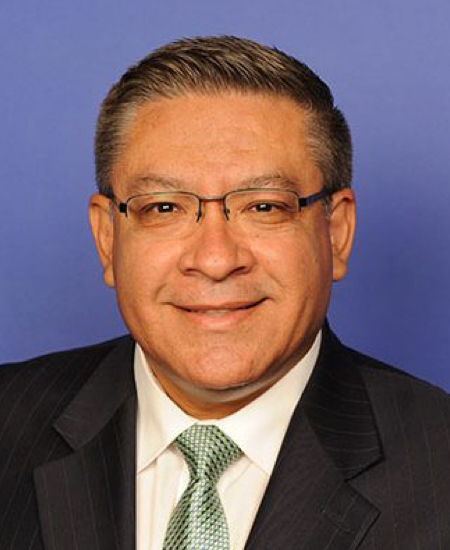
Rep. Salud O. Carbajal
Sponsored bills
Maddy summaryHR 8617, the Adoptee Citizenship Act of 2024, automatically grants U.S. citizenship to certain internationally adopted individuals who meet specific criteria. It directly affects adoptees adopted by U.S. citizen parents before age 18, who were physically present in the U.S. in legal custody before age 18, never acquired citizenship before the bill's enactment, and were residing in the U.S. on the bill's effective date. For those already in the U.S., citizenship becomes automatic upon meeting these conditions; for those abroad, citizenship is granted upon lawful entry. The bill removes barriers that previously prevented automatic citizenship for these adoptees under prior immigration rules. It requires background checks for visa issuance but exempts applicants from standard inadmissibility grounds.
Maddy summaryHR 1687 names the United States Postal Service facility at 6444 San Fernando Road in Glendale, California, as the "Paul Ignatius Post Office." All official U.S. government references to this location - such as in laws, maps, or documents - will now use the new name. This is a procedural bill with no policy changes beyond the naming designation.
Maddy summaryHRES 1215 is a non-binding resolution calling on elected officials, civil society leaders, and educators to promote public awareness of Jewish American contributions. It urges these groups to condemn antisemitism, educate communities about Jewish Americans' historical and cultural impacts (including in science, civil rights, and arts), and support safety measures for Jewish communities. The resolution cites a 140% rise in antisemitic incidents in 2023 as context for its call to action. It does not create new laws or funding but seeks to elevate recognition of Jewish American heritage through education and public engagement. The resolution is directed at officials and leaders to foster broader understanding, not at specific policy changes.
Maddy summaryThis bill, the GOSAFE Act, prohibits the sale, manufacture, transfer, and possession of gas-operated semi-automatic firearms and large capacity ammunition feeding devices (those holding more than 10 rounds). It defines "gas-operated" firearms as those using gas from fired cartridges to cycle the action, and requires the Attorney General to maintain a list of prohibited firearms. Manufacturers must seek approval for new semi-automatic firearms before selling them to civilians, and the bill creates a fund to support buy-back programs for prohibited firearms and devices. Violations could result in fines up to $5,000 or 12 months in jail, with harsher penalties for those who commit other federal crimes while in possession of prohibited firearms.
Maddy summaryThe Tribal Climate Health Assurance Act of 2024 establishes the "Climate Ready Tribes Initiative" to help tribal communities address climate-related health risks. It directs the CDC, in partnership with the National Indian Health Board, to translate climate science, develop planning tools, and share resources for tribal governments and health programs. The bill authorizes $110 million annually starting in 2025 specifically for this initiative, with funds prohibited from being diverted to other CDC programs. This funding enables tribes to prepare for climate impacts like heatwaves or air quality changes that directly affect community health.
Maddy summaryHRES 1233 is a symbolic resolution supporting National Honor Our LGBT Elders Day. It does not create new laws or allocate funds but encourages federal, state, and local entities to observe the day through programs raising awareness about health disparities and unique challenges faced by LGBTQ+ older adults. The resolution specifically urges healthcare providers to offer culturally competent care and calls for prioritizing the health and human rights of LGBTQ+ elders in government and aid efforts. It directly affects LGBTQ+ elders by highlighting their needs, though it has no binding legislative effect.
Maddy summaryThis bill amends the 2022 Camp Lejeune Justice Act to clarify and correct technical details. It updates eligibility requirements for claimants (requiring 30 days at Camp Lejeune and defining "latent harm" instead of "latent disease"), clarifies court jurisdiction for cases, and specifies attorney fee structures (20% pre-litigation, 25% post-litigation). The changes directly affect individuals who developed health issues due to contaminated water at Camp Lejeune, streamlining their legal process under the existing 2022 law.
Maddy summaryThe HELP Act of 2023 provides $550 million annually for 2024-2025 and $450 million for 2026-2030 to strengthen 211 (human services information and referral) and 988 (mental health crisis) services nationwide. It requires states to develop coordinated systems that ensure 24/7 accessibility, reduce non-emergency 911 calls, and connect individuals to appropriate human services and mental health resources. The bill mandates states to create comprehensive service databases, ensure accessibility for people with disabilities, and establish oversight councils with diverse representation to monitor racial equity and service effectiveness. States must also implement diversion programs to connect individuals with mental health responders instead of law enforcement for non-emergency situations. The legislation includes regular reporting requirements and biennial evaluations to measure how effectively the program connects people to needed services and reduces unnecessary law enforcement interactions.
Maddy summaryHR 895, the Combating Organized Retail Crime Act of 2023, expands federal law to better prosecute organized retail theft by amending sections 2314 and 2315 of Title 18. It clarifies that crimes involving stolen goods valued at $5,000 or more over 12 months - including retail theft - can be prosecuted under existing federal statutes, and broadens definitions to include goods taken via "any facility of interstate or foreign commerce." The bill also creates a new Organized Retail Crime Coordination Center within Homeland Security, requiring it to coordinate federal, state, and local law enforcement efforts, share threat information with retailers, and produce annual public reports on trends. This directly affects law enforcement agencies, retailers, and criminal justice systems by standardizing prosecution thresholds and enhancing interagency collaboration.