

Maddy summaryHR 2296, the National Weather Service Communications Improvement Act, requires the National Weather Service (NWS) to replace its internal instant messaging system (NWSChat) with a commercial cloud-based solution by October 1, 2027. The new system must accommodate future growth, support increased users, be user-friendly, and resemble common commercial platforms. Funding up to $3 million annually from 2026-2029 will cover this upgrade, sourced from existing NWS operational budgets. This bill directly affects NWS personnel who rely on internal communications for weather forecasting and warnings.
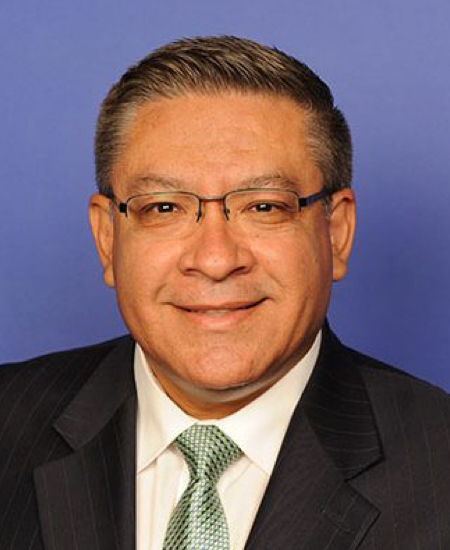
Rep. Salud O. Carbajal
Sponsored bills
Maddy summaryHRES 238 is a non-binding House resolution expressing the House's position that every person has the basic right to emergency health care, including abortion care during medical emergencies. It does not create new laws or alter existing regulations but formally states the House's view that abortion restrictions in emergencies endanger patients' health and lives. The resolution specifically highlights how current abortion bans put pregnant people at risk during life-threatening conditions like hemorrhage or infection, disproportionately impacting Black, Indigenous, people of color, immigrants, and low-income individuals. It serves as a symbolic statement opposing policies that restrict emergency reproductive care access.
Maddy summaryThe Don’t Penalize Victims Act amends the Stafford Act to prevent disaster victims from having their federal aid reduced or denied if they also receive assistance from other sources, such as state programs or private insurance. It directly affects individuals seeking disaster relief under the Robert T. Stafford Disaster Relief Act, ensuring they can access full federal support without penalty for other aid. The key change removes the phrase "or any other source" from Section 312(a), eliminating a provision that previously restricted aid eligibility. This policy update applies to all federal disaster assistance programs administered under the Stafford Act.
Maddy summaryHR 2257 authorizes the U.S. Mint to produce three commemorative coins (a $5 gold coin, a $1 silver coin, and a half-dollar) to honor fallen firefighters, with specific quantity limits and specifications. The bill requires a surcharge ($35 for gold, $10 for silver, $5 for half-dollar) on each coin sold, which is directed entirely to the National Fallen Firefighters Foundation to support its programs. The coins must be issued in 2026, will be legal tender, and the government must recover all costs through sales before distributing funds to the Foundation. This is a commemorative coin program, not a direct legislative policy change affecting broader public programs.
Maddy summaryThis bill (HR 2199) prevents private health insurance plans from discriminating against patients with end-stage kidney disease (ESRD) who require dialysis. It amends the Social Security Act to prohibit plans from treating dialysis coverage differently than other medical services or applying network restrictions that disproportionately harm ESRD patients. The law clarifies that plans cannot deny or limit benefits for dialysis based on a patient’s diagnosis, while preserving a plan’s right to choose which dialysis providers are in their network. It directly affects ESRD patients and their private health insurance coverage, ensuring dialysis is treated equally with other covered medical services. The bill does not require plans to include specific dialysis providers but stops them from unfairly restricting access to necessary care.
Maddy summaryThe Air America Act of 2025 authorizes one-time payments of $40,000 to individuals who worked for Air America or its affiliated companies for at least five years during 1950-1976, or to their surviving spouses, children, or dependents. Additional payments of $8,000 per full year beyond five years are allowed. The program is capped at $60 million total funding, with claims required within two years of final regulations. Payments are a single lump sum with no ongoing benefits, and the bill explicitly states it does not create new entitlements beyond this one-time award.
Maddy summaryHRES 226 is a ceremonial resolution commemorating Delta Air Lines' 100th anniversary, marking the centennial of its founding on March 2, 1925. It recognizes Delta's history as the first U.S. airline to reach 100 years (originally as Huff Daland Dusters, an aerial crop-dusting company) and highlights its current scale, including 100,000 employees, 5,000 daily flights, and global connectivity. The resolution contains no policy changes or binding provisions - it simply expresses the House's recognition of Delta's milestone and its role in connecting people and supporting communities. As a commemorative resolution, it does not affect any individuals, businesses, or regulations.
This bill treats Kenya, Mali, Burkina Faso, and Chad as combat zones for purposes of determining eligibility for certain federal tax benefits available to members of the U.S. Armed Forces. (Conditions apply.) Specifically, under the bill, a qualified hazardous duty area is treated as a combat zone for purposes of determining the filing status of an individual whose spouse is missing in action; excluding compensation received by a member of the Armed Forces serving in a combat zone from gross income and wages subject to withholding; forgiving the income tax liability of a member of the Armed Forces who dies in a combat zone; certain estate tax rules applicable to a member of the Armed Forces who dies in a combat zone or as a result of an injury, wound, or disease suffered while in a combat zone; the exemption from the federal excise tax imposed on certain telephone services for telephone calls originating from a combat zone by a member of the Armed Forces; and postponing certain federal tax deadlines (e.g., filing a tax return, paying taxes, and claiming a tax refund) for a member of the Armed Forces serving in a combat zone. The bill defines a qualified hazardous duty area as Kenya, Mali, Burkina Faso, and Chad if any member of the U.S. Armed Forces is entitled to special pay (e.g., hostile fire pay and imminent danger pay) for services performed in such locations.
Maddy summaryHR 2095, the Postal Police Reform Act of 2025, amends existing law to clarify the roles of USPS police officers and their authority over property. It explicitly includes "Postal Service police officers" alongside Postal Inspectors in Section 3061 of Title 18, U.S. Code, and gives the Postmaster General new authority to create rules for protecting USPS-owned or controlled property. These rules can include fines or up to 30 days in jail for violations, with penalties clearly defined under the law. The bill directly affects USPS police officers and individuals on USPS property by standardizing their regulatory framework.
Radiation Oncology Case Rate Value Based Program Act of 2025 or the ROCR Value Based Program Act This bill establishes a specialized payment program under Medicare for providers and suppliers of radiation oncology services. Specifically, the Centers for Medicare & Medicaid Services (CMS) must establish a program under which radiation therapy providers (i.e., hospital outpatient departments) and suppliers (i.e., physician group practices and freestanding radiation therapy centers) receive payments for each episode of care provided to individuals with specified types of cancer. An episode of care means the period beginning on the day radiation therapy planning is furnished to the individual and ending (1) for individuals with bone or brain metastases, 30 days later; and (2) for individuals with other cancer types, 90 days later. Participation in the program is mandatory for providers and suppliers that participate in Medicare, unless the provider or supplier is part of a state-based Center for Medicare & Medicaid Innovation model or qualifies for a significant hardship exemption. The CMS must set payment rates for the program based on national payment rates with specified adjustments (e.g., geographic adjustments). Providers and suppliers who provide certain transportation services for individuals under their care may receive an additional payment. Providers and suppliers must be accredited in accordance with certain standards, subject to payment reductions. The Government Accountability Office must report on (1) implementation of the program, and (2) underserved areas that are in need of more or newer radiation therapy resources.