

Maddy summaryThe Wildfire Emergency Preparedness Act of 2025 establishes a national training plan for structural firefighters to respond to wildfires and wildland-urban interface fires, with $5 million annually for training grants. It creates an Under Secretary of Agriculture for Fire Coordination to improve federal-state-local coordination in wildfire response and authorizes $20 million annually for research on firefighter health, including PFAS exposure in firefighting equipment. The bill also provides $100 million for supplemental grants to fire departments and EMS organizations for wildfire response equipment and training, and sets criteria for mental health support for first responders. It requires reports to Congress on training effectiveness and coordination challenges within one year of enactment.
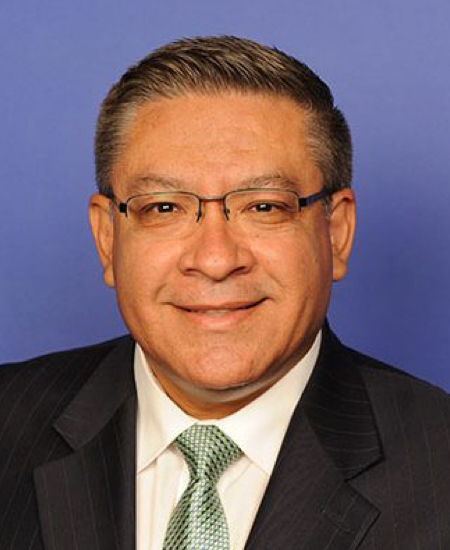
Rep. Salud O. Carbajal
Sponsored bills
Maddy summaryThis bill adjusts health insurance subsidies by modifying the premium tax credit structure under the Internal Revenue Code. It replaces previous income thresholds with a sliding-scale formula, increasing subsidies for households earning between 150% and 400% of the federal poverty level - reducing their required premium payments as income rises within these tiers. The changes apply to tax years beginning after December 31, 2025, directly affecting middle-income individuals and families purchasing coverage through health insurance marketplaces. It also repeals specific provisions from a prior reconciliation law related to health care.
Maddy summaryThis resolution (HRES 616) is a symbolic, non-binding expression of support for designating July 2025 as "American Grown Flower and Foliage Month." It recognizes the domestic flower and foliage industry’s economic impact - supporting hundreds of growers, thousands of small businesses, and tens of thousands of jobs - while highlighting that only 20% of flowers sold in the U.S. are domestically grown. The resolution urges consumers to choose domestically grown floral products to support U.S. farmers and the agricultural economy, but it does not create new laws, regulations, or funding. As a procedural resolution, it has no direct effect on policy or industry operations.
Maddy summaryThis bill removes a barrier preventing most low-income students from accessing SNAP benefits. It amends the Food and Nutrition Act to explicitly allow students enrolled at least half-time in recognized higher education programs to qualify for SNAP, reversing a prior exclusion. The key change eliminates the previous requirement that students meet specific exceptions (now deleted) and adds a new eligibility category under Section 3(m)(5). This directly affects low-income undergraduate and graduate students at colleges and training programs who were previously ineligible. The changes take effect January 2, 2026.
Maddy summaryHR 4796, the Restoring Essential Healthcare Act, repeals a provision that blocked Medicaid payments to certain healthcare providers during a specific period. It directly affects Medicaid beneficiaries who received care from these providers between the enactment of the prior law (Public Law 119-21) and this bill's enactment. The key provision retroactively restores Medicaid payments for services already provided during that blocked period, treating the payment restriction as if it never existed. This change ensures eligible individuals and providers receive reimbursement for covered care delivered during the prohibited timeframe.
Maddy summaryHR 4784, the Don Young American Grown Act, requires that cut flowers and cut greens displayed officially in federal buildings - specifically in the Executive Office of the President, State Department, or Defense Department - must be grown in the United States. This affects federal facilities and their display practices, not the general public or commercial markets. The bill includes an exception allowing federal employees to use imported items for personal displays. It defines "produced in the United States" to include all states, the District of Columbia, territories, and federally recognized tribal lands. The rule takes effect one year after enactment.
Maddy summaryThis bill updates the TRICARE Young Adult Program to make healthcare coverage more accessible for military dependents. It directly affects young adults (ages 21-26) who are children of active-duty service members, by eliminating a separate premium they previously paid for coverage. Key changes include removing an extra cost for young adults and adjusting eligibility rules to simplify enrollment. These amendments aim to reduce out-of-pocket expenses and streamline access to health insurance under the program.
Maddy summaryHR 4667, the VISIBLE Act, requires U.S. Immigration and Customs Enforcement (ICE), U.S. Customs and Border Protection (CBP), and other authorized immigration officers to visibly display their agency name and either their last name or unique badge number during all public immigration enforcement activities (such as stops, arrests, raids, or checkpoints). This identification must be clearly legible from 25 feet away on outer clothing, not obscured by gear, and officers cannot wear face coverings that hide their face during public interactions unless for covert operations or hazardous conditions. The bill mandates DHS to discipline non-compliant officers and submit annual reports to Congress detailing enforcement activities, violations, and disciplinary actions. It also directs DHS’s Civil Rights Office to investigate public complaints about noncompliance.
Maddy summaryHR 4696 amends Section 249 of the Immigration and Nationality Act to update eligibility for a registry program that provides a pathway to legal status for long-term residents. It changes the requirement from entering the U.S. before January 1, 1972, to entering at least 7 years before the application date. This adjustment bases eligibility on a rolling 7-year window instead of a fixed historical cutoff, allowing more recent long-term residents to qualify. The bill directly affects individuals who entered the U.S. after 1972 but maintained continuous residence for at least seven years prior to applying.
Maddy summaryHR 4723, the Mental Health for Latinos Act of 2025, requires the U.S. Department of Health and Human Services to create a new outreach strategy specifically for Hispanic and Latino communities to improve mental health access and reduce stigma. The strategy must address cultural and language needs, provide information on culturally appropriate treatments, and involve community members in its development. It mandates annual reports to Congress on the strategy’s impact on mental health outcomes and allocates $1 million for fiscal year 2026 to fund implementation. This bill directly affects Hispanic and Latino individuals facing barriers to mental health care due to cultural, linguistic, or systemic factors.