

Maddy summaryHRES 774 is a non-binding resolution that expresses congressional support for recognizing October 2025 as Filipino American History Month. It celebrates the historical contributions of Filipino Americans to U.S. society, including their roles in military service (such as World War II veterans), healthcare, labor movements, and cultural achievements. The resolution does not create new laws or benefits but urges the public to observe the month through educational programs and activities that highlight Filipino American history and culture. It directly affirms the heritage of the Filipino American community - approximately 4.6 million people - who are the third-largest Asian American group in the U.S. and have made significant contributions across multiple fields.
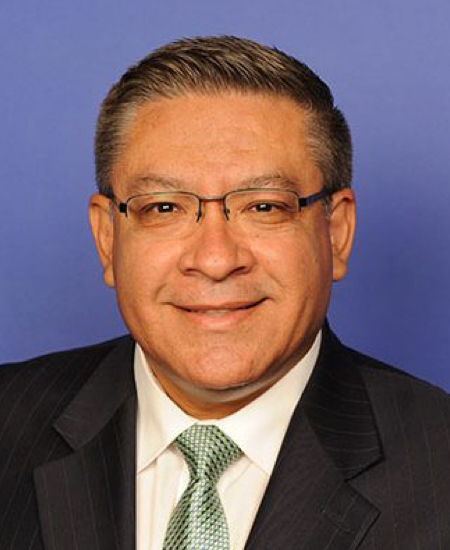
Rep. Salud O. Carbajal
Sponsored bills
Maddy summaryThis bill ensures federal firefighters continue receiving pay and benefits during government funding gaps and shutdowns. It authorizes continuing appropriations for firefighter pay during any period without full-year funding for fiscal year 2026, and prohibits layoffs due to reduction-in-force actions during funding lapses. The law directly affects firefighters employed by executive agencies or military departments whose primary duties involve fire control and extinguishment. Key provisions guarantee job security and pay continuity without requiring new legislation during budget implementation delays.
Maddy summaryHR 5660, the Pay Our Military Act, ensures military personnel and support staff receive pay during a government funding gap in fiscal year 2026. It appropriates funds from the Treasury to cover pay and allowances for active-duty troops, reservists, Department of Defense civilian employees, and contractors supporting military operations, if Congress hasn’t passed regular funding by then. The funding remains available until either regular appropriations are enacted or January 1, 2027, whichever comes first. This is a temporary measure to prevent disruptions in military pay during budget negotiations.
Maddy summaryHR 5615 establishes the FireGuard Program as a formal, mandatory program within the National Guard under Title 32 of the U.S. Code. It requires the Secretary of Defense to provide annual reports to Congress starting in 2026, detailing which states, counties, municipalities, and tribal governments received wildfire data, comparing fire maps before and after containment, analyzing detection-to-alert times, and reviewing technology integration efforts. The program is set to end on December 31, 2031, with no further authorization after that date. This bill directly affects National Guard operations and local emergency responders receiving wildfire data.
Maddy summaryThis resolution (HRES 757) is a symbolic gesture by the U.S. House of Representatives to support designating September 22, 2025, as "National Hispanic Nurses Day" and to formally recognize the National Association of Hispanic Nurses (NAHN) as the leading organization representing Hispanic nurses. It does not create new laws or policies but expresses official congressional support for honoring Hispanic nurses' contributions to healthcare equity and cultural competence. The resolution acknowledges NAHN's role since 1975 in advancing health outcomes for Hispanic communities and reducing disparities. As a non-binding resolution, it has no direct legal effect but aims to raise public awareness of Hispanic nurses' work.
Maddy summaryThis bill bans the import, export, and sale of donkey skins and ejiao products (a gelatin made from donkey skin) in U.S. commerce. It directly affects U.S. businesses importing or selling ejiao, which currently accounts for $12 million in annual U.S. imports. The law prohibits trading in donkey skins for ejiao production or any product containing ejiao, with civil penalties up to $10,000 per violation or criminal charges for larger offenses. Enforcement will be handled by U.S. Customs and Border Protection, targeting the U.S. market for a product driving global donkey population declines.
Maddy summaryHR 5545, "Katie Meyer’s Law," requires colleges and universities receiving certain federal funds to provide students facing alleged violations of campus conduct codes with the option of having an adviser during disciplinary proceedings. Institutions must adopt policies allowing students to choose an outside adviser or request an independent adviser from the school, who must be trained on campus procedures and can participate in hearings as an advocate. The law also mandates that advisers may receive bi-weekly updates with student permission and ensures students are informed of their adviser options in written notifications. This directly affects students in disciplinary cases at participating higher education institutions across the U.S.
Maddy summaryThe Mental Health Services for Students Act of 2025 would establish a federal grant program to fund school-based mental health services for students in grades K-12, particularly those experiencing trauma, grief, suicide risk, or violence. It directly affects schools (including Bureau of Indian Education schools), students, and community mental health providers through partnerships that must include school districts and local mental health entities. Key provisions require services to be culturally appropriate, trauma-informed, and integrated with positive behavioral supports, with grants capped at $2 million per award for 5 years (renewable) and funded at $300 million annually for 2027-2028. Recipients must report annually on program outcomes, ensure equitable access across urban and rural areas, and comply with privacy laws like HIPAA and FERPA.
Maddy summaryHR 5529, the Fair Housing for Disabled Veterans Act, changes how veteran disability payments are treated when determining eligibility for low-income housing programs. Specifically, it amends the tax code to exclude disability compensation or pension payments (under 38 U.S.C. chapters 11 or 15) from income calculations for low-income housing tax credits and residential rental project bonds. This means disabled veterans applying for these housing assistance programs will not have their disability benefits counted as income, potentially making them eligible for more housing options they otherwise might have been disqualified from. The bill directly affects disabled veterans seeking affordable housing through these federally supported programs.
Maddy summaryThis bill freezes U.S. import tariffs on coffee products at their existing rate as of January 19, 2025, preventing any future increases. It directly affects businesses importing coffee into the United States, including roasted beans, coffee husks, and coffee-based substitutes, from countries with normal trade relations. The law ensures tariffs on these items cannot exceed the current baseline, regardless of new trade policies or emergency situations. This creates certainty for importers by maintaining the status quo for coffee-related tariffs.