

Maddy summaryThis bill, the PrEP Access and Coverage Act of 2026, requires most health insurance plans to cover HIV prevention medication without charging patients any out-of-pocket costs. It directly affects people with private insurance, government health programs like Medicare and Medicaid, military health care, and the Indian Health Service. The law mandates that insurance companies cannot require pre-approval for these medications, cannot charge deductibles or copayments for them, and cannot deny or charge higher premiums for life, disability, or long-term care insurance based on someone taking HIV prevention medication. The bill also creates a new public education campaign to increase awareness about HIV prevention options and provides federal funding to states and community organizations to expand access to these services.
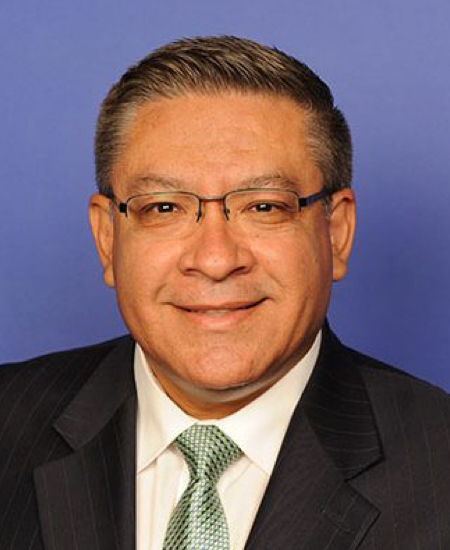
Rep. Salud O. Carbajal
Sponsored bills
Maddy summaryThe DISCLOSE Act of 2026 aims to increase transparency in election spending and prevent foreign influence. It expands the ban on foreign money to cover federal, state, and local elections, including ballot initiatives and judicial nominations, and criminalizes using corporations to conceal these funds. The bill mandates that organizations spending over $10,000 on campaign-related activities, such as independent expenditures or judicial nomination advocacy, disclose their beneficial owners and top donors. Additionally, it establishes new "Stand By Every Ad" disclaimers for political communications, requiring the highest-ranking official to approve the message and, for certain ads, list their top funders. These provisions directly affect non-candidate organizations, individuals involved in political and judicial nomination spending, and foreign nationals.
Maddy summaryHRES 1080 is a symbolic resolution recognizing and celebrating Black History Month 2026, focusing on its theme "A Century of Black History Commemorations." It highlights historical figures and events central to Black history, including Carter G. Woodson’s founding of Negro History Week (the precursor to Black History Month), Juneteenth, and key moments like the 1865 Charleston commemoration. The resolution emphasizes how Black history commemorations counter historical erasure and affirm Black contributions to U.S. history, referencing figures like Mary McLeod Bethune and W.E.B. Du Bois. As a ceremonial resolution, it has no binding effect but aims to raise awareness of Black achievements through official recognition.
Maddy summaryHR 7659 designates the Pride flag as an authorized flag eligible for display at all National Park System units, including national monuments and parks. The bill specifically expresses Congress's sense that the Pride flag should be displayed at the Stonewall National Monument in New York City, which commemorates the 1969 LGBTQ rights uprising at the Stonewall Inn. It cites the monument’s significance as the first U.S. national monument dedicated to LGBTQ history and condemns the removal of the Pride flag from the site. The bill does not change existing park regulations but formally recognizes the Pride flag’s eligibility for display under National Park Service policy. It directly affects how the National Park Service manages flag displays at the Stonewall National Monument and other park locations.
Maddy summaryThis bill increases the annual stipend for books, supplies, and educational materials under the Post-9/11 GI Bill from $1,000 to $1,400, effective immediately. It also establishes a new automatic annual adjustment starting in fiscal year 2026, tying stipend increases to inflation using the Consumer Price Index (CPI). Specifically, the stipend will rise each year by the percentage difference between the current CPI and the previous year’s CPI. This directly affects veterans using the Post-9/11 Educational Assistance Program for their education expenses.
Advanced Capabilities for Emergency Response Operations Act or the ACERO Act This bill provides statutory authority for the Advanced Capabilities for Emergency Response Operations (ACERO) project. The ACERO project conducts research and development activities regarding aerial response to wildfires using uncrewed aircraft systems (UAS) and other advanced aviation technologies. It is administered by the National Aeronautics and Space Administration (NASA). The bill directs the ACERO project to address airspace management and deconfliction during wildfire response efforts, including through real-time information sharing among response teams and the development of a platform to provide situational awareness of aerial assets. The bill also directs the ACERO project to establish a multiagency concept of operations to facilitate the coordination of aerial wildfire response among federal, state, and local government agencies. NASA must consult with other federal agencies and departments to avoid duplication of these efforts. NASA generally may not procure UAS manufactured or assembled by specified foreign entities, including entities domiciled in or controlled by China, for use by the ACERO project.
Maddy summaryThe Ceasefire Compliance Act of 2026 establishes requirements for Israel to comply with the October 10, 2025, ceasefire agreement, including allowing sufficient humanitarian aid into Gaza, halting military operations in Gaza, preventing settler violence, and supporting Palestinian governance. The bill requires the US government to submit quarterly reports certifying Israel's compliance with these conditions, with potential restrictions on US defense sales to Israel if violations occur. If Israel fails to meet the requirements, the US would prohibit the sale, export, or transfer of US-origin defense articles for use in the West Bank or Gaza. The bill also creates an end-use monitoring group to track if US defense articles are being used in those areas, with a 5-year sunset provision. This legislation directly affects US-Israel defense relations and the flow of military assistance.
Maddy summaryThe Head Start for America's Children Act amends the Head Start Act to enhance early childhood education services for low-income children, with specific provisions to improve culturally responsive programming for Native American and Native Hawaiian communities. It increases funding for Head Start programs, including $91.575 million for transportation, $37.5 million for workforce development, and $863 million for extended operations to provide full calendar year services. The bill updates definitions throughout the law to use more inclusive language, replacing "limited English proficient" with "children who are developing English proficiency," and establishes new requirements for staff compensation and benefits to improve recruitment and retention. Native American Head Start programs and migrant/seasonal programs are exempt from certain requirements, such as the full calendar year service requirement.
Maddy summaryHR 7591 requires the U.S. Department of Education to develop and distribute annual firearm safety best practices to schools, focusing on secure storage methods and suicide prevention resources. The bill mandates that local school districts create community-specific guidance incorporating these best practices, to be shared with students, parents, and staff annually before the start of each school year. It specifies that materials must include practical storage solutions (like locks and safes), mental health resources, and neutral information about firearm safety without promoting or discouraging gun ownership. The law directly affects schools receiving federal funding under the Elementary and Secondary Education Act, aiming to reduce firearm-related injuries and suicides through education, not by changing gun ownership laws.
Maddy summaryHR 7599 creates a federal framework for extreme risk protection orders (ERPOs), allowing family members or law enforcement to petition courts to temporarily prohibit individuals from possessing firearms when they pose a risk of harm to themselves or others. The bill establishes a process for issuing ex parte orders (up to 14 days) followed by a hearing within 72 hours to determine if a longer-term order (up to 180 days) should be issued, requiring respondents to surrender firearms to U.S. Marshals or designated law enforcement. Courts must consider specific factors like recent threats, violence, substance abuse, or cruelty to animals before issuing orders, with no fees for petitioners. The law requires law enforcement training to address bias, includes annual reporting requirements, and ensures firearms are returned once the order expires and the individual is eligible to own firearms under federal law.