

Maddy summaryThis bill amends federal law to include Transportation Security Administration (TSA) officers who die while performing official duties protecting transportation systems as eligible for public safety officers' death benefits. It specifically adds TSA employees working to "ensure freedom of movement for people and commerce" to the list of covered personnel under the Omnibus Crime Control and Safe Streets Act. The change applies to deaths occurring on or after October 31, 2013, directly affecting TSA officers and their families by expanding access to death benefits previously available only to other public safety personnel.
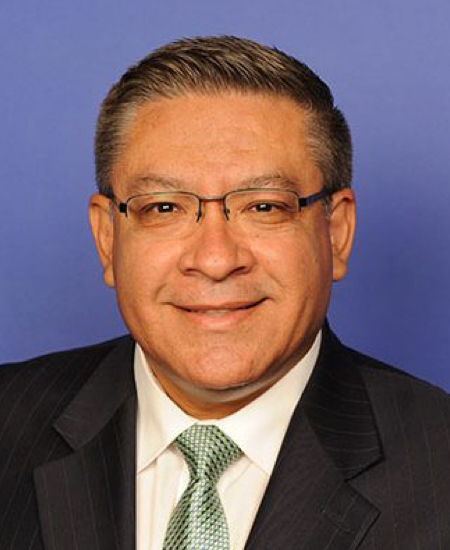
Rep. Salud O. Carbajal
Sponsored bills
Maddy summaryHR 882, the American Teacher Act, requires states to ensure full-time teachers in public elementary and secondary schools earn at least $60,000 annually (adjusted for inflation), with part-time teachers receiving proportional pay. It provides federal grants to states to fund these salary increases, mandating sustainability plans beyond the 4-year grant period and prioritizing schools in high-poverty areas. The bill also includes cost-of-living adjustments tied to the Consumer Price Index and funds a national campaign to promote teaching as a career. It explicitly states grant funds must supplement existing education budgets without reducing current teacher pay or state loan forgiveness programs.
Maddy summaryHR 251 renames the Department of Veterans Affairs outpatient clinic in Vallejo, California, as the "Delphine Metcalf-Foster VA Clinic." This bill updates all official U.S. government references - such as laws, maps, and documents - to reflect the new name. It directly affects the Vallejo clinic and its administrative records, with no policy changes or financial impact. The bill is purely procedural, honoring Delphine Metcalf-Foster through the clinic's designation.
Maddy summaryThe Better Care Better Jobs Act (HR 547) aims to improve access to home and community-based services (HCBS) for Medicaid beneficiaries by providing states with planning grants and enhanced federal funding. States that develop approved HCBS infrastructure improvement plans will receive a 10 percentage point increase in federal Medicaid funding for HCBS services, with additional incentives for self-directed care programs. The bill requires states to address barriers to access, expand workforce development, improve payment rates for direct care workers, and track demographic data on service utilization. It also establishes quality measurement requirements and mandates regular reporting on progress toward improving HCBS access and quality.
Maddy summaryThe Extreme Risk Protection Order Expansion Act of 2023 creates a federal grant program to help states, tribes, and local governments implement and improve Extreme Risk Protection Orders (ERPOs), which temporarily remove firearms from individuals deemed to pose a danger to themselves or others. To qualify for grants, states and tribes must enact ERPO laws meeting specific due process requirements, including notice, hearing procedures, and standards of proof. The bill amends federal law to include ERPOs in the National Instant Criminal Background Check System and requires states to report on ERPO usage, including demographic data. It also establishes "full faith and credit" for ERPOs across state lines, ensuring consistent enforcement nationwide.
Maddy summaryHR 715, the Bipartisan Background Checks Act of 2023, requires background checks for all firearm transfers between private individuals, not just those through licensed dealers. It mandates that unlicensed sellers must involve a licensed dealer to conduct a background check before transferring a firearm, with exceptions for family transfers (like spouses or parents/children), law enforcement, temporary safety transfers, and certain hunting or range activities. The bill also requires licensed dealers to provide a notice and certification form in both English and Spanish to buyers. It explicitly states it won't create a national gun registry or override state laws on the same topic. The law would take effect 180 days after enactment.
Maddy summaryHR 727 establishes a 12-member National Council on African American History and Culture within the National Endowment for the Humanities (NEH). The Council, appointed by the President with Senate consent, advises the NEH on preserving and celebrating African-American history and culture. Its key duties include evaluating NEH programs, gathering information on cultural trends, developing national policy recommendations, and submitting annual reports to the NEH Chair. The Council terminates 10 years after the bill's enactment, with members serving five-year terms (initially staggered) and receiving partial compensation for their service.
Maddy summaryThis bill helps new car dealers affected by pandemic-era supply chain disruptions by changing tax rules for inventory sales. It allows dealers using LIFO accounting to treat certain sales of unsold vehicles (liquidations) between March 2020 and December 2021 as "qualified" for tax purposes. Dealers can defer recognizing income from these sales and have until 2026 to replace the sold vehicles before potential tax adjustments apply. The provision specifically targets dealers who couldn't replenish inventory during the supply chain crisis.
Veterans Census-Enabled National Treatment Equitable Resource Supplement for Mental Health Act of 2023 or the Vet CENTERS for Mental Health Act of 2023 This bill requires the Department of Veterans Affairs (VA) to ensure that there is a minimum number of Vet Centers located in each state. Vet Centers are community-based counseling centers that provide social and psychological services to eligible veterans, service members, and their families. The minimum number of Vet Centers required in each state is generally based on the state's geographic size or the number of veterans located in the state. The VA must establish additional Vet Centers as necessary to meet the minimum required number for each state. The VA may establish the additional Vet Centers at facilities made available by a state, local government, or recognized Indian tribe. If a state needs more than one additional Vet Center to meet its minimum requirement, the VA must establish at least one additional Vet Center and may establish Vet Center outstations to cover the difference.
Maddy summaryThe Federal Infrastructure Bank Act of 2023 would establish a new Federal Infrastructure Bank to provide financing for infrastructure projects across the United States. The bank would offer loans, loan guarantees, and equity investments to eligible entities for qualifying projects including highways, ports, airports, energy systems, and public transportation. The bill requires at least 10% of funding to support rural infrastructure projects and prohibits the bank from funding projects owned or influenced by the Chinese government or projects outside the United States. The bank would operate as a subsidiary of a Federal Infrastructure Bank Holding Company, with both entities exempt from most taxes. The bank would also establish an Infrastructure Guarantee Fund to cover defaults on loans or guarantees.