

Maddy summaryThe VA Same-Day Scheduling Act of 2023 requires the Department of Veterans Affairs to schedule appointments for enrolled veterans during the same phone call when they request care. This applies to veterans enrolled in the VA healthcare system who contact the VA by phone to request appointments. The law mandates that the VA must complete the scheduling during the call - without delay or future scheduling - regardless of the appointment date. The requirement takes effect 120 days after the bill is enacted.
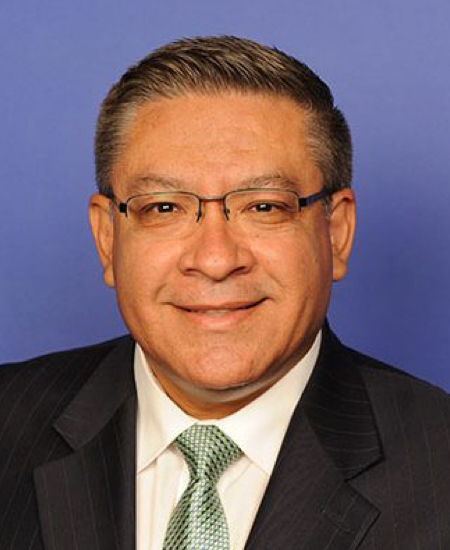
Rep. Salud O. Carbajal
Sponsored bills
Maddy summaryHR 2413, the Dental Care for Veterans Act, reclassifies dental care as standard medical services under the VA's existing benefits structure, eliminating prior restrictions that treated dental care separately. It modifies how dental appliances are procured and establishes a phased eligibility timeline: veterans already eligible for dental benefits gain immediate access, while others qualify over 1-4 years based on their current benefit status. The bill affects all veterans currently covered under VA dental programs, changing their access to care without creating new funding. Key provisions streamline dental service delivery under Title 38, aligning it with other medical benefits.
Maddy summaryHR 2414 extends CHAMPVA health coverage for children of veterans from age 21 to 26, regardless of marital status. This change directly affects children of veterans enrolled in the CHAMPVA program who would otherwise lose coverage upon turning 21. The bill amends Section 1781(c) of Title 38, U.S. Code, to update eligibility rules for medical care provided after the law's enactment. It does not impact existing coverage for children under a specific subsection (section 101(4)(A)(ii)).
Maddy summaryThe Panama Canal Zone Veterans Act of 2023 creates a presumption that veterans who served in the Panama Canal Zone between 1958 and 1999 (or until the last military member left) and developed specific illnesses are automatically eligible for VA benefits without needing to prove a direct link between their service and the condition. It lists 16 illnesses, including prostate cancer, lung cancer, diabetes, Parkinson's disease, and several other cancers, as qualifying for this presumption due to presumed exposure to herbicides like Agent Orange during service. The VA will use regulations based on medical evidence to determine which illnesses qualify under this provision. This change directly affects veterans who served in the Panama Canal Zone during the covered period and later developed one of the listed conditions.
Maddy summaryHR 2584, the SAVE Act, creates a new federal criminal offense for assaulting or intimidating hospital employees while they're performing their duties, punishable by up to 10 years in prison, with enhanced penalties for using weapons, causing injury, or during public emergencies. The bill authorizes $25 million annually in federal grants to hospitals for violence prevention programs, including staff training, security technologies like panic buttons and video surveillance, and coordination with law enforcement. It defines "hospital" broadly to include various medical facilities such as long-term care hospitals, rehabilitation facilities, and critical access hospitals. The legislation directly affects hospital workers and medical facilities by establishing federal criminal penalties for violence against employees and providing funding to improve workplace safety. The law aims to address the rising problem of workplace violence against healthcare workers, which the bill states has increased since 2011.
Maddy summaryHR 2630, the Safe Step Act, requires group health plans and health insurance issuers to establish a clear, transparent process for patients or their doctors to request exceptions to medication step therapy protocols. These protocols typically force patients to try cheaper drugs first before covering more expensive alternatives. The bill mandates that plans must approve exceptions when prior treatments failed, delay would cause serious harm, a treatment is unsafe, or a patient is stable on a previously approved drug, with strict 72-hour (or 24-hour in emergencies) decision timelines. It also requires plans to publish the exception process online and limit documentation requests to only necessary medical information. This law directly affects health insurers, employers offering health plans, and patients using step therapy for prescription drugs.
Tax Fairness for Disaster Victims Act This bill allows individual taxpayers living in a disaster area to use earned income from a preceding taxable year for purposes of calculating the earned income tax credit. The bill applies if current year income is disrupted by a disaster and is less than the income of the preceding taxable year.
Maddy summaryHJRES 54 proposes a constitutional amendment stating that only natural persons (human beings) have rights protected by the U.S. Constitution, explicitly denying constitutional rights to corporations, limited liability companies, and other artificial entities. It would require governments to regulate or restrict corporate political contributions and spending to ensure equal access to elections, mandate public disclosure of all political spending, and clarify that campaign finance rules do not violate the First Amendment. This amendment directly affects corporations and other artificial entities by removing their constitutional standing in legal challenges and subjecting their political activities to stricter government oversight. If passed, it would fundamentally change how corporations interact with election laws and constitutional protections, though it preserves press freedom under Section 3. The bill is a proposed amendment requiring ratification by 3/4 of state legislatures to become part of the Constitution.
Securing Access to Lower Taxes by ensuring Deductibility Act or the SALT Deductibility Act This bill repeals the temporary restrictions in taxable years 2018 through 2025 on the deductibility of state and local taxes.
Maddy summaryHR 2402, the Alan Reinstein Ban Asbestos Now Act of 2023, bans the manufacture, processing, use, and sale of commercial asbestos (including specific types like chrysotile and crocidolite) in the U.S. starting one year after enactment, with key exceptions. It allows the chlor-alkali industry to continue using asbestos for diaphragm manufacturing until two years after enactment and permits limited national security exemptions for up to three years with public disclosure. The bill also requires the EPA and HHS to create public education resources about asbestos health risks and mitigation options. This directly affects manufacturers, distributors, and users of commercial asbestos products, excluding asbestos present only as an impurity.