

Maddy summaryThe Strengthening Organic Agricultural Research (SOAR) Act of 2023 increases annual funding for organic agricultural research and extension programs, directly supporting organic farmers, researchers, and institutions. It authorizes $60 million in 2024, rising to $100 million annually after 2028, for the Organic Research and Extension Initiative, and creates a new $10-20 million annual program to study transitioning from conventional to organic farming. This new program requires grants to prioritize partnerships with organic producers and specific educational institutions (1890/1994 colleges, Hispanic-serving institutions) while focusing on barriers, ecosystem benefits, and improved transition methods. Finally, the bill mandates a USDA economic impact analysis of organic agriculture, examining effects on rural economies, labor, environment, and community dynamics, to be completed within three years of enactment.
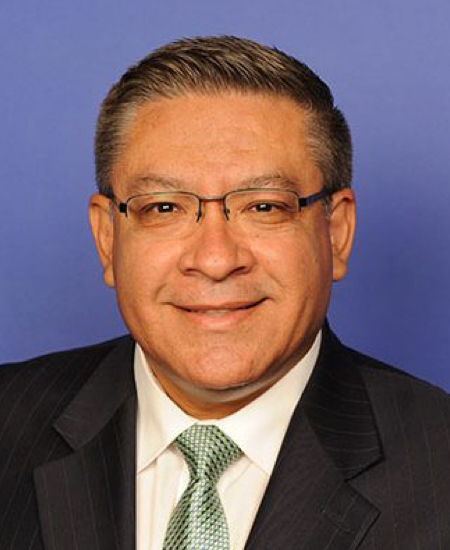
Rep. Salud O. Carbajal
Sponsored bills
This concurrent resolution honors Mary Eliza Mahoney, the first professionally trained Black nurse in the United States, for her contributions to the nursing profession. It also supports the goals and activities of National Nurses Week.
Maddy summaryHRES 381 is a non-binding House resolution supporting National Fentanyl Awareness Day in 2023. It aims to increase public awareness about the dangers of counterfeit fentanyl pills - fake pills that mimic prescription medications and are linked to over 70,000 overdose deaths in 2021, including 80% of deaths among youth aged 14-23. The resolution encourages existing law enforcement efforts to combat counterfeit pills and acknowledges that only 48% of youth are aware fentanyl is used in these fake pills. It does not create new laws or programs but formally recognizes the need for greater awareness, particularly for young people vulnerable to these deadly substances.
Maddy summaryThe PAST Act of 2023 amends the Horse Protection Act to ban specific devices used to cause pain (soring) in horses at shows, particularly affecting Tennessee Walking Horses, Racking Horses, and Spotted Saddle Horses. It defines prohibited "action devices" (like boots or chains causing friction) and requires licensed, conflict-free inspectors at events to enforce rules. The bill increases penalties for violations to up to $5,000 fines or 3 years in jail, and mandates longer disqualifications for repeat offenses (180 days → 1 year → 3 years). Horse show organizers, exhibitors, and participants must comply with these new inspection and penalty requirements.
Maddy summaryThis bill authorizes Congress to award a Congressional Gold Medal to honor the service of Army and Navy nurses who served during World War II. It directly recognizes over 73,000 nurses (59,000 Army and 14,000 Navy) who provided critical medical care under dangerous conditions, often without military status or full benefits. The medal, designed by the Treasury Secretary, will be presented by congressional leaders and permanently displayed at institutions like the Women in Military Service Memorial and the National World War II Museum. The bill does not create new benefits but provides formal recognition for their service, as noted in congressional findings about their contributions to saving lives and supporting military operations.
Maddy summaryHR 3238, the Affordable Housing Credit Improvement Act of 2023, updates the Low-Income Housing Tax Credit (LIHTC) program to increase the availability of affordable housing across the United States. The bill makes several key changes including increasing state funding formulas, modifying tenant eligibility rules to better serve vulnerable populations (such as domestic violence victims and students), and expanding credit eligibility for projects in rural and Native American communities. Specific provisions raise the credit for properties serving extremely low-income households, clarify rules around tenant income increases, and require housing providers to protect victims of domestic violence. The bill also updates terminology from "low-income" to "affordable" throughout the tax code and enhances program transparency through data sharing requirements. These changes aim to make the LIHTC program more effective at creating and preserving affordable housing units for low-income households nationwide.
Maddy summaryThe Invest to Protect Act of 2023 establishes a federal grant program for local law enforcement agencies with fewer than 200 officers (including counties, municipalities, and tribal governments) to fund training and support services. Grants cover de-escalation training, mental health resources, evidence-based safety training (such as handling domestic violence or mental health crises), and recruitment/retention incentives like signing bonuses, retention bonuses (up to 20% of salary), and stipends for graduate education in mental health or social work. The bill requires a streamlined grant application process (under two hours), public disclosure of bonus amounts, and annual audits to prevent misuse of funds.
Maddy summaryThe HELPER Act of 2023 creates a new FHA mortgage insurance program specifically for first responders and K-12 teachers. It allows eligible first-time homebuyers in these professions to secure mortgages with 100% financing (no down payment required) for purchasing or repairing a primary residence. To qualify, applicants must be employed as law enforcement, firefighters, paramedics, or K-12 teachers, have completed housing counseling, and meet specific employment history requirements (e.g., 4 years in the role or disability-related release). The program authorizes $660,000 for fiscal year 2024 and $160,000 annually through 2030, with authority expiring after 5 years.
Maddy summaryThe ACRE Act of 2023 amends the tax code to exclude interest income from certain rural and agricultural loans from taxable income for eligible lenders. It directly affects banks, savings associations, and their wholly-owned entities that provide qualified loans secured by rural or agricultural real estate, including single-family homes in designated rural areas (with a $750,000 loan balance cap) or aquaculture facilities. The key provision allows these lenders to exclude interest earned on qualifying loans from their gross income, effectively reducing their tax liability on such lending activity. The bill applies to loans made after its enactment date and aligns with existing definitions of rural property from the Agricultural Credit Act of 1987.
Maddy summaryThe Transit to Trails Act establishes a federal grant program to fund transportation projects connecting critically underserved communities - defined as areas lacking adequate park access, low-income, communities of color, or environmental justice areas - to public lands and recreational spaces. Eligible entities, including states, local governments, tribal organizations, and park districts, can apply for grants to develop transportation connectors (like bus routes) and culturally appropriate education materials, with priority for projects using low-emission vehicles and offering discounted fares for low-income riders. Grants range from $25,000 to $500,000, with federal funding covering up to 80% of costs, and recipients must report on demographics served and project outcomes. The program is funded at $40 million annually in its fifth year, aiming to improve mobility to parks and recreation in communities historically excluded from such access.