

Maddy summaryThis bill requires the Committee on Foreign Investment in the United States (CFIUS) to review real estate transactions involving foreign adversaries (including China, Russia, Iran, and North Korea) near sensitive sites like military installations, ports, or critical infrastructure. It defines "elevated risk real estate transactions" as purchases or leases by foreign adversaries near such sites, creating a presumption that these deals pose unresolvable national security risks unless CFIUS explicitly approves them with evidence. The bill also adds food security considerations to CFIUS reviews and mandates declarations for these high-risk transactions. These changes aim to prevent foreign adversaries from gaining access to strategic U.S. land or infrastructure through real estate deals.
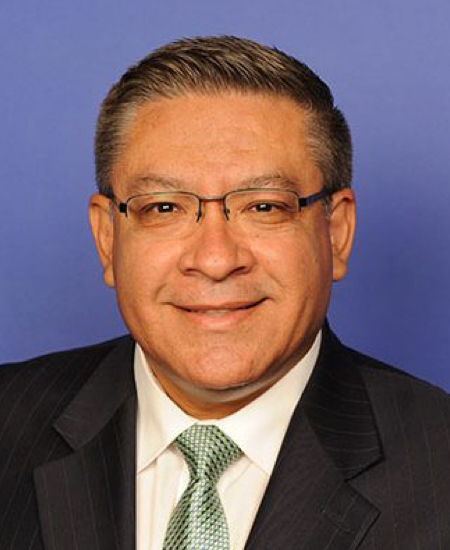
Rep. Salud O. Carbajal
Sponsored bills
Maddy summaryHR 4530 establishes the NRC Office of Public Engagement and Participation to help members of the public participate in Nuclear Regulatory Commission (NRC) proceedings. The office provides free guidance on submitting comments, attending hearings, and understanding nuclear safety regulations, and can compensate individuals for legal costs if they face significant financial hardship while participating in important NRC decisions. The office is led by a Director appointed by the NRC Chairman (with a five-year term), and must submit annual reports to Congress detailing public assistance requests and common participation challenges. It does not change existing NRC public engagement standards but ensures the office operates independently within the Commission. This directly affects people and groups engaging with the NRC on nuclear energy and safety issues.
Maddy summaryThe FRIDGE Act of 2023 authorizes $1 million annually (2024-2028) to provide technical assistance for improving cold chain infrastructure in developing countries. It directly affects U.S. agricultural exporters by addressing infrastructure gaps that cause food loss and export damage, and it targets developing nations needing upgrades to cold storage, transport, and port systems. The bill requires the Secretary of Agriculture to fund needs assessments, training, and infrastructure support through agreements with eligible trade organizations. This concrete funding mechanism aims to reduce food waste and expand U.S. agricultural exports by strengthening supply chains in key markets.
Maddy summaryHR 4604, the Don Young American Grown Act, requires that cut flowers and cut greens displayed in public areas of Executive Office, State Department, and Defense Department buildings must be grown in the United States. This affects federal agencies by mandating U.S.-sourced decorative floral products for official displays, excluding personal use by employees. The bill defines "produced in the United States" to include all states, D.C., territories, and federally recognized tribal lands. It takes effect one year after enactment, with no impact on personal displays by federal staff.
Child Care Investment Act of 2023 This bill increases the employer-provided child care tax credit, the amount excludable from gross income for dependent care flexible spending accounts, and makes the household and dependent care tax credit refundable. Among other provisions, the bill increases the rate of the employer-provided child care tax credit from 25% to 50% and increases the maximum credit amount from $150,000 to $500,000. It also increases (1) the pre-tax deduction for dependent care flexible spending accounts from $5,000 to $10,000, plus an additional $2,000 for each eligible dependent; and (2) the rate of the household and dependent care tax credit and makes such credit refundable.
Maddy summaryThe Veteran Service Recognition Act of 2023 requires the Department of Defense, Homeland Security, and Veterans Affairs to study noncitizen veterans removed from the U.S. between 1990 and 2023, documenting their service history and reasons for removal. It establishes a system to identify noncitizen veterans before removal proceedings and creates a Military Family Immigration Advisory Committee to review cases and recommend against removal for veterans. The bill also creates a program to facilitate citizenship for noncitizen service members and provides pathways for previously removed noncitizen veterans to adjust to lawful permanent residence. These provisions directly affect noncitizen veterans and their family members facing immigration proceedings, aiming to better recognize military service in immigration decisions.
Maddy summaryHR 4579, the Fairness for Farm Workers Act, amends the Fair Labor Standards Act to establish phased overtime requirements for agricultural workers. Starting in 2024, most farm employers must pay overtime for hours worked beyond 55 per week (reducing to 50 in 2025, 45 in 2026, and 40 in 2027), with small farms (25 or fewer employees) getting a 3-year delay on the full 40-hour standard. The bill also removes existing exemptions that allowed some agricultural employers to avoid overtime pay for certain workers. This directly affects farm workers in agriculture and their employers, requiring compliance with standard overtime rules previously not applied to this sector.
Maddy summaryThe DISCLOSE Act of 2023 would increase transparency in political spending by requiring organizations making campaign-related disbursements over $10,000 to disclose the names and addresses of their major donors, including the top five funders for political communications. It would close loopholes allowing foreign nationals to secretly fund election activities through corporations or other entities by expanding the definition of prohibited foreign contributions. The bill would mandate "stand by every ad" disclosure requirements for political communications across all media, including audio, video, and internet ads, requiring clear identification of funders. It would also require reporting of disbursements related to Federal judicial nominations, which currently aren't subject to disclosure requirements. These provisions would apply to corporations, labor organizations, and certain nonprofits that engage in political activity.
Maddy summaryThe IDEA Full Funding Act (HR 4519) mandates specific annual increases in federal funding for special education programs under the Individuals with Disabilities Education Act (IDEA). It requires Congress to appropriate increasing amounts each fiscal year - from $5.87 billion for 2024 up to $55.53 billion for 2033 - to reach 40% of the national average per-pupil expenditure for public schools by 2033. This directly affects all public school districts serving students with disabilities, as federal IDEA funding supports their special education services. The bill sets fixed dollar amounts or percentage targets (whichever is greater) for each fiscal year, aiming to gradually close the long-standing gap between promised and actual federal funding. It does not alter eligibility for services but mandates higher, phased funding levels to meet the 40% target.
Maddy summaryHR 3853, the Roadless Area Conservation Act of 2023, requires the U.S. Forest Service to enforce existing protections against road construction, reconstruction, and logging in designated roadless areas within the National Forest System. It directly affects Forest Service management practices and ensures these areas - critical for clean water, wildlife habitat, recreation, and tribal cultural sites - remain undisturbed. The bill codifies the current Roadless Rule, which already prohibits such activities in inventoried roadless areas, without creating new restrictions on non-roadless lands or limiting permitted uses like hiking or hunting. This preserves existing protections for over 58 million acres of National Forest land without altering the Forest Service’s multiple-use management approach.