

Saving Us from Pandemic Era Resistance by Building a Unified Global Strategy Act of 2023 or the SUPER BUGS Act of 2023 This bill requires the Department of Health and Human Services (HHS) to seek to enter into arrangements with foreign countries, multilateral organizations, and other appropriate entities to facilitate the development and commercialization of qualified pandemic or epidemic products, which include drugs, biological products, and medical devices. HHS shall report to Congress a strategy for achieving this goal.
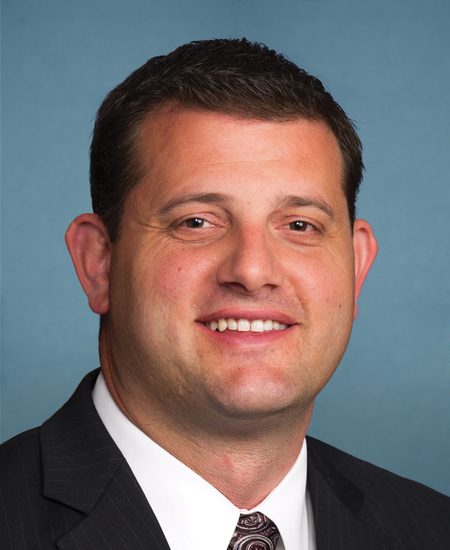
Rep. David G. Valadao
Sponsored bills
Maddy summaryThis bill amends the Higher Education Act to exempt certain family-owned assets from being counted when calculating federal student aid eligibility. Specifically, it excludes family farms where the family resides and small businesses with 100 or fewer full-time equivalent employees owned and controlled by the family. These assets will no longer be considered when determining a student's financial need for aid programs. The change directly affects students from qualifying family farms or small businesses when applying for federal financial aid. The exemption applies to assets held by the family, not just the business itself.
Maddy summaryHR 1222, the Buffalo Soldiers Congressional Gold Medal Act of 2023, authorizes a single Congressional Gold Medal to honor the six all-Black cavalry and infantry regiments established in 1866 (later consolidated into four regiments). The medal recognizes their service from the post-Civil War era through World War II, including roles in frontier protection, national park preservation, and combat during major conflicts. After awarding the medal, it will be permanently displayed at the Smithsonian's National Museum of African American History and Culture, with bronze duplicates available for sale to cover costs. This bill is purely commemorative, with no new policies or direct impacts on current laws or individuals.
CBDC Anti-Surveillance State Act This bill limits the ability of the Federal Reserve to (1) provide direct services to individuals, and (2) use a central bank digital currency. A central bank digital currency is a digital currency (e.g., Bitcoin or Ether) issued by a government-backed central bank. Specifically, the bill prohibits the Federal Reserve and the Federal Open Market Committee from using any central bank digital currency to implement monetary policy. In addition, a Federal Reserve bank is prohibited from offering products or services directly to an individual, maintaining an account on behalf of an individual, or issuing a central bank digital currency directly to an individual. The Federal Reserve must (1) consult with each Federal Reserve bank with respect to any central bank digital currency study or pilot program, and (2) issue quarterly reports on the findings and determinations of any such study or program.
This bill redesignates as the Nancy Reagan Memorial Park the Gravelly Point Park located along the George Washington Memorial Parkway in Arlington County, Virginia.
Yosemite National Park Equal Access and Fairness Act This bill makes changes with respect to the Hetch Hetchy Reservoir and Lake Eleanor Basin areas of Yosemite National Park. Specifically, the bill increases rent paid by the San Francisco Public Utilities Commission for the use of the park from $30,000 to $2 million per year. That amount shall be adjusted annually to reflect increases in the Consumer Price Index for All Urban Consumers. The commission may not recoup such sums from wholesale water or power customers. The bill allows collected rent to be used by the Department of the Interior for wildfire mitigation activities in the park and other national parks in California. The bill requires the National Park Service to administer the Hetch Hetchy Reservoir and Lake Eleanor Basin areas for public recreation, benefit, and use in a manner that will preserve scenic, historic, scientific, or otherwise important features.
Endangered Species Transparency and Reasonableness Act of 2023 This bill revises requirements concerning determinations on whether a species is a threatened or endangered species under the Endangered Species Act of 1973 (ESA) and caps attorney's fees to prevailing parties in ESA citizen suits. The U.S. Fish and Wildlife Service (USFWS) and the National Marine Fisheries Service (NMFS) must publish online, subject to privacy or administrative limitations, the best scientific and commercial data available that are the basis for each determination. The bill states that the term best scientific and commercial data available includes all data submitted by a state, tribal, or county government. Thus, the USFWS and NMFS would no longer consider whether data from those sources are the best scientific and commercial data available. Instead, the data would be automatically deemed the best scientific and commercial data available regardless of the quality of the data. Before making a determination on whether a species is an endangered or threatened species, the USFWS and NMFS must provide affected states with all of the data that is the basis of the determination. The Department of the Interior must also publish and maintain an online searchable database that discloses federal expenditures related to litigation under the ESA.
Maddy summaryHR 189, the "Action Versus No Action Act," requires federal agencies (like the Department of Agriculture or Interior) to limit environmental reviews for certain forest management projects to only two options: proceeding with the project or taking no action. It applies specifically to projects on lands suitable for timber production that meet one of four criteria, such as being developed through a collaborative process or covered by a community wildfire protection plan. The bill mandates that agencies analyze only these two alternatives, including detailed assessments of how "no action" would impact forest health, wildfire risk, habitat, and economic factors. This change streamlines environmental reviews but restricts consideration of other potential management approaches.
Water Supply Permitting Coordination Act This bill makes the Bureau of Reclamation the lead agency for the purpose of coordinating all permitting and related activities required to construct certain new surface-water storage projects. Specifically, Reclamation must identify, notify, and coordinate all Federal agencies that may have jurisdiction over a review, analysis, opinion, statement, permit, license, approval, or decision for a qualifying project. A state where a project is being considered may also choose to participate as a cooperating agency. Reclamation's coordination responsibilities include (1) preparing a unified environmental review document, and (2) maintaining a consolidated administrative record and project data records. Additionally, Reclamation is authorized to accept and expend funds contributed by a nonfederal public entity to expedite the evaluation of a permit for such a project.
Maddy summaryHR 150, the Protecting American Energy Production Act, gives states primary authority to regulate hydraulic fracturing (fracking) for oil and gas on state and private lands, directly affecting state governments and energy producers. The bill requires states to maintain this regulatory role and blocks the President from imposing a fracking moratorium without explicit congressional approval. Key provisions include a Congressional "sense" statement affirming state primacy and a direct prohibition on presidential moratoriums unless authorized by a new law. This bill focuses on shifting regulatory power to states and limiting federal executive action on fracking, without specifying financial impacts or environmental standards.