

Maddy summaryHR 1777 establishes a $50 million annual fund (2024-2028) for collaborative defense research between the U.S. and Israel in emerging technologies like artificial intelligence, cybersecurity, directed energy, and automation. The bill directly supports U.S. and Israeli military forces by enabling joint development of new warfare capabilities to address current and future defense challenges. Key provisions include authorizing $50 million per year for collaborative projects, building on existing U.S.-Israel defense partnerships like counter-tunnel and counter-drone systems. This funding aims to strengthen bilateral defense innovation without altering existing military aid structures.
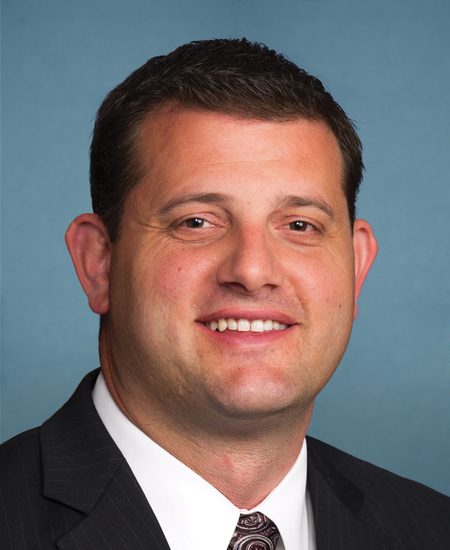
Rep. David G. Valadao
Sponsored bills
Maddy summaryThis bill creates a new visa category for temporary workers in mobile entertainment, such as carnival and circus staff who travel across the U.S. It directly affects carnival operators, seasonal workers, and food/concession vendors at fairs and festivals. The key provision requires Department of Labor certification to ensure U.S. workers are not displaced and that hiring foreign workers won’t lower wages or working conditions. It defines "mobile entertainment provider" to include traveling carnivals, circuses, and affiliated seasonal services like food concessions at local events.
Maddy summaryHR 1748, the Quantum in Practice Act, amends the National Quantum Initiative Act to explicitly include "quantum molecular modeling or simulation" as a priority research area. This change directs federal funding and research efforts toward advancing quantum computing applications for molecular-level simulations. The bill directly affects scientists and researchers working under the National Quantum Initiative Act by expanding their program focus to include modeling chemical processes, materials, and reactions. Key provisions add this specific research category to existing funding priorities, aiming to accelerate breakthroughs in fields like sustainable fertilizers, drug development, and advanced materials. The policy change is purely procedural, redirecting existing program resources without creating new funding.
Maddy summaryHR 1716, the Global Aircraft Maintenance Safety Improvement Act, requires U.S. airlines to annually report detailed information about heavy maintenance work performed outside the U.S. on their aircraft, including locations, work descriptions, and any safety issues identified after maintenance. It prohibits U.S. airlines from entering new contracts for such maintenance with repair stations in countries classified by the FAA as "Category 2" due to safety deficiencies. The bill also mandates that mechanics and supervisors at foreign repair stations performing heavy maintenance on U.S. aircraft must hold appropriate FAA certifications. Additionally, it establishes a working group with international aviation authorities to review and recommend improvements for overseeing foreign repair stations.
Maddy summaryThis bill establishes the Agent Orange Veterans Service Medal, a commemorative award for veterans who receive compensation under 38 U.S.C. §§ 1116 or 1116A (for health conditions linked to Agent Orange exposure). The Secretary of Defense must design and issue the medal upon request by eligible veterans or their next-of-kin if the veteran has passed away. Veterans must apply through a process created by the Department of Defense to receive the medal, which serves solely as a symbolic recognition of service. The bill does not alter existing benefits or create new entitlements.
American Families United Act This bill authorizes the Department of Homeland Security (DHS) or the Department of Justice (DOJ) to exercise discretion in certain immigration cases. Under this bill, DOJ or DHS may, on a case-by-case basis, exercise discretion by declining to remove a non-U.S. national ( alien under federal law) or bar an alien from entering the United States to prevent hardship for the alien's U.S. citizen spouse, parent, or child. This discretion may also be exercised if the alien is the spouse or child of a deceased U.S. citizen. For the purposes of this bill, it shall be presumed that family separation constitutes hardship. However, DOJ or DHS may not exercise this discretion if the alien is removable or inadmissible due to certain grounds, including specified crime- and security-related grounds. This exercise of discretion may be applied to an alien who was ordered removed or denied entry prior to this bill's enactment if the alien files a motion to reopen or reconsider within two years of this bill's enactment.
Maddy summaryThis bill establishes new health and identification requirements for importing live dogs into the U.S. Importers must provide veterinary certification proving dogs are healthy, vaccinated, treated for parasites, and permanently identified (e.g., microchipped), with documentation from accredited veterinarians. Dogs imported for transfer (sale, adoption, etc.) must be at least 6 months old and accompanied by a Secretary-issued permit. Limited exceptions exist for research, veterinary treatment (with quarantine), and Hawaii-specific puppy imports under state regulations, with regulations to be finalized within 18 months. The bill repeals a prior section of the Animal Welfare Act and strengthens enforcement through penalties for noncompliance.
Maddy summaryThis bill adds a new section to federal law making murder of law enforcement officers a capital offense. It mandates death or life imprisonment for individuals who murder federal officers during official duties, or state/local officers when the crime involves interstate activity (like using a weapon that crossed state lines). Key provisions include specific aggravating factors considered for sentencing, such as ambush tactics, prior violent advocacy, or ties to extremist groups. The bill explicitly states it does not affect state court jurisdiction over such cases.
Maddy summaryHR 1503, the Prescription Information Modernization Act of 2023, allows drug manufacturers to provide FDA-approved prescribing information exclusively via digital means (like email or online portals) to doctors and pharmacists, while requiring them to still offer paper copies upon request at no extra cost. The bill directly affects drug manufacturers and distributors, who must implement this change by 2025 (or when regulations take effect), and ensures prescribers and dispensers can choose their preferred format. Key provisions include mandating manufacturers to honor paper requests promptly without additional fees and requiring the Health Secretary to issue implementing regulations within one year. The law aims to modernize how medical information is shared while maintaining accessibility for healthcare providers.
Maddy summaryThe DAIRY PRIDE Act would require food products using dairy-related terms (like "milk," "yogurt," or "cheese") to meet the FDA's definition of dairy - derived from animal milk - to prevent misleading labeling of plant-based alternatives. It directly affects producers of plant-based products currently marketed with dairy terms, such as almond or oat milk, which often lack comparable nutrition. The bill mandates the FDA issue enforcement guidance within 180 days and report to Congress on actions taken after two years. This policy change aims to align product names with the FDA's existing definition of dairy products under federal law.