

Maddy summaryHRES 467 designates May 2025 as "National Wildfire Preparedness Month" to raise public awareness about wildfire risks and encourage existing community safety practices. It does not create new laws or allocate funding but urges federal, state, local, tribal, and community organizations to promote educational initiatives on wildfire prevention. Key focus areas include home hardening (using fire-resistant materials), community planning for firefighter access, evacuation strategies, and reducing human-caused ignitions like fireworks. The resolution emphasizes preparing for increasingly severe wildfire seasons, citing statistics on rising fire frequency and costs. This symbolic designation applies broadly to all U.S. communities facing wildfire threats.
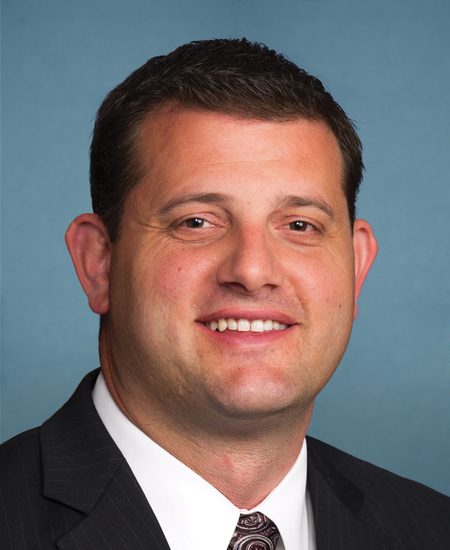
Rep. David G. Valadao
Sponsored bills
Maddy summaryHR 3694, the VALID Act of 2025, requires lenders to include specific information about VA loans in mortgage disclosures. It amends the National Housing Act to mandate that disclosures state the loan-to-value ratio and clarify that VA loans are available under Chapter 37 of Title 38 (veterans' benefits law), assuming prevailing interest rates. The bill also requires the Federal Housing Finance Agency to add a military service question to the Uniform Residential Loan Application form, placing it above the signature line within six months of enactment. This directly affects veterans and active-duty service members applying for VA-guaranteed mortgages, as well as the lenders processing those applications.
Maddy summaryHR 3583 requires funeral honors details presenting a folded U.S. flag to military members or veterans at funerals to recite the 13 specific "Folds of Honor" with their symbolic meanings (e.g., "The 1st fold is a symbol of life"). This applies to flag presentations under federal law for deceased service members or veterans, directly affecting military funeral honors teams. Families may opt out of the recitation if they choose, per the bill's exception clause. The bill adds this requirement to U.S. Code without changing existing funeral procedures.
Maddy summaryThis bill changes the rural surface transportation grant program to prioritize funding for roads serving high-value agricultural areas. It defines "covered counties" as those with at least $1 billion in annual agricultural production value and $500,000 per square mile in agricultural output (adjusted for inflation). The key provision reserves 10% of annual program funds specifically for projects on "farm-to-market roads" within these covered counties. This directly affects rural counties meeting the agricultural thresholds and their transportation infrastructure projects, ensuring dedicated funding for roads connecting farms to markets.
Maddy summaryThe ASSIST Act of 2025 amends the VA’s definition of medical services to explicitly include medically necessary automobile adaptations for veterans. It directly affects veterans with mobility needs who require modifications like ramps, wheelchair lifts, raised doors, or accessibility features to safely operate vehicles. The bill adds these specific adaptations - such as ingress/egress modifications and non-articulating trailers - to the list of VA-covered medical services under Title 38. This change ensures veterans can access these transportation aids without additional administrative hurdles, streamlining coverage for essential mobility support.
Maddy summaryHR 1286, the Simplifying Forms for Veterans Claims Act, requires the Department of Veterans Affairs (VA) to simplify forms sent to veterans filing claims. Within 30 days of enactment, the VA must hire an independent research center (FFRDC) to assess these forms, working with veterans' groups, legal experts, and the VA itself. The VA must then report the assessment to Congress within 90 days and implement approved changes - like clearer language or better organization - within two years. This directly affects veterans navigating VA claims by aiming to reduce confusion in the application process.
Maddy summaryHR 1147 establishes the Veterans Accessibility Advisory Committee to improve accessibility for veterans with disabilities across Department of Veterans Affairs (VA) services. The committee, composed of 15 members including four veterans with disabilities, four accessibility experts, two VA staff, and five veteran service organization representatives, will assess barriers in VA facilities, digital services, benefits, and communications. It must submit biennial reports identifying accessibility gaps and recommending improvements, with the VA required to respond to these reports within 90 days. The committee directly affects veterans with disabilities by mandating regular VA consultation on compliance with accessibility laws like the Americans with Disabilities Act and Section 508 of the Rehabilitation Act.
Maddy summaryHR 217, the CHIP IN for Veterans Act of 2025, makes permanent a program allowing the Department of Veterans Affairs (VA) to accept donated properties and facility improvements from communities. This directly affects veterans by expanding potential access to VA services through locally donated facilities, such as buildings or renovations. The key provision removes the temporary expiration date from a 2016 pilot program, ensuring the VA can permanently accept these donations without needing periodic reauthorization. The bill updates related sections of the U.S. Code to reflect this permanent change, effective December 16, 2026. It does not alter eligibility for veterans or VA benefits but changes how facilities may be sourced.
Maddy summaryHR 3462, the "They’re Fast, We’re Furious Act of 2025," establishes a federal Street Racing Prevention and Intervention Task Force within the FBI. The Task Force, composed of federal and state/local law enforcement representatives, will study street racing and vehicle sideshows, develop national best practices for law enforcement, create educational materials, and coordinate responses across agencies. It must submit a report to Congress within one year of the bill's enactment. The bill directly affects law enforcement agencies at all levels and communities impacted by street racing activities.
Maddy summaryHR 3408, the Pathways to Policing Act, authorizes $50 million annually from 2026 to 2030 to fund grant programs aimed at increasing diversity in law enforcement. It provides grants to states, local governments, and police agencies to support two key areas: up to 50% of funds for marketing/recruitment campaigns targeting underrepresented communities and nontraditional candidates, and up to 50% for "Pathways to Policing" programs that help new candidates overcome education barriers through financial support during training. These programs specifically assist individuals with no prior law enforcement experience who face obstacles to entering the field. The bill also directs the federal government to create nationwide recruitment campaigns and resources for local agencies, with a focus on recruiting officers who live in or will serve the communities they protect.